

Renovating an old house is a lot like opening a series of small time capsules. Behind one wall, a couple found something that had been waiting more than a century: a pocket door with a stained glass panel, still tucked away where it had slid out of sight long ago.
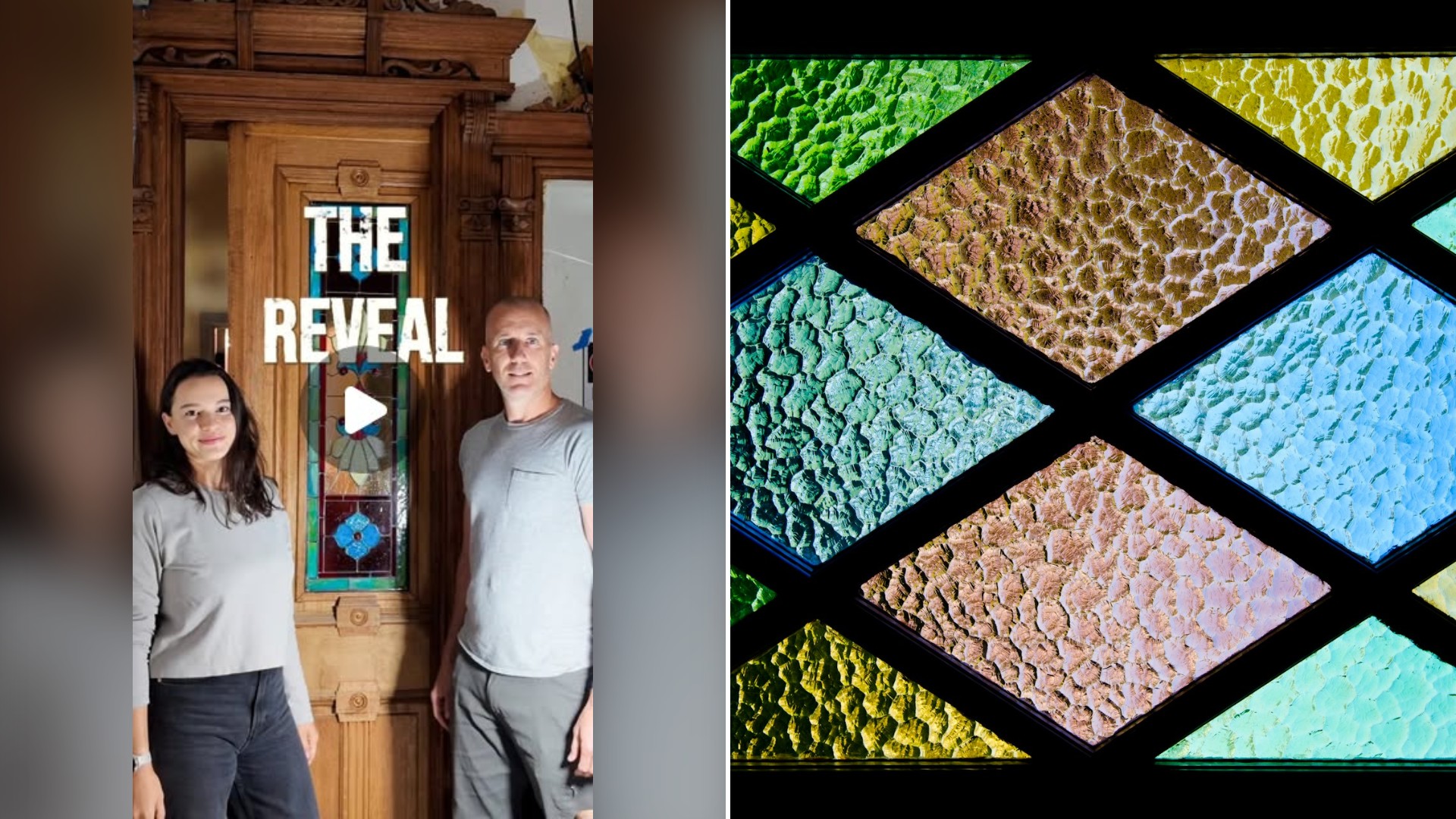
The only problem was that half of the glass was missing. What happened next, shared by @galeguesthouses, is a satisfying lesson in how skilled artisans bring a damaged piece back without erasing its history.
View on Instagram
A door behind the wall
The story opens in an unfinished interior of a brownstone, with a woman and a man standing beside a tall wooden doorframe. She asks, “Ready?” and explains that they opened the wall and found a 140 year old pocket door with stained glass.
A pocket door slides into a cavity inside the wall instead of swinging open, which is why one can vanish for decades when a wall is built or closed in around it. The panel they found was broken. In her words, half of it was gone, and the remaining pieces were held together with plastic tape.
Taking it apart, one step at a time
Rather than replace the door, the couple handed the glass to artisans. The process was shown as a simple checklist on screen: take it apart, clean it, match the original glass, and put it back together.
The artisans carefully removed the frame and disassembled the panel. They washed the glass with soapy water and cleaned away what she describes as decades of nicotine, the sticky brown film that builds up on surfaces in homes where people once smoked indoors. Then came the detective work. They found old glass to match the original so that the repaired section would blend in, and they put it back together piece by piece.
The panel then spent months away in the workshop. When it finally returned, it was carried down the tree lined street back to the house, and she announced it with real joy: “It’s coming home!”
Whole again
The reveal shows the old broken state melting into the finished door as it slides into place, with close ups of the colorful glass in blues, reds and golds. Both of them embrace in front of it. As she puts it, “it was whole again. 140 years later, it’s still here. Right where it belongs.”
There is one more twist. They say they are not quite done. Because they see themselves as the home’s new caretakers and part of its story, they decided to add a little something of their own to the glass. The details of that personal touch are left as a teaser.
How stained glass is usually repaired
Old stained glass panels are generally built from many small pieces of colored glass held together by thin channels of lead, sometimes called came, or by copper foil and solder. Over time, the metal can sag, the joints can crack, and individual pieces can break. Conservators usually work in a few stages:
- Document the panel with photos and tracings so every piece can go back where it belongs.
- Remove the panel from its frame and carefully take it apart.
- Clean the glass gently, since original painted details can be fragile.
- Replace missing or broken pieces with glass that matches in color, texture and thickness.
- Reassemble, seal the joints and reinforce the panel so it can handle being moved and used.
Matching glass is often the hardest part. Older sheet glass tends to have subtle waves, streaks and bubbles that modern machine made glass does not have, so artisans often hunt for salvaged period glass to make a repair that does not stand out.
If you find something similar in your own home
Not every old house hides a stained glass door, but many have overlooked original details behind paneling, drywall or paint. A few sensible tips if you uncover one:
- Stop and photograph it before anyone touches it, including how it sits in the opening.
- Support fragile glass with tape or cardboard only as a temporary hold, and avoid pressing on it.
- Do not try to clean old glass with harsh chemicals or abrasives.
- Ask a stained glass studio or architectural conservator about repair options before deciding to replace anything.
- Check with local preservation groups, since many have lists of trusted craftspeople.
Common questions
Is repair better than replacement? Many preservationists prefer repair when possible because it keeps original material and craftsmanship, but the right choice depends on the condition of the piece.
How long does it take? In this story, the panel was away for months. Hand work and sourcing matching glass take time, and good studios often have a waiting list.
The takeaway
A broken door could have been thrown out. Instead, patient work gave it a second life and kept a piece of the home’s story in place. The best restorations leave the past visible while quietly making it strong enough to last another century.
Credit for the original post goes to @galeguesthouses on Instagram.

Leave a Reply