

Some of the best vintage finds are not found at all. They turn up in the back of an old drawer while someone is sorting through a family home. That is exactly how a 1960s Rolleiflex camera ended up in the hands of one granddaughter, and now she wants to know whether it can shoot again.
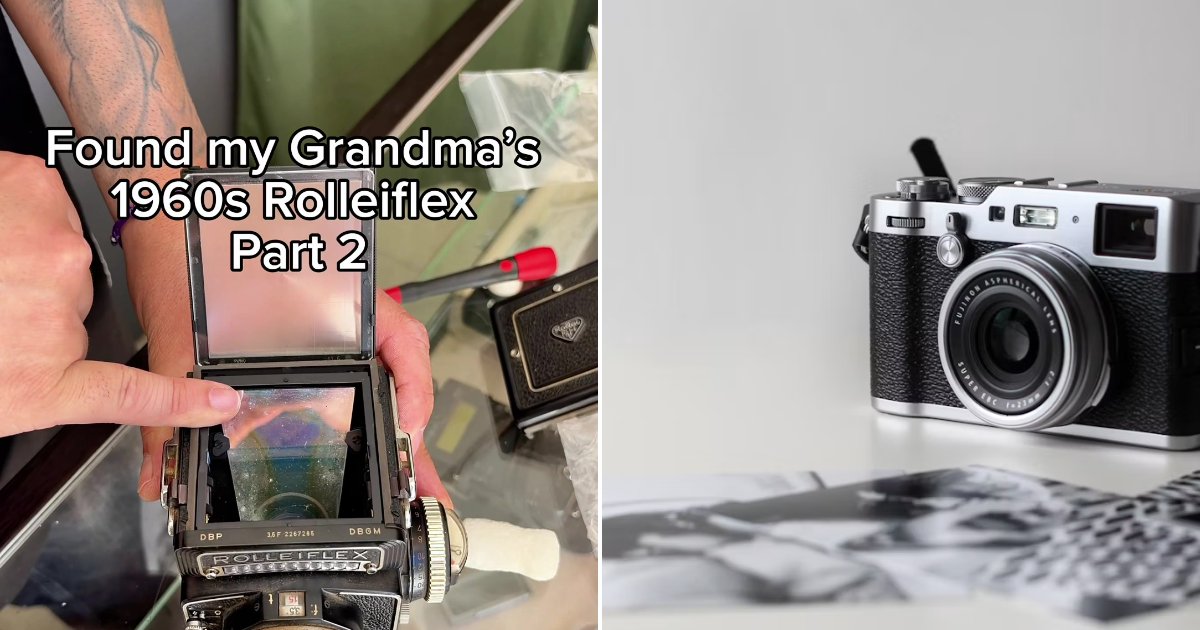
Her trip to a camera repair shop was shared by @kai.george0 on TikTok, labeled Part 2 of her story about the camera.
@kai.george0
From a drawer to a repair counter
The week before, her mom handed her a vintage Rolleiflex she had discovered in one of the old drawers at her grandmother’s house. Now she is pulling up to Walter’s Camera and Digital Repairs, a shop she says has been in the same business since the 1950s. The goal for the visit is simple: find out how much it will cost to get the camera cleaned and working.
What the technician found
Inside the shop, the technician asks what model it is. It is a Rolleiflex 3.5F with a Planar lens. He checks the glass first and explains that it is the most important part of these cameras: if the glass is good, everything is good. Hers is clean, which he calls a very good sign, since cameras in the 3.5 and 2.8 range often have glass problems.
Then comes the bad news. The mirror has discolored with age, and that is why the viewfinder looked dim. It needs to be replaced. He also notes that the shutter sometimes stays open because of dried lubricant, and that the shutter button can take a long time to come back up. Like most Rolleiflex cameras, this one needs the mirror replaced along with a full CLA, which stands for cleaning, lubrication and adjustment.
The price tag and a surprise customer
The quote comes to $450. She notes that her mom found the camera at her grandmother’s and jokes that she wishes she had found a few extra hundred dollars too. The technician tells her it is about an $1,800 camera and calls it one of the finest cameras ever made.
The visit also includes a fun coincidence. Another customer happened to bring in a camera from the 1920s, a Heidoscop, which is quite a rarity. The technician and the other Rollei owner chat about their own cameras while they look over hers.
Was it worth it?
Back in her car, she thinks out loud. Could she have found a cheaper repair somewhere else? Possibly, but she says she would probably have had to ship it out. Because of the type of camera and the replacement mirror, she decides the price makes sense. She says people kept telling her it was only worth about $900, while she believed it was worth at least $1,800, and the technician agreed with her number. She calls the repair a worthwhile investment. The finished repair is still to come, so the ending of this story is yet to be told.
Tips if you inherit a vintage camera
- Check the glass first. According to the technician, clean glass is the best sign on a Rolleiflex.
- Expect age related problems such as a discolored mirror and dried lubricant that makes the shutter stick.
- Ask the shop what a CLA includes and get a quote before any work begins.
- Compare the repair estimate with what the camera is worth, but also weigh the sentimental value.
- Look for a repair shop that works on older cameras, since parts and know how matter.
What makes a Rolleiflex special
A Rolleiflex is a twin lens reflex camera, which means it has two lenses stacked one above the other. The upper lens sends the image to a mirror and a viewing screen on top, and the lower lens takes the picture. The 3.5F, a model the story names, shoots medium format roll film, which is still sold today. Its square frames and bright waist level viewfinder give it a look many photographers love, and that explains why these cameras remain in demand with film shooters.
Understanding a CLA
CLA stands for cleaning, lubrication and adjustment. Over decades the oils inside a camera can thicken or dry, which makes shutters sluggish or inaccurate. A technician takes the mechanism apart, cleans out the old lubricant, adds fresh lubricant where it belongs and tests the shutter speeds and focus. It is routine work for an older camera, but it takes skill, which is part of why quotes can be higher than people expect.
Questions people ask about inherited cameras
Should I repair it or sell it as is? It depends on what you want. A working camera generally appeals to more buyers than a non working one, but a repair costs money up front. Compare the quote with what similar cameras in working condition have sold for, and weigh how much you want to use it yourself.
How should I store it in the meantime? Keep it in a dry spot at room temperature, away from direct sun and damp basements, ideally in a padded case or bag. Do not force a stuck shutter or dial, and use a blower rather than a cloth to clear dust from the lenses.
Can I still use film? Medium format film is still produced and processed by many labs, so an inherited camera can be put straight back to work once it is serviced.
Credit for the original post goes to @kai.george0 on TikTok.

Leave a Reply