

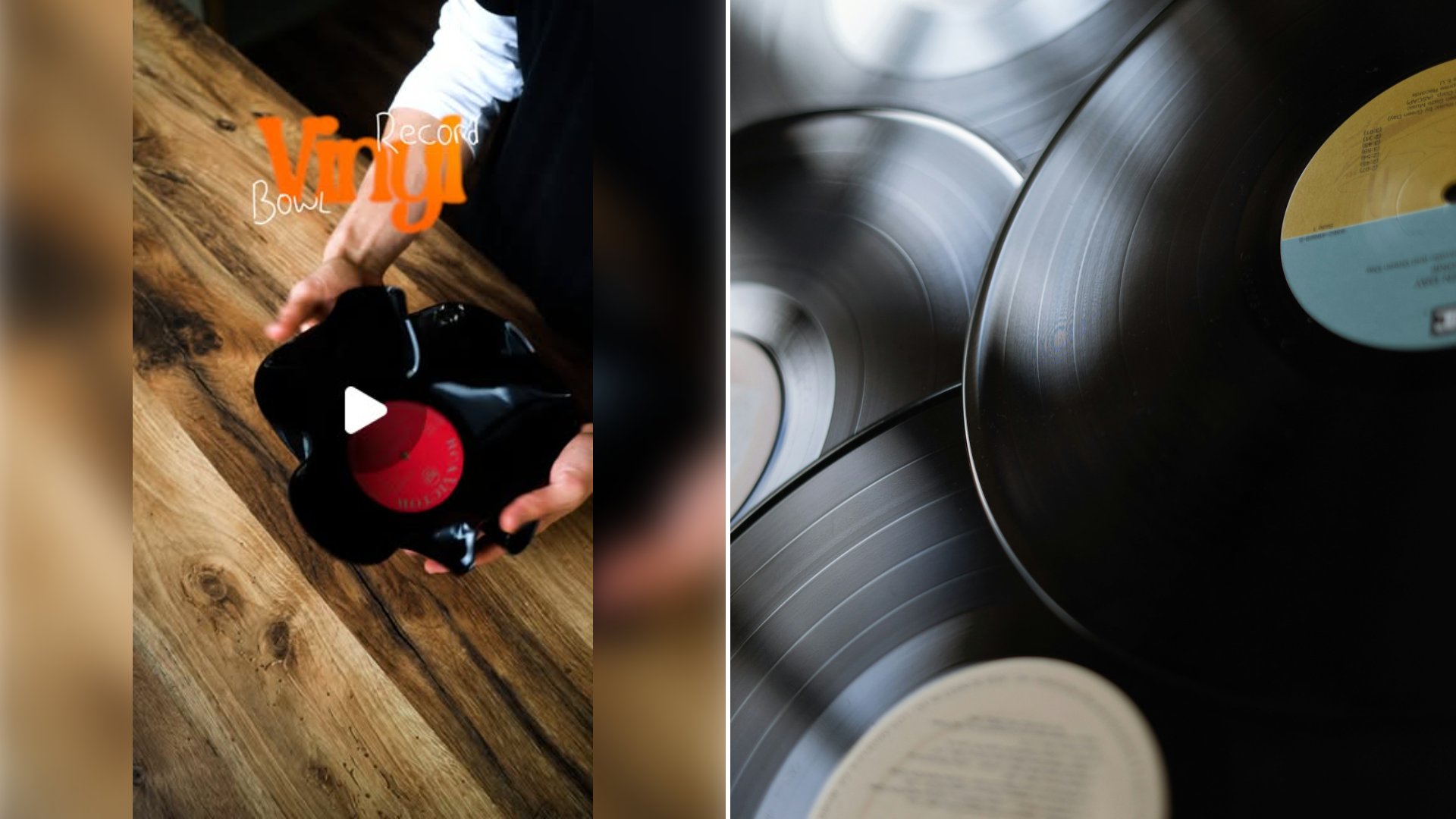
The record this video starts with is nothing special, just a scratched, beat up vinyl that most people would quietly toss in the trash without a second thought. The creator sets it on a baking sheet, slides it into a regular home oven, and waits. A few minutes later, the flat record comes out soft and pliable, and with a quick, confident motion it gets pressed over a bowl mold and cooled into a completely new shape. What was a scratched record a few minutes earlier is now a genuinely striking decorative bowl, curved edges and all, ready to display on a shelf.
Creator @inspo.leon walks through the entire process in real time, which is part of why it lands so well. There is no editing trick hiding the transformation. The record genuinely goes from flat and rigid to soft and moldable in the oven, and the final shaping happens fast, in the short window before the vinyl firms back up again.
The science behind this trick is straightforward once you know what a vinyl record actually is. Records are made from PVC, or polyvinyl chloride, a plastic that behaves exactly like other plastics do when heat is introduced: it softens well below the temperature required to melt or burn it. Heating a record gently in a low temperature oven, generally for only a few minutes, brings the PVC into a flexible, workable state without destroying the material, which is exactly what allows a flat disc to be draped over a bowl, a vase, or any other mold and hold that new curved shape once it cools and firms back up.
Before grabbing just any record off a shelf to try this, it is worth being honest about which ones are genuinely good candidates. Once a record goes through this process, it is permanently reshaped and can never be played again, so the ideal candidates are records that are already scratched beyond playability, duplicates that already exist in a collection, or common pressings with no meaningful collector value. Records that should be left alone include early or first pressings, limited or colored vinyl variants, promotional copies, and anything that is still fully playable or carries genuine sentimental or financial value to its owner, since none of that value survives the reshaping process. When in doubt, a quick check of the record’s pressing details and condition before heating it is a reasonable habit, since there is no undoing the shape change once it happens.
Projects like this one sit at an interesting intersection of thrifting culture and home decor. Damaged or unwanted records are easy to find for next to nothing at thrift stores, flea markets, and garage sales, which makes this exactly the kind of low cost, high impact project that appeals to anyone drawn to retro aesthetics without wanting to spend real money on store bought decor. A finished record bowl also carries a distinct visual identity that no mass produced bowl can replicate, retaining the label in the center and sometimes even faint grooves around the edges, a small reminder of what the object used to be before it became something new.
It is a simple project, but it hits a specific nostalgic note that a lot of home decor misses entirely: it does not just imitate a retro look, it is actually made from the real thing, repurposed rather than reproduced.
More from Vinyl and Velvet
- A Restorer Strips Decades of Paint Off an Antique Door Latch Using the ‘Crockpot Method,’ and Commenters Joke That It Looks Like Someone Is Slow-Cooking a Victorian Lock for Dinner
- Houston Creator Soaks a Customer’s Pope Gosser Plates in Hydrogen Peroxide for 24 Hours, Bakes Them at 200 Degrees and Shows Decades of Brown Stains Gone
- Poster Conservator Reveals the Donor Poster Technique Used to Rebuild a Missing Torn Corner of a Vintage French Travel Poster Without Ever Touching It With Acrylic Paint

Leave a Reply