

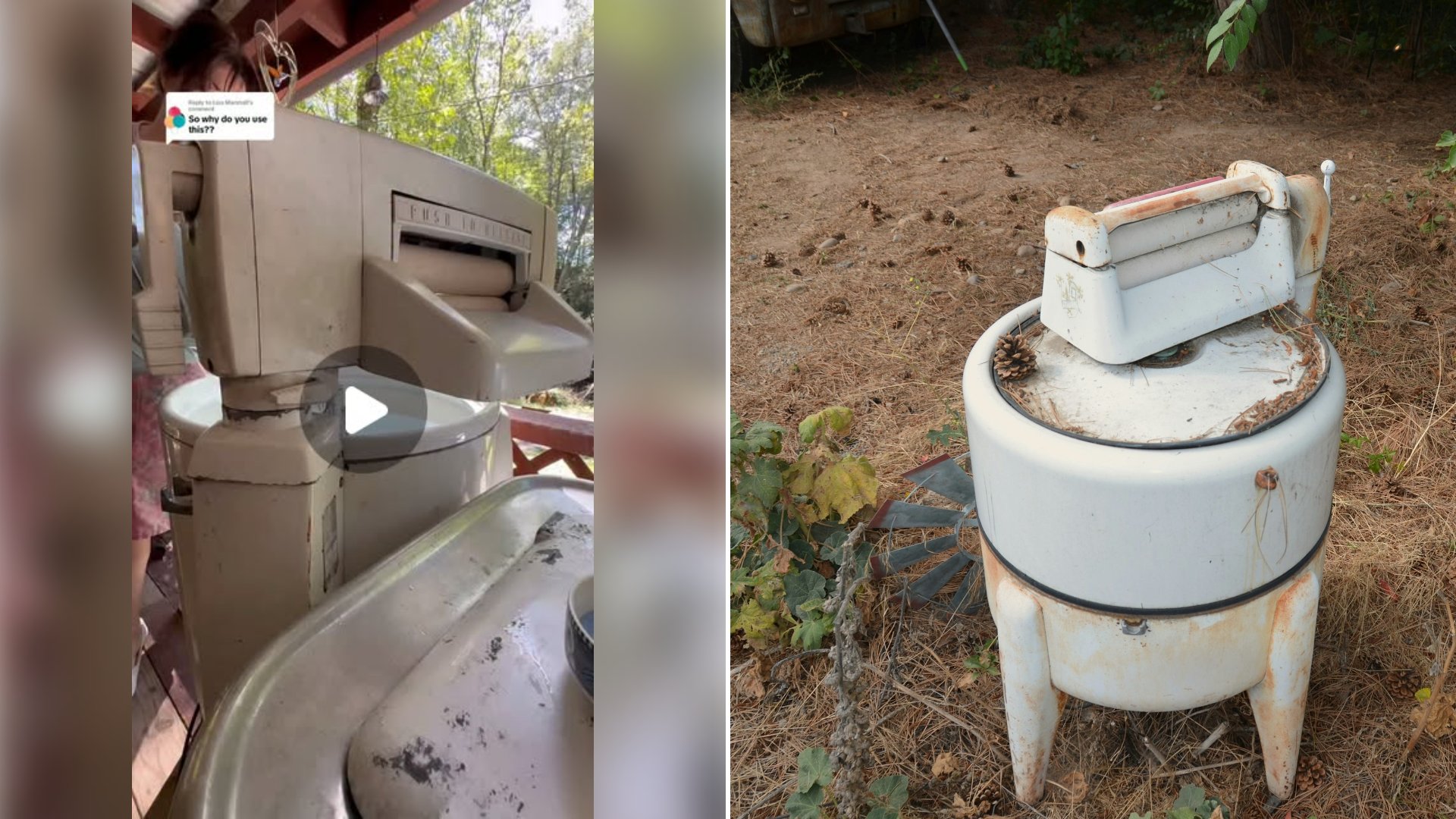
@mudcreekmemories shared a video walking through every step of running a vintage wringer washing machine, the kind with a tall tub, an agitator, and a hand-fed roller mounted on top to squeeze water out of each piece of laundry. She loads it, runs the wash cycle, then feeds each item through the wringer by hand, catching it in a basin on the other side before it ever gets near a clothesline. It’s slower than tossing a load into a modern washer and walking away, and that’s precisely the point she makes throughout the video.
@mudcreekmemories explains that she still reaches for the wringer machine for certain loads, heavier linens and tougher work clothes especially, because she feels it gets them genuinely clean in a way a quick modern cycle sometimes doesn’t. There’s also an unmistakable rhythm to the process on camera: load, agitate, feed through the rollers, repeat, each step requiring her full attention rather than running in the background while she does something else.
Wringer washers were the standard home laundry appliance for most of the first half of the twentieth century, replacing the washboard-and-tub method that came before them and remaining common in American households through the 1950s and into the early 1960s. The basic design paired a motorized agitator tub with a hand-cranked or motor-driven roller system that squeezed water out of wet fabric far faster than wringing by hand ever could. Fully automatic washing machines, the kind that wash, rinse, and spin without any manual intervention, started appearing in the late 1930s but remained expensive for years, which meant wringer models stayed in production and in heavy use well into the 1960s before automatic machines finally became the affordable default in most homes.
That gap is part of why wringer machines still show up functioning today. They were built to be simple and mechanically repairable, with motors, belts, and rollers that a home owner or local repair shop could service rather than parts that required factory replacement. A lot of vintage examples that survived in barns, basements, and rural properties can still be coaxed back into working order with new belts and a thorough cleaning, which is exactly the kind of machine @mudcreekmemories is demonstrating. The wringer mechanism itself hasn’t needed to change much since it was first introduced, because the physics of squeezing water out of fabric between two rollers hasn’t changed either.
The appeal of a video like this one goes beyond nostalgia for an old machine. There’s a growing interest right now in what gets loosely called slow living, intentionally choosing tasks that take longer because the slower pace itself has value, rather than optimizing every chore for speed. A wringer washer forces that pace by design. You can’t multitask your way through feeding laundry between two rollers by hand, and that forced presence is exactly what a lot of viewers respond to in videos like this one. It’s not really an argument that modern washing machines are worse, it’s a demonstration that older, slower tools can still do a job well, and that doing a chore the long way sometimes offers something a five-minute cycle never will.
More from Vinyl and Velvet
- Minnesota Antique Refrigeration Specialist Shows a Teal Fridge Swinging Open Hands Free When a Foot Presses a Chrome Pedal, Revealing Copper Toned Shelves Inside
- Homeowner Pulls Hardboard Off a Hallway and Finds the Original 1930s Stair Bannisters She Says Were Probably Hidden Since the 60s or 70s, Plus Panelling and a Cupboard Door
- A Restorer Strips Decades of Paint Off an Antique Door Latch Using the ‘Crockpot Method,’ and Commenters Joke That It Looks Like Someone Is Slow-Cooking a Victorian Lock for Dinner

Leave a Reply