

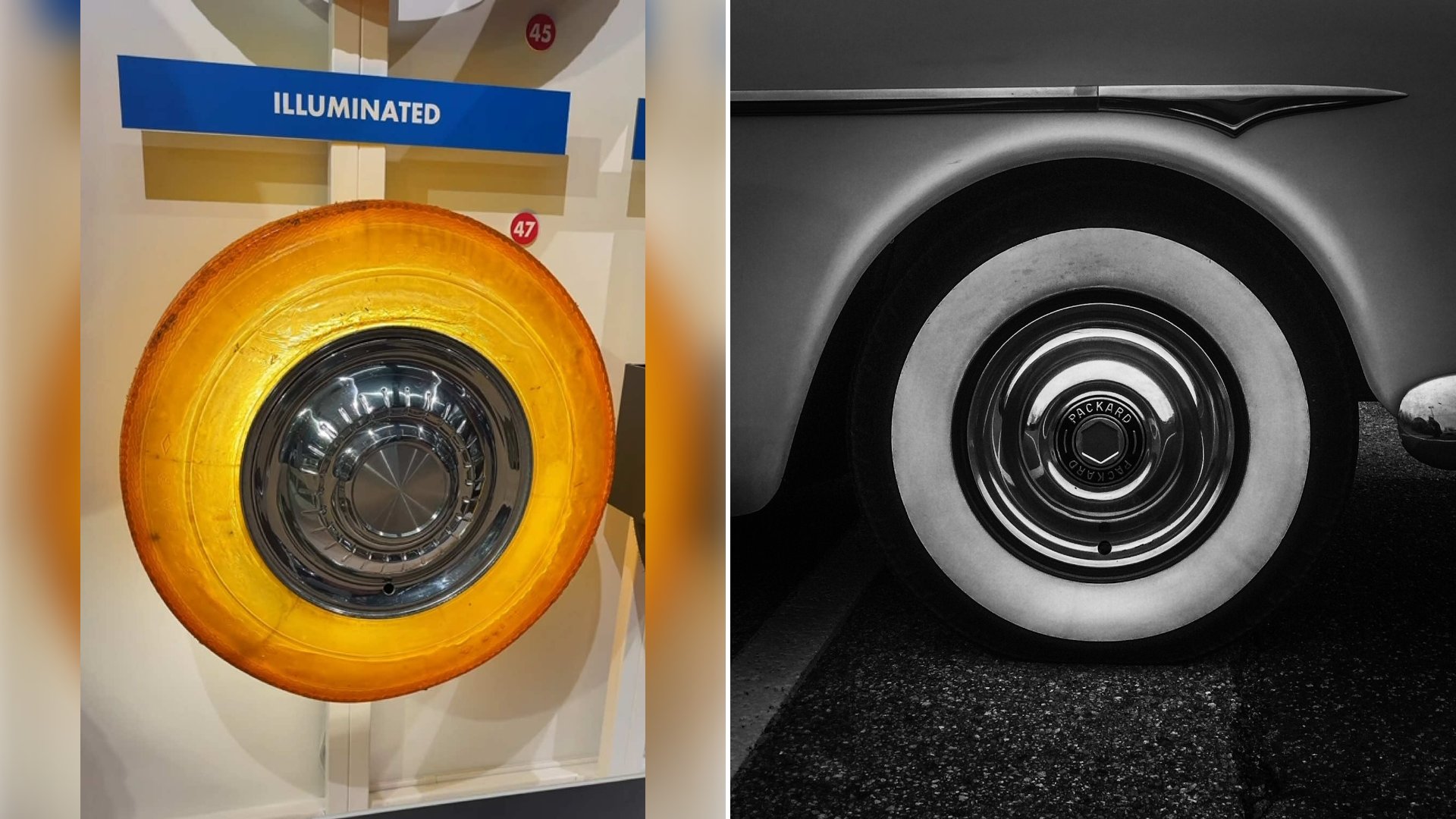
Most museum visitors walk past a concept car looking at the paint, the fins, the futuristic dashboard, never thinking to crouch down and study the tires. TikTok creator @carsandkeyspicy used a museum tour to highlight exactly the detail everyone misses: an original illuminated, glowing tire feature from decades ago that most visitors walk straight past without ever realizing what they are looking at.
The guide points to the tire’s sidewall, lit from within, glowing softly against the museum floor lighting. It looks almost like a modern novelty accessory, the kind sold online as an aftermarket add on, except this one is decades old and was engineered directly into a genuine concept vehicle long before LED underglow was ever a trend. The detail is easy to miss specifically because it looks so strange sitting on an otherwise period accurate car.
@carsandkeyspicy
Illuminated tire technology is a real and well documented piece of automotive history, developed by Goodyear in the 1960s. Goodyear built translucent tires using a specially formulated clear or neon tinted rubber compound, with small light bulbs mounted inside the wheel itself, so the entire sidewall would glow when the lights were switched on. The technology was shown off most prominently on General Motors concept vehicles of the era, including show cars exhibited at auto shows designed specifically to demonstrate how far automotive styling and engineering could push beyond the showroom floor.
The feature never made it to production, for reasons that are fairly intuitive once you think about them. Translucent rubber compounds sacrifice the durability and opacity that standard tire rubber relies on, and running wiring and bulbs inside a rotating wheel assembly introduces obvious reliability and safety concerns at highway speed. Like many concept car features from the 1950s and 1960s, the illuminated tire existed to generate buzz and demonstrate engineering ambition rather than to become a practical feature drivers would ever use on public roads.
That is exactly why it survives today mostly as a museum curiosity rather than a a widely known fact. Concept cars were built in extremely limited numbers, often as a single running prototype, and many of that era’s show cars were eventually scrapped once their press tour obligations ended. The vehicles that survived and ended up in museum collections carry details like illuminated tires specifically because a curator or collector recognized them as a snapshot of a design era that never went mainstream, which is also why most casual visitors have no context for what they are looking at when they walk by.
It is a small reminder that automotive history is full of ideas that got built, shown, photographed, and then quietly abandoned, not because they failed, but because they were never meant to last past the auto show floor. Finding someone who actually knows the story behind a detail like a glowing tire is often the only way these moments of design ambition get remembered at all.
More from Vinyl and Velvet
- A Rare 1948 Tucker 48 Surfaces Online With a Helicopter-Derived Engine, Three Headlights, and Six Exhaust Tips, and the Creator Says It Was Preston Tucker’s Own Personal Car
- A Restorer in Belgium Pulls Open a Vine-Covered Barn Door and Reveals a 1971 Citroën DS21 Pallas That Had Been Hidden Since 2005, and Commenters Call the ‘Goddess’ the Most Beautiful Car Ever Built
- An Antique Warehouse Tour Reveals a Working Miniature Salesman’s Sample Barber Chair and a Mystery Object Several Commenters Swear Looks Like a Bazooka

Leave a Reply