

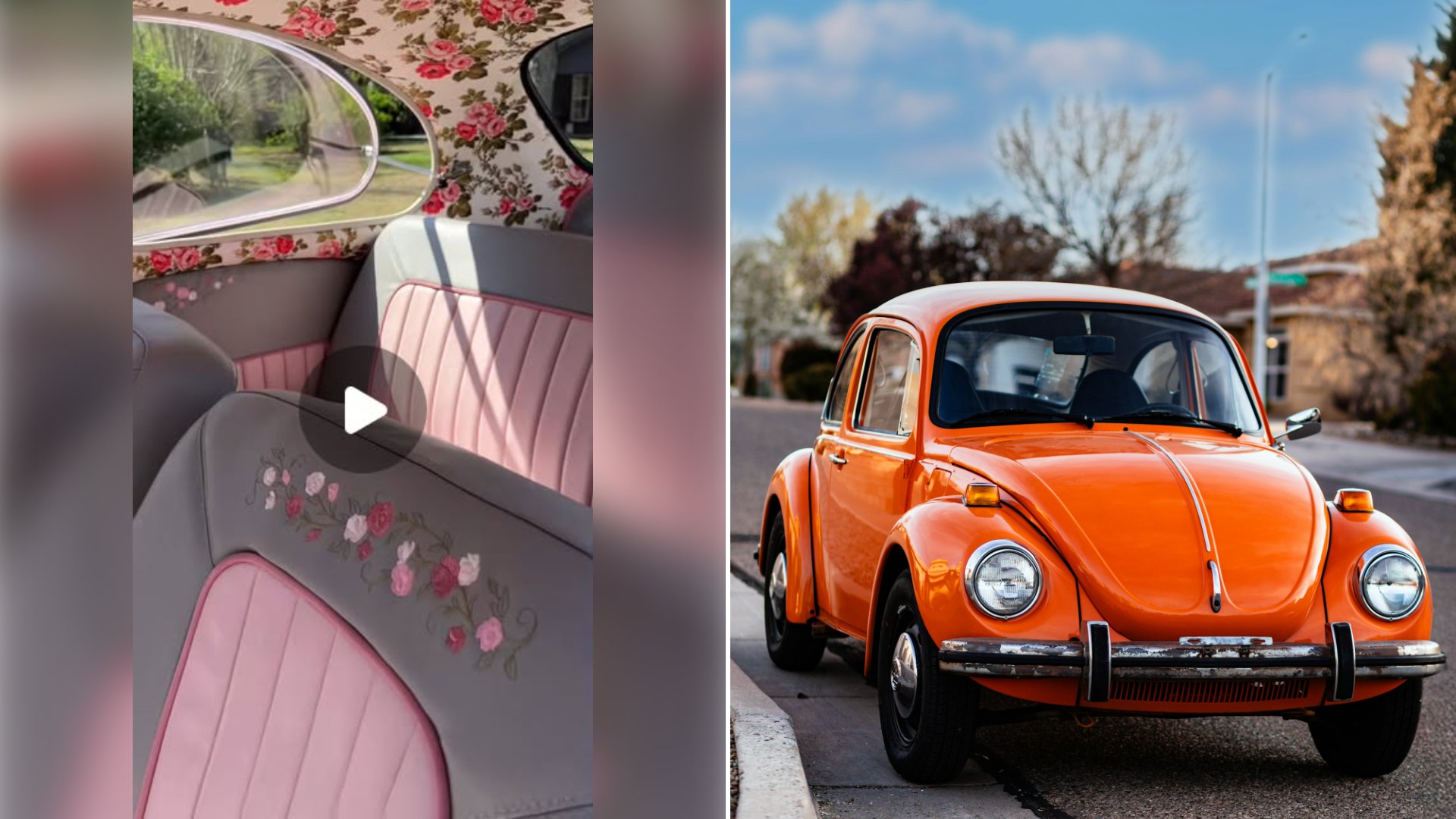
The video opens on exactly what you would expect from a car that has been abandoned for years: a 1967 Volkswagen Beetle reduced to a rusted, hollowed out shell, paint long gone, floor pans eaten through, sitting on flat tires in a state that looks closer to scrap metal than a car. What follows is a full restoration timeline, compressed into one satisfying clip, that ends with the same car rolling out as a finished, glossy pastel pink show car covered in metallic flower decals.
The transformation is the kind that restoration accounts build their entire following on, and @metalmorphosiscars clearly knows how to pace one for maximum effect. The before shots linger just long enough on the rust holes and missing panels to make the finished reveal land harder, cutting from bare rusted metal straight to a mirror smooth paint job without lingering too long on the unglamorous middle stretch of the job.
That unglamorous middle stretch is worth understanding, because it is where the real work happens. A genuine ground up, or frame off, restoration on a car in the condition this Beetle started in typically means stripping every panel down to bare metal, cutting out and fabricating replacement metal for rusted sections like floor pans, rocker panels, and fender edges, and then rebuilding the car essentially from a bare shell outward. Specialists in the classic Volkswagen world routinely describe projects like this running well past a thousand hours of labor once metal fabrication, bodywork, paint, mechanical rebuilding, wiring, glass, and interior upholstery are all added together, and that estimate assumes the car does not reveal additional hidden rust once the old panels come off, which is common rather than rare.
The 1967 model year adds another layer of significance for Beetle collectors specifically. Volkswagen sold the original Beetle in the United States for decades with only incremental yearly changes, but 1967 is widely considered one of the most desirable model years among enthusiasts because it was the last year before a wave of federally mandated safety and emissions changes altered the car’s details going into 1968, including updated lighting and other trim. That makes a well preserved or well restored 1967 Beetle a genuine sweet spot for collectors who want the classic look without some of the later regulatory era changes.
The finished color choice is its own statement. Pastel pink paired with metallic flower decals leans directly into the flower power aesthetic that the Beetle became synonymous with during the counterculture era of the late 1960s and early 1970s, when the car’s affordability and simplicity made it a default choice for a generation that wanted something distinctly different from Detroit’s bigger, flashier offerings. A build like this one is not trying to look factory original. It is deliberately leaning into decades of Beetle culture that grew up around the car long after it left the showroom, using custom paint and graphics to turn a mass produced economy car into a one of a kind personal statement.
Restorations like this one do more than create a pretty car. They preserve a piece of automotive history that would otherwise have gone to a scrapyard, and they keep alive the specialized metalworking and upholstery skills that full frame off restorations demand, skills that get harder to find as fewer shops take on projects this labor intensive. For a car that started the video as little more than rusted scrap, ending it as a showstopping pastel pink Beetle is as complete a transformation as the classic car world offers.
More from Vinyl and Velvet
- A Restorer in Belgium Pulls Open a Vine-Covered Barn Door and Reveals a 1971 Citroën DS21 Pallas That Had Been Hidden Since 2005, and Commenters Call the ‘Goddess’ the Most Beautiful Car Ever Built
- Builder Installs a 30 Year Old Billet Steel Crankshaft His Grandfather Ground as Surplus From NASCAR Powerhouse Robert Yates Racing Into a 1965 Mustang Build Aiming for 650 Horsepower
- Professional Detailer Surprises a Daughter by Fully Cleaning Her Father’s Dream Firebird After It Sat Untouched for 30 Years, Pulling Decades Old Trash Out With the Vacuum Along the Way

Leave a Reply