

Mary Beth Kelley finished college with two job offers. CNN, which matched the journalism career she says she really wanted, was paying $18,000. Calvin Klein was paying $25,000. “I am one of six children, and my parents were like, you’re off payroll,” she says. “So I had to pay rent and feed myself.”
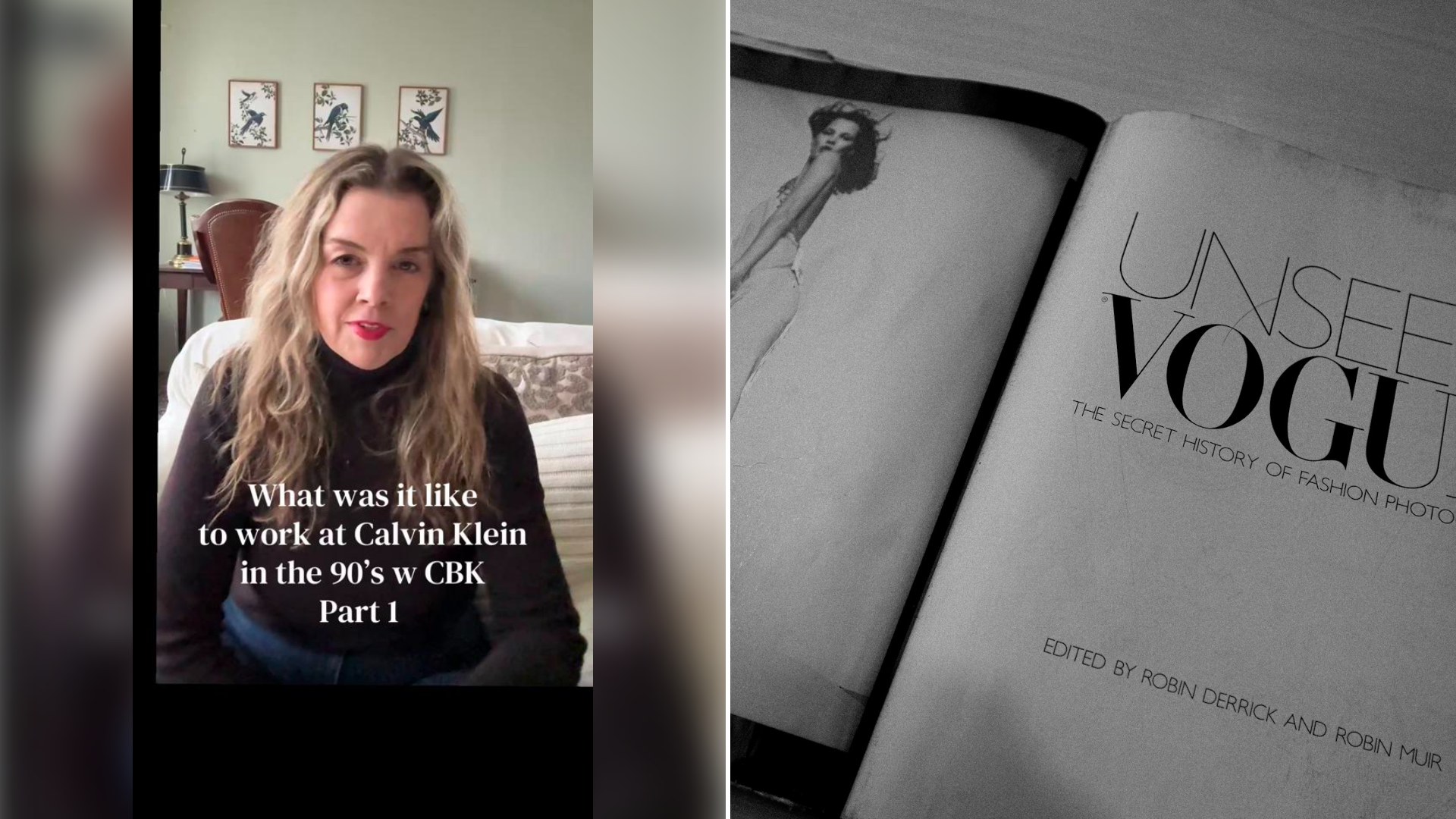
She took the fashion job, calling it the “better financial deal,” and a line of on screen text gives the number behind the decision: “My rent at the time was $750/month.” Kelley, who posts on TikTok as @marybethkelleyrealestate, told the story in a video posted on February 17, 2026, titled on screen “What was it like to work at Calvin Klein in the 90’s w CBK Part 1.” Her caption says she worked there from 1994 to 2003 and that this is part 1 of 5.
She got in as an intern before she graduated, through a friend of a friend who worked there. Kelley says she was supposed to spend that stretch in her mother’s real estate office in Westport, Connecticut, until the company, which she says was struggling to find temps “that knew what they were doing,” called her friend. The friend’s answer, as Kelley tells it: “I already have a job, but I think Mary Beth would like to work there.”
The internship put her in the men’s underwear design department. Her on screen note describes the work as “making design boards of yarn dye plaids” for men’s boxers and adds, “I thought it was incredible.” She went back during her senior year, and she says the company tried to keep her: “They actually wanted to hire me before I even graduated. And I said, I have to go back to school and finish one more semester.”
Her first full time job was working for the executive vice president, whom she describes as “basically the chief design merchant, chief buyer,” the person all of the designers reported to. A caption on screen says that executive was over all women’s, home and kids design and merchandising. The executive had three assistants, and Kelley says, “I was her head assistant.”
The main task was the calendar, “which was very complicated because she was in every design meeting” and reviewed every fit, prototype and product design before it went into production. The executive also met with the heads of the licensees, which Kelley stops to explain: “There were a lot of companies that he hired to produce his products,” while he kept hold of the design so he could control what they looked like.
She lists the licensed categories as coats, shoes, belts, underwear, swimwear and socks, plus foreign licensees in Japan and Italy. Her on screen estimate is that Calvin had “about 20” of them. The result, she says, was one meeting after another, with her in charge of the schedule.
Kelley says she and her boss “did not get along at first,” and an on screen line says she “could totally write a book” about the job. Then: “Eventually we saw eye to eye, and I became her little protege.” She was made licensing coordinator, a job her on screen text describes as running “the time & action calendars for every product category.” That put her in all of the executive’s meetings, with what she calls “a lot of overlap with Calvin himself.”
Carolyn Bessette comes in at the end. “I didn’t have a lot of meetings with Carolyn because she was in PR,” Kelley says, describing that job as getting celebrities in, styling people and helping organize the runway shows. “We both worked on the 10th floor.” She compares the gap between them to school: “I was like a sixth grader, and she was a senior in high school. And just her even talking to me was like, oh my god.” The on screen version reads, “She was 8 years older than me and def way cooler.” The video stops as she mentions who Bessette was dating, under the words “Come back tmrw for part 2.”
What Her Licensing Explanation Means for a 1990s Calvin Klein Tag
Kelley’s account is that outside companies produced whole categories while the design was controlled in house. For a thrifter, that turns the inside label into the thing to photograph. On a 1990s coat, belt, pair of shoes, swimsuit, pair of socks or set of underwear, look past the brand label for a second tag naming the maker or the country, and shoot both. A second company name, or Japan or Italy, fits the business she describes. It does not authenticate anything by itself, so put both labels in the listing and let the buyer see them.
Her intern detail gives one hands on check for men’s boxers. “Yarn dye” means the plaid is woven from colored threads instead of printed on top, so the pattern looks the same on the inside of the fabric as on the outside. Turn the fabric over: a plaid that is pale or blank on the reverse is a print.
Use her six categories as search words. Typing coat, shoes, belt, underwear, swimwear or socks next to the brand name and “1990s” pulls up licensed pieces that a search for jeans alone will miss.

Leave a Reply