

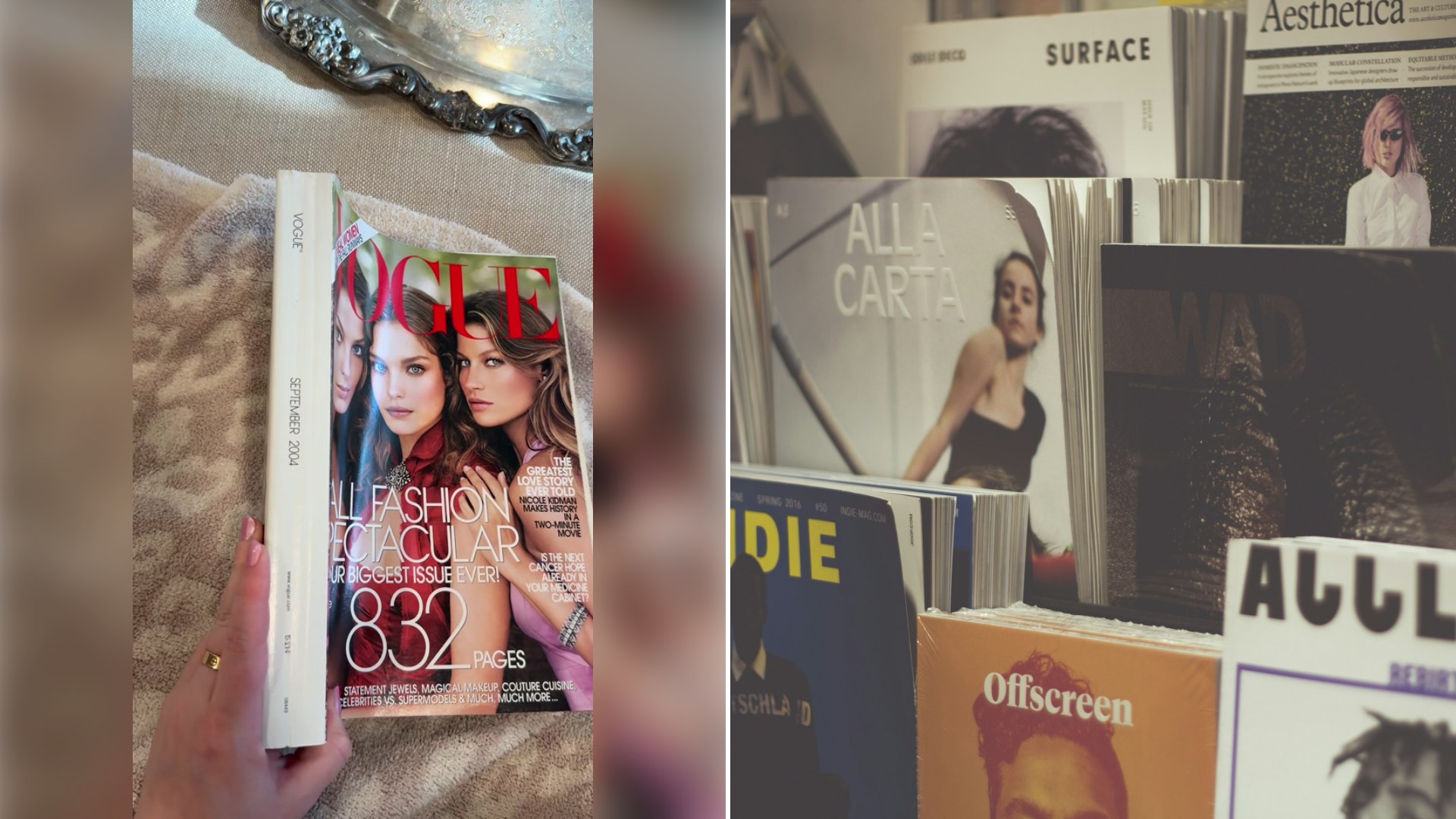
For some collectors, a weekend in means settling into an armchair with a stack of history rather than a streaming queue, and @theobjectsgirl shows exactly what that looks like in this clip. She settles in with her personal archive of vintage September Vogue issues, treating the stack of old fashion magazines as a full weekend’s worth of genuine entertainment rather than simply something to display.
The September issue of Vogue has held a near-mythic status within fashion culture for decades, often running several times thicker than a typical monthly edition and serving as the industry’s unofficial seasonal preview for everything from runway trends to advertising budgets. Collecting these issues specifically, rather than fashion magazines more broadly, reflects a kind of curatorial discipline that distinguishes a serious collector from someone simply hoarding old periodicals.
Vintage magazine collecting more broadly occupies an interesting space within the paper ephemera world, sitting somewhere between disposable pop culture and legitimate historical document. Unlike books, magazines were never designed to be preserved long-term, which means surviving copies in strong condition, especially the thicker, more fragile September issues, become genuinely harder to find the further back in time a collector goes, even for titles that originally sold in the millions.
There is something genuinely rewarding about revisiting old fashion magazines specifically, beyond pure nostalgia for the clothes themselves. Advertising campaigns, editorial photography styles, and even the typography and layout choices evolve so distinctly decade to decade that flipping through a stack in chronological order functions almost like a compressed visual history lesson, one that traces broader cultural shifts in beauty standards, gender presentation, and consumer aspiration far more vividly than most textbooks manage to.
This kind of slow, physical media consumption also stands in deliberate contrast to how most fashion content gets consumed today. Scrolling through an endless, algorithmically generated feed of fashion imagery produces a very different experience than sitting with a single physical object, turning pages at your own pace, and lingering on a specific spread simply because it catches your eye. That difference in pacing is part of why physical magazine collecting has found a genuine, if niche, resurgence among younger collectors who grew up entirely in the scrolling era.
Fashion magazine archives also carry real research value well beyond personal enjoyment. Costume designers, fashion historians, and stylists regularly turn to vintage issues for accurate period reference, which means a well-maintained personal collection like this one functions as something closer to a working research library than a simple hobby shelf, even if that was never the original intent behind assembling it.
Content like this also plays a quiet but meaningful role in keeping print media culture alive in an increasingly digital-first world. By treating a stack of old magazines as genuinely engaging weekend entertainment rather than a dusty relic, creators like this one make a compelling, lived-in case for why physical fashion media still deserves a place in how we think about style history, long after the issues themselves stopped being current.

Leave a Reply