

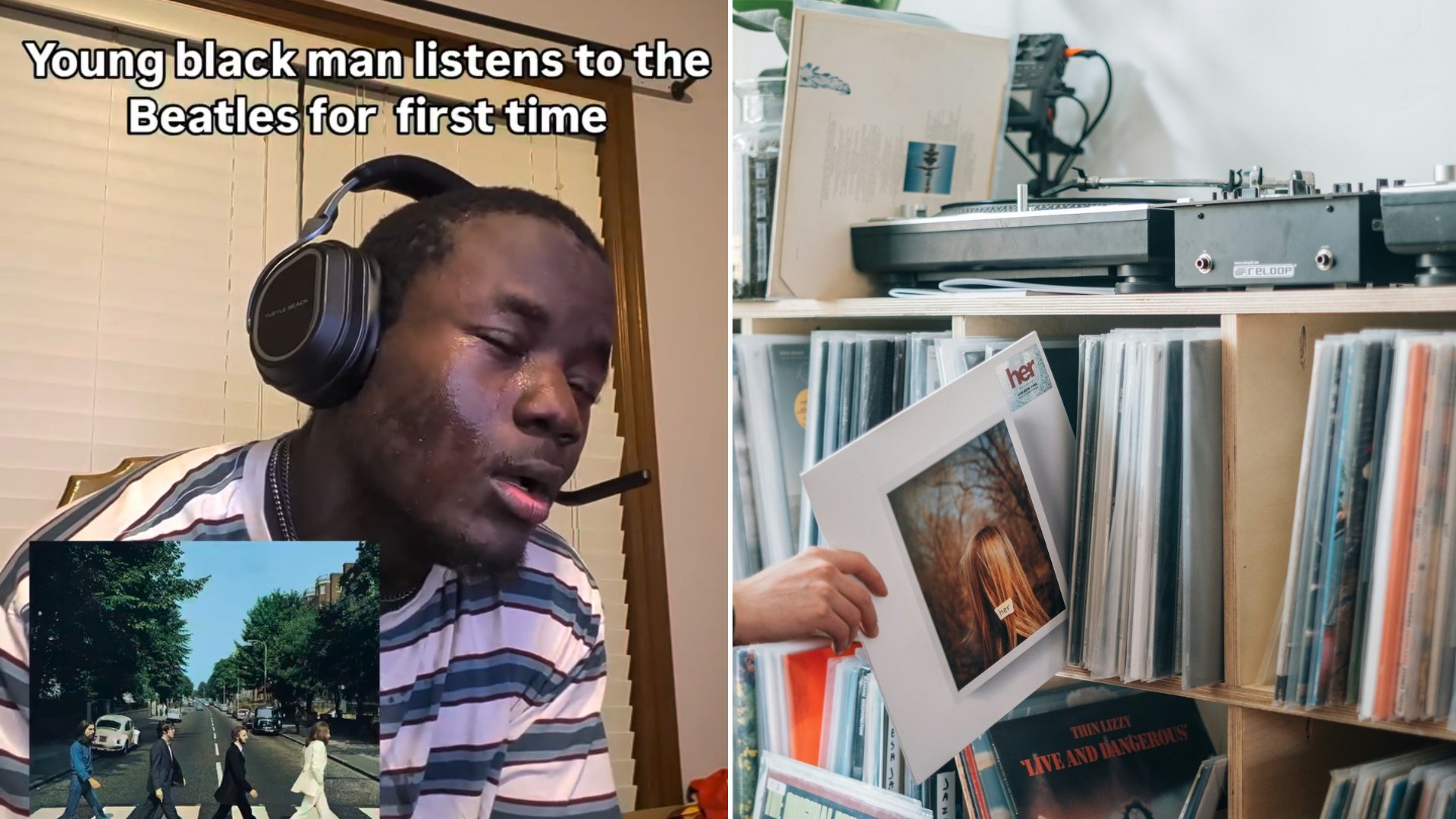
There are certain songs so deeply woven into shared cultural memory that it’s genuinely hard to imagine anyone reaching adulthood without hearing them, and that’s exactly what made a recent video from creator @jabaphetlifts so striking to watch. Sitting completely still with headphones on, he let the camera simply capture his face as he experienced the Beatles’ “Hey Jude” for the very first time in his life. No narration, no commentary during the listen itself, just a young man’s unfiltered reaction to a song most people assume everyone has already heard by a certain age.
The caption that followed made the moment even more powerful, with him explaining that the song healed something in him, before turning the experience outward and asking his followers to suggest what classic song he should experience next. That single question transformed a personal moment into an ongoing series, inviting an entire audience to participate in shaping his next musical discovery rather than simply watching a one-off reaction video.
View this post on Instagram
“Hey Jude” occupies a nearly unmatched place in popular music history. Released in 1968, it became one of the Beatles’ biggest commercial successes and has remained a fixture of classic rock radio, wedding playlists, and generational music education ever since. For most people who grew up with parents or older relatives who listened to classic rock, hearing this particular song feels less like a discovery and more like an inevitability, something absorbed almost by osmosis over years of car rides, family gatherings, and background radio. Watching someone experience it fresh, with zero prior exposure, flips that assumption entirely, and that novelty alone is a big part of why the video caught so much attention.
There’s a specific kind of vulnerability required to film a reaction like this one and post it publicly. Music affects people in deeply personal, sometimes unpredictable ways, and there’s no guarantee that a first listen to any particular song will produce a visible or dramatic reaction on camera. Choosing to record and share that moment regardless, without knowing ahead of time how it would land, takes a level of openness that a lot of people wouldn’t be comfortable with. The payoff here, judging by the caption describing the song as something that healed a part of him, suggests the risk was worth taking, and it’s exactly that kind of honest emotional payoff that tends to resonate widely with an online audience that has grown somewhat skeptical of manufactured reaction content.
This kind of video also taps into a broader, ongoing trend of people documenting their first exposure to older, culturally significant art, whether that’s music, movies, or books. There’s something genuinely compelling about watching someone encounter a piece of shared cultural history for the first time as an adult, partly because it lets longtime fans relive their own first experience with the material vicariously, and partly because it raises an interesting question about what gets passed down between generations and what quietly slips through the cracks. Not everyone grows up in a household where classic rock plays regularly, and gaps like this one are more common, and less embarrassing, than people often assume.
For anyone thinking about their own relationship with so-called essential classics in music, film, or literature, there’s a useful and low-pressure lesson buried in a video like this one. It’s never too late to experience something considered foundational for the first time, and doing so as an adult, with a fuller emotional and life experience to draw on, can sometimes produce a richer reaction than experiencing the same material as a child would have. There’s no expiration date on discovering a great song, and there’s no shame in having missed something that felt like it should have been unavoidable growing up.
There’s also something worth appreciating about the community element this kind of content builds. By inviting his followers to suggest what he should listen to next, the creator turned a personal moment of musical discovery into an ongoing, collaborative project. It gives his audience a genuine stake in what happens next, transforming passive viewers into active participants who get to see their own suggestions potentially shape someone else’s emotional experience. That kind of interactive structure, more than any single reaction video on its own, is often what keeps audiences coming back, curious to see which song gets chosen next and how it lands.
There’s also something worth noting about why a song specifically, rather than a movie or a book, tends to produce such an immediate and visible reaction on camera. Music works almost instantly on the body and the emotions in a way that longer-form media simply can’t match within the span of a few minutes. A first-time reader of a classic novel needs hours to form an opinion. A first-time listener of a song like this one can be visibly moved within the first verse, which makes music an especially compelling format for exactly this kind of “experiencing something for the first time” content, since the emotional payoff arrives quickly enough to hold an audience’s attention from start to finish.
For anyone thinking about which songs, movies, or books they might want to introduce to someone else for the first time, there’s a small case here for choosing something with genuine emotional depth over something simply popular. The reaction that resonates isn’t really about recognition or fame; it’s about whether the piece itself is strong enough to move someone who has absolutely no prior context for it at all.

Leave a Reply