

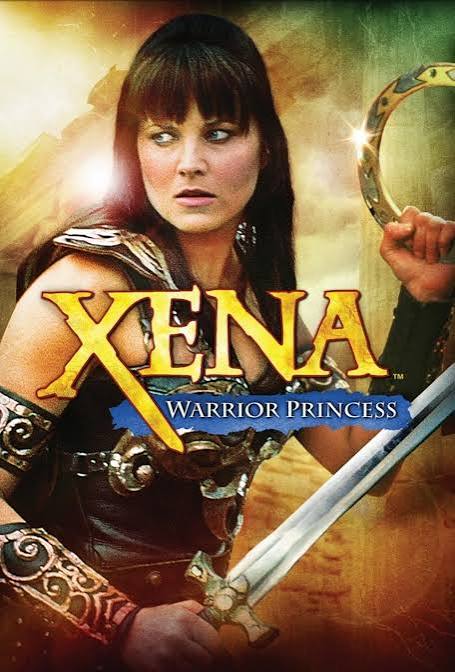
Xena: Warrior Princess premiered in first-run syndication on September 4, 1995, which puts it at exactly 31 years old today. The show would go on to run six seasons and 134 episodes, but the character almost didn’t survive long enough to get a title card of her own, because the original plan for Xena was to kill her off after three guest appearances, according to production history documented on Wikipedia and corroborated by Cord Cutters News‘s retrospective on the series.
A Villain Who Was Supposed to Die
Xena started life as a guest antagonist on Hercules: The Legendary Journeys, introduced as a warlord with no redemption arc planned and a death scheduled for her third and final episode. Audiences didn’t cooperate with that plan. The character’s popularity was strong enough, fast enough, that Renaissance Pictures scrapped the death and started building an entire spinoff around her instead, reworking her from villain to a warrior actively atoning for her violent past. Robert Tapert created the spinoff in 1995 through his Renaissance Pictures banner, with R.J. Stewart and Sam Raimi developing alongside him, and John Schulian credited as co-creator on the character’s earliest scripts.
The role almost went to someone else entirely. British actress Vanessa Angel was the producers’ first choice to play Xena, but illness kept her from taking the part. Four more actresses were considered and passed over before Lucy Lawless, a relative unknown at the time, was cast in the role that would define her career. Renee O’Connor’s casting as sidekick Gabrielle came together in a similarly last-minute fashion, after the original choice for the part, Sunny Doench, declined to relocate to New Zealand, where the series filmed and was distributed by Universal Television. It’s worth sitting with how close the whole project came to simply not existing in the form audiences got: a different lead actress, a dead villain, and Xena is a forgotten guest arc on someone else’s show rather than a franchise unto itself.
The Spinoff That Outgrew the Original
Once it launched, Xena didn’t just survive as a lesser sibling to Hercules. By its second season it had become the top-rated syndicated drama series on American television, pulling in around 7.8 million viewers and landing at number seven overall among all shows, syndicated or network, according to figures cited in the show’s Wikipedia production record. The series held top-five syndicated status for most of its run and, by the numbers, eventually overtook the show that spawned it. That’s a rare trajectory for a spinoff built around a character who was supposed to be dead by episode three.
Building a Fandom Before Fandom Had a Playbook
Xena became one of the first television shows to genuinely tap into an internet fanbase, at a moment when most of the internet still ran on dial-up. Fans built message boards, organized conventions, and wrote an enormous body of fan fiction exploring the relationship between Xena and Gabrielle, which the community read as romantic well before mainstream television regularly depicted queer leads. The fandom’s writing around that relationship was significant enough to help popularize the term “altfic” for same-sex fan fiction, a piece of internet-culture vocabulary that outlasted the show itself.
The show also picked up real institutional recognition along the way. Composer Joseph LoDuca earned seven Emmy nominations for the score and won Outstanding Music Composition in 2000 for the Season 5 episode “Fallen Angel.” Lucy Lawless picked up Saturn Award nominations for Best Genre TV Actress, and the series later landed on TV Guide’s list of the top cult shows of all time. Academic writing followed too, with the show’s gender politics and its “girl power” framing becoming subjects of doctoral scholarship years after it left the air.
Still Finding New Audiences
Xena’s influence is easy to trace forward. Shows built around physically formidable, morally complicated women, Buffy the Vampire Slayer chief among them, owe a visible debt to a warlord who was never meant to make it past her third guest spot. Three decades later the series keeps finding new viewers through streaming, which is a strange kind of vindication for a character whose entire existence was, at one point, a scheduling accident. The producers didn’t set out to build a cultural touchstone. They built a monster-of-the-week villain, watched the audience refuse to let her go, and then had to figure out, on the fly, what a hero built from that raw material was even supposed to look like. Thirty-one years on, most spinoffs still don’t get that lucky, or that stubborn about proving the network wrong.

Leave a Reply