

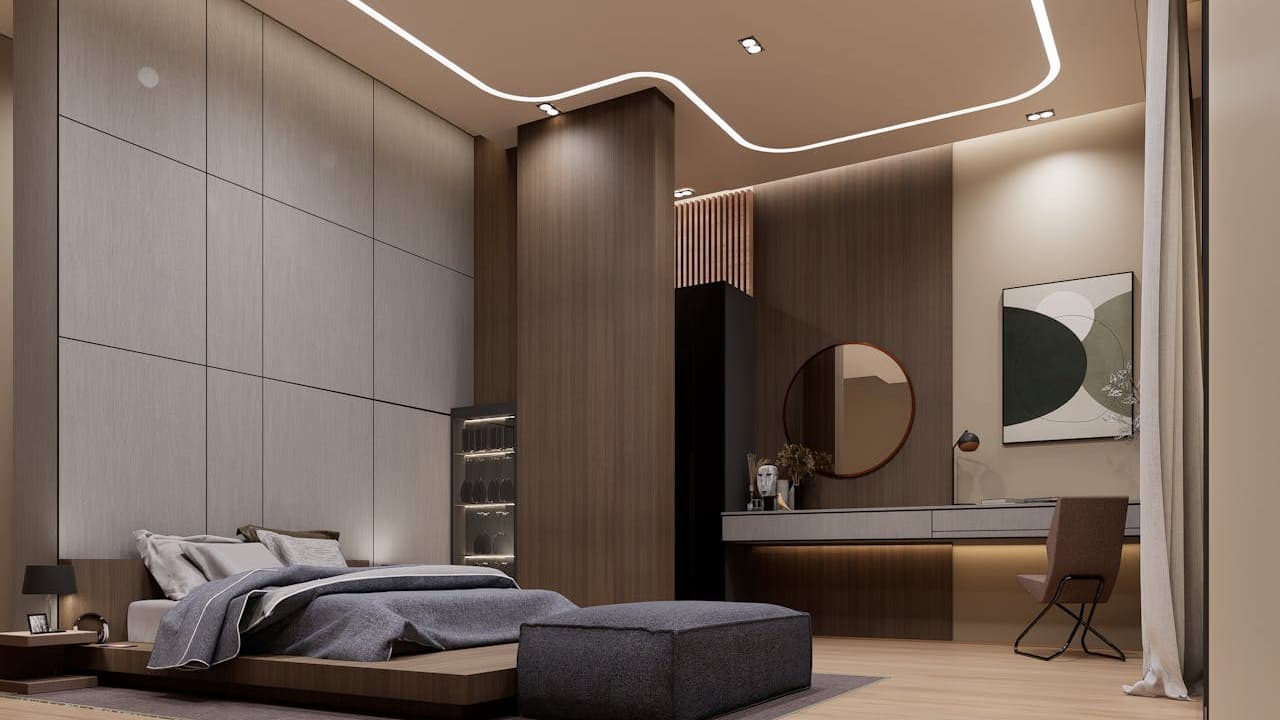
Fluted walls and cabinets have grown steadily more popular for two years running, according to the Composite Panel Association’s own 2026 trend report, and paneling has stopped hiding on a single accent wall. Interior designers say clients are now asking for it across entire rooms rather than one statement surface, according to Rumor Designs lead designer Peyton Helsen, speaking to Hunker. That’s a full reversal from the dark plywood veneer that lined rec rooms and dens from the 1950s into the 1970s before design trends moved on. What’s going up in 2026 leans on European oak, walnut, and Douglas fir with precise, architectural milling rather than the heavy woodgrain sheets from the original run, according to wood specialist Havwoods. The material that used to signal a bargain-basement remodel is now turning up in entryways, ceilings, and full living rooms.
From Accent Wall to Whole Room
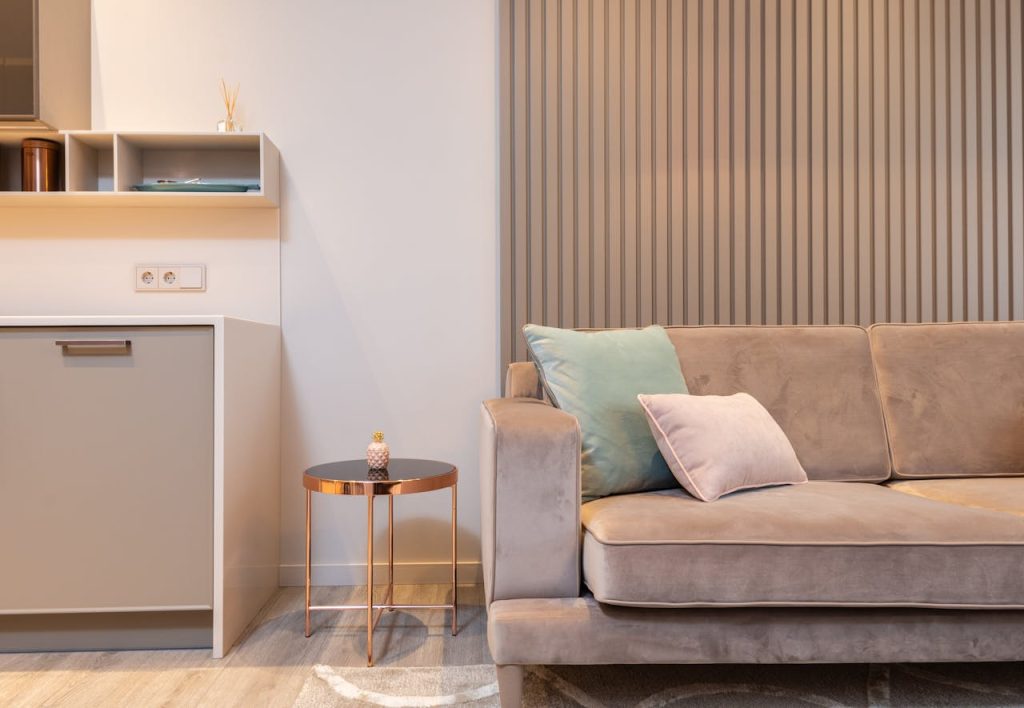
Helsen, who leads design at Rumor Designs, told Hunker that “with the resurgence and desire for more traditional elements within a home, we have seen and implemented requests for more intricate and detailed wood paneling.” Rather than the single geometric panel wall that defined the 1970s look, Helsen said her team has “started steering away from these accent wall applications and towards whole-room paneling applications with a more classic or traditional style.” Wider slats and lighter grain finishes are the most requested combination right now, a shift toward cohesive rooms instead of one loud focal wall.
Why 2026’s Panels Don’t Look Like 1975’s
The material itself has changed as much as the way it’s used. Havwoods describes the new wave as “lighter, more architectural, and far more refined” than the heavy, dark panels of the 1970s, built with precise milling and natural finishes instead of the printed woodgrain laminate that covered so many basements, according to the company’s own trend analysis. European oak is doing most of the heavy lifting because it takes finishes ranging from pale to smoky tones, while walnut, ash, and Douglas fir get pulled in for warmer, more distinct character. The Composite Panel Association’s report points to a related shift in the fluting trend, tracing the style’s roots back to ancient Greek and Roman columns and its more recent revival through Art Deco design.
It’s Not Just Walls Anymore
Havwoods lists entryways, bedrooms, and home offices among the residential spots where paneling is landing this year, alongside restaurants, hotels, and retail buildouts on the commercial side — a spread that goes well past the single den or basement rec room the material used to define. The Composite Panel Association’s report describes a parallel move toward curves and arches after years of sharp, minimal angles, showing up in mirrored arches, rounded alcoves, and kitchen islands built from the same engineered wood substrates as the paneling itself. The association frames the overall moment as “curated maximalism,” a preference for rooms with personality over any single dominant aesthetic, and paneling fits that description better than almost any other material trending right now: warm, textured, and about as far from a blank white wall as a surface can get.
A Practical Excuse, Not Just a Look
Paneling’s comeback isn’t purely aesthetic. Havwoods frames it as a fix for a problem open-concept floor plans created in the first place: hard surfaces and fewer walls that leave rooms echoing. Helsen made a similar case to Hunker, noting paneling can carve out functional “micro-zones” inside open layouts while doing double duty on sound. It’s a rare case of a retro material getting a modern job description instead of just a modern finish.
The Color and Sustainability Shift
Wood tones aren’t standing alone, either. The Composite Panel Association’s report ties the paneling surge to a broader move toward rich, earthy colors — terracotta, deep emerald, dark browns — and a technique called color drenching, where a single color family covers a room’s walls, trim, and ceiling, replacing what the association’s report calls the safe neutrals that dominated the past decade. Sustainability shows up in the mix too: the same report highlights Eco-Certified Composites, made with recycled and carbon-negative materials, as a trending category among manufacturers. Havwoods’ own product lines lean on engineered substrates with a selected wood veneer face rather than solid board, a construction method the company frames as both a design choice and a practical one for covering large walls and ceilings.
Every material that gets exiled to “dated” eventually gets a second look once enough time passes for people to see the craft instead of the decade. Wood paneling spent about forty years waiting out that pendulum swing, and 2026 is turning out to be the year the swing landed — not as a nostalgia costume, but as an actual design category with its own species list, its own acoustic pitch, and its own sustainability angle.

Leave a Reply