

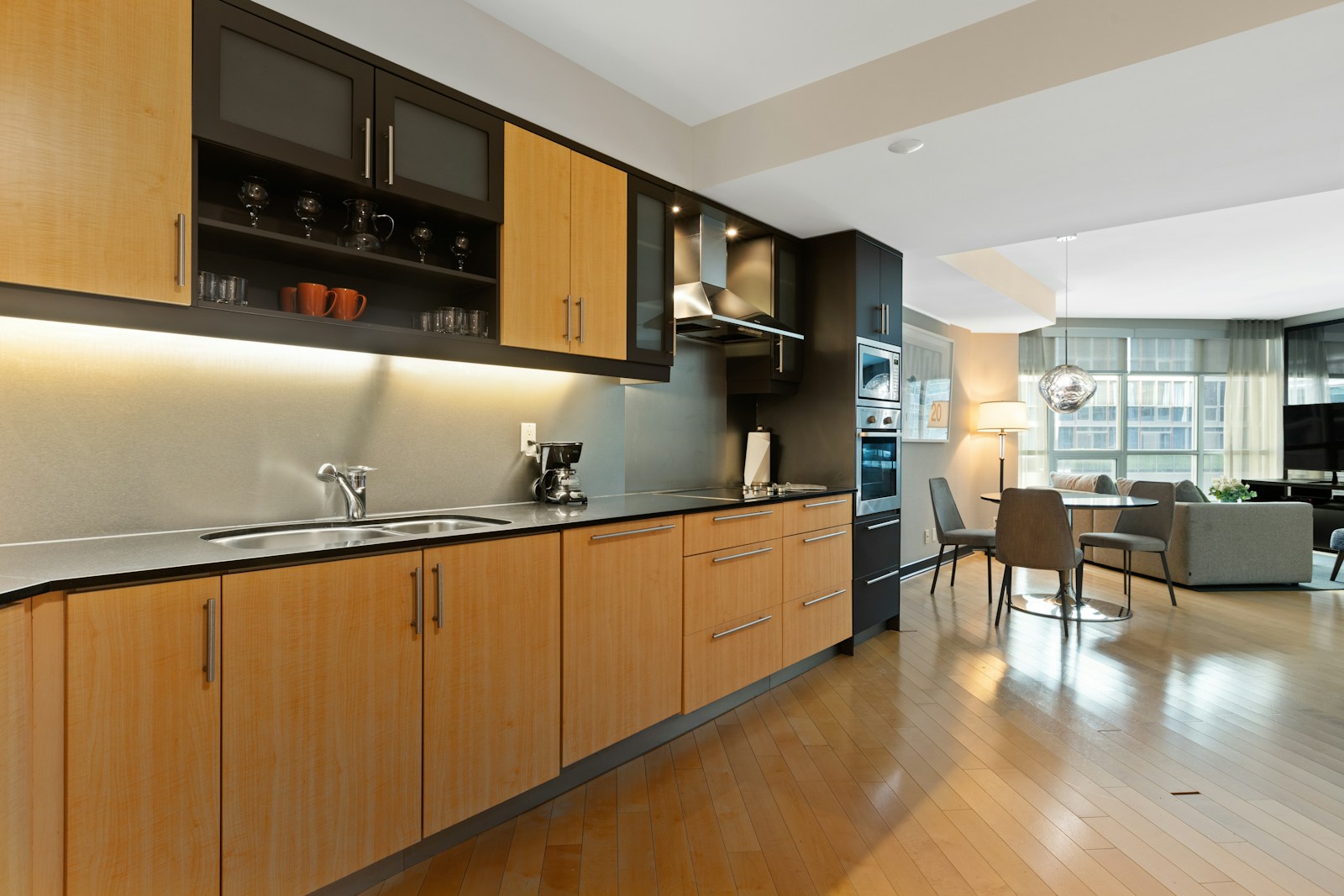
Twenty-nine percent to twenty-eight. That is the entire margin by which wood-toned cabinets edged out white ones in Houzz’s 2026 Kitchen Trends Study, which surveyed 1,780 U.S. homeowners who had just finished a kitchen renovation. It sounds like a rounding error. It isn’t. White has anchored the top of Houzz’s cabinet rankings through basically the entire farmhouse-sink, shiplap-everything decade, and wood’s six-point jump from the prior year’s survey is the kind of swing that reshuffles what a “normal” new kitchen looks like. The National Association of Realtors’ own 2026 kitchen trends report confirms it plainly: wood cabinets have overtaken white as the top choice among renovating homeowners, with medium-toned finishes leading the way.

The Narrow Win That Ends a Long Streak
A one-point lead is not a landslide, and Houzz is careful to frame it that way. But the direction matters more than the margin. Medium-toned wood alone accounts for 15% of the wood share, with lighter finishes at 11% and darker tones trailing at 3%, according to the same study. NAR’s report adds that Shaker-style doors remain the dominant silhouette, with flat-panel a distant second, and that hardware has shifted too: bar pulls in brushed nickel now outrank knobs, followed by black and brushed gold finishes. None of that reads like a fad chasing a single viral kitchen. It reads like a slow-motion correction after years of the same white box.
A Callback Nobody Is Calling Retro
Here is the part the surveys don’t spell out but the photos make obvious: warm, visible wood grain on kitchen cabinetry was the default look for a much longer stretch of the 20th century than all-white ever was. Oak and pine cabinetry defined suburban kitchens from the 1960s through the early 1990s, before the granite-and-white-shaker wave of the 2000s swept it out wholesale. What Houzz and NAR are documenting as a 2026 “trend” is, structurally, a return to the wood-toned kitchen that a huge share of American homeowners grew up cooking in. Nobody renovating a kitchen this year is asking for a 1978 look on purpose. They are asking for warmth, texture and a countertop that doesn’t photograph like a hospital corridor — and the aesthetic that answers that request happens to be the one their parents already had.
What’s Riding Along With the Wood
The cabinet swing isn’t happening in isolation. NAR’s report notes that more than 75% of renovating homeowners are now adding specialty storage — 47% adding pantry cabinets, 16% going for full walk-in pantries — and that islands are getting bigger and busier, with roughly half now stretching past seven feet and integrating a dishwasher or microwave directly into the millwork. Houzz’s own numbers echo the storage obsession: 64% of homeowners are adding pull-out trash and recycling bins, and 41% are building in dedicated spice storage. Wood is doing double duty in these kitchens — it’s the finish and the camouflage, warming up all that extra cabinetry so a wall of storage doesn’t read as a wall of storage.

Two-Tone as the Transition Move
Notably, few homeowners are ripping out white entirely. NAR’s data points to a rise in two-tone cabinetry — wood on the island, a lighter finish on the perimeter, or vice versa — which functions as a hedge for anyone not ready to commit to an all-wood kitchen but done pretending white will stay dominant forever. Countertops are following the same logic: wood is becoming the most popular contrast material against a lighter cabinet base, according to the same report, rather than the reverse. It’s a way of buying into the shift without fully abandoning the decade of renovations that came before it. Backsplashes have barely moved by comparison — tile still covers 72% of new kitchens per Houzz’s data, mostly in white or off-white rectangular subway shapes — which suggests homeowners are treating the cabinet swap as the statement change and leaving everything else alone rather than gutting a kitchen twice in five years.
Professionals are steering a lot of this. Houzz’s study found 87% of the homeowners it surveyed hired a pro for the renovation, meaning designers and contractors, not just Pinterest boards, are the ones actively pitching wood over white on client calls. That matters for how fast a trend like this can move: a consumer fad spreads through algorithms, but a trend that professionals are recommending gets built into showroom samples, cabinet-maker catalogs and contractor pitch decks, which tends to make it stickier.
The Pattern Underneath the Percentage
Kitchen trends rarely move in straight lines, and a one-point lead can flip back within a survey cycle or two. What won’t reverse as easily is the underlying reason this happened at all: an entire generation of buyers spent a decade renovating toward a look that photographed well and now wants a kitchen that feels lived-in instead. Wood didn’t win because it’s new. It won because it’s the thing white was trying to erase in the first place.

Leave a Reply