

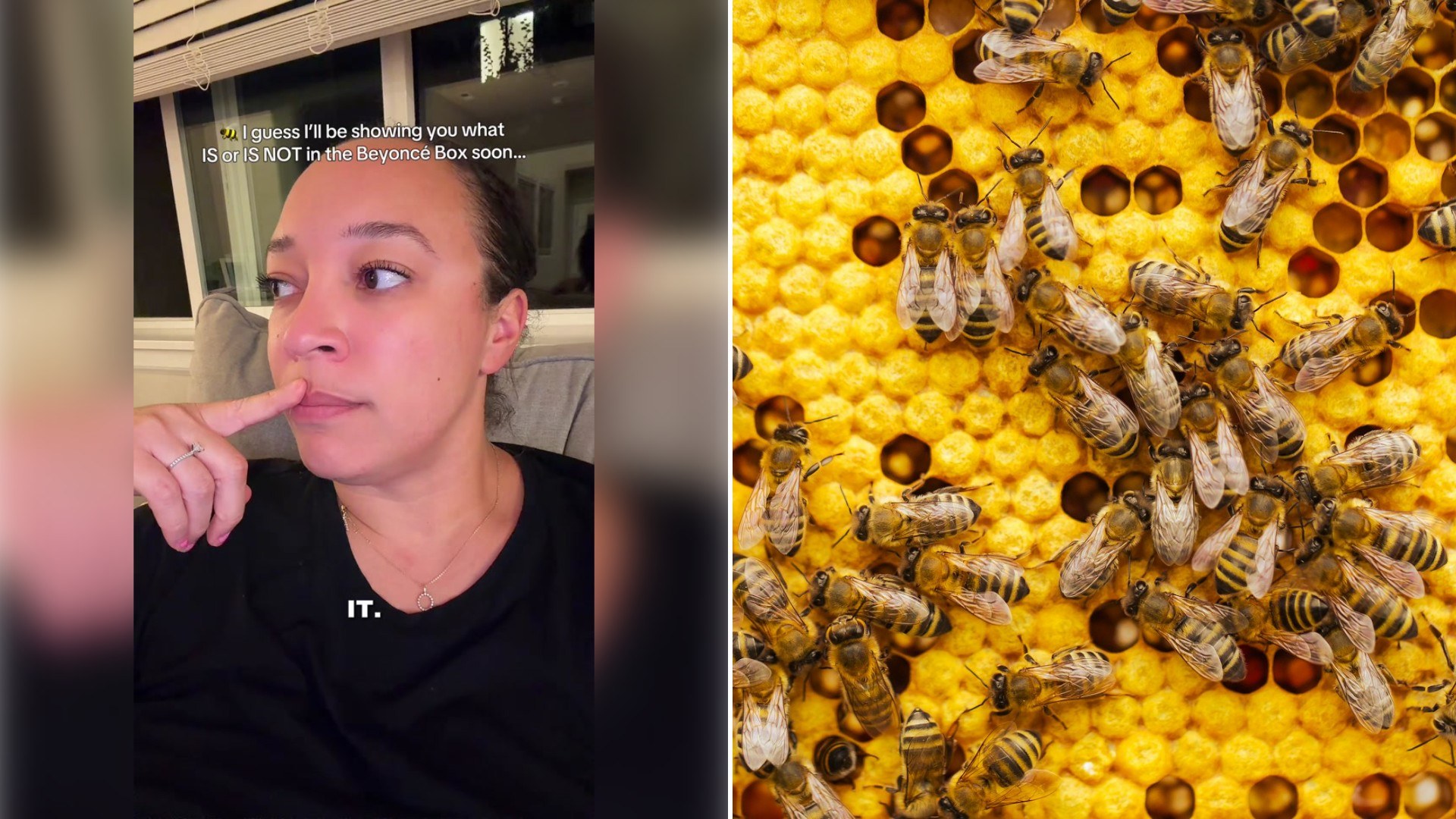
Some surprises land less because of the gift itself and more because of who is willing to spend on it, and that is exactly the reaction captured by @mmllewe in a single-shot talking-head video. She tells her audience that her husband surprised her with the Beykeeper Box, a large and famously expensive limited-edition piece of Beyonce fan merchandise, and her response is somewhere between disbelief and delight, laughing that he is absolutely insane for buying it.
Rather than diving into the contents right away, the video ends on a cliffhanger, with the creator promising a follow-up once she gets home to actually open the box and reveal everything inside. That structure turns a single gift reveal into a two-part story, building anticipation not just for what is inside but for her genuine reaction once she sees it.
Limited-edition fan merchandise boxes built around major music artists have become a genuine collecting category in their own right, particularly around artists like Beyonce whose fan base treats official releases with the same seriousness other communities reserve for trading cards or sneakers. The Beykeeper Box specifically carries a reputation among fans for its scale and price point, making it exactly the kind of purchase that prompts a reaction like this one.
That husband-buys-the-big-splurge dynamic is also a familiar trope across fandom and collecting content generally, tapping into a shared fantasy many fans have: someone close to them recognizing a fandom or a collecting passion seriously enough to actually spend real money supporting it, rather than dismissing it as a passing interest.
There is something worth examining in why fan merchandise boxes at this scale have become viable products in the first place. A decade or two ago, official artist merchandise tended to mean a tour t-shirt or a poster, modestly priced items sold as a simple memento of a concert experience. A box positioned as a major collectible release, with the kind of price point that makes a spouse react the way this one does, reflects a much more ambitious merchandising strategy, one that treats devoted fans less as casual buyers and more as a dedicated collector base willing to invest seriously in officially licensed pieces.
The cliffhanger structure of the video also deserves attention as a savvy content choice independent of the gift itself. By withholding the actual unboxing, the creator effectively guarantees a second wave of engagement once the follow-up posts, turning what could have been a single, self-contained reveal into a two-part story that keeps an audience checking back. That kind of deliberate pacing has become increasingly common across unboxing and gift-reveal content generally, since a single video rarely generates as much sustained attention as a promised follow-up does.
It is also worth sitting with the specific emotional register of the reaction itself, somewhere between genuine gratitude and amused disbelief at the price tag. That combination is common in reveal videos involving expensive surprise gifts, since the recipient is often navigating two things simultaneously: real appreciation for the thoughtfulness behind the gesture, and an honest, almost involuntary reaction to just how much money was clearly involved. Videos that let both of those reactions coexist, rather than performing pure gratitude alone, tend to feel more authentic to viewers who can sense when a reaction has been sanitized for the camera.
It is worth noting, too, how naturally this kind of gift reveal fits into the broader wave of surprise and reaction content that has become a dominant format across social media generally, well beyond fandom specifically. Audiences have developed a real appetite for watching someone’s unfiltered, in-the-moment reaction to good news or an unexpected gesture, and a reveal like this one taps directly into that appetite while adding the extra layer of fan-specific stakes that a generic surprise video would not carry on its own.
Fan merchandise culture around major pop artists has also increasingly borrowed directly from trading card and collectible packaging conventions, limited runs, numbered editions, elaborate unboxing experiences, treating a box of merchandise less like ordinary retail product and more like a genuine collector’s item worth building anticipation around. That borrowing is precisely why a fan merchandise box can now generate the same kind of two-part reveal structure that has long been standard in card-breaking and toy-collecting content.
For fellow fans following along, the appeal here is less about the box’s specific contents and more about the anticipation itself, the shared experience of waiting to see whether a big, expensive gift lives up to the hype once it’s finally unboxed.
There is also a broader cultural point worth making about how fandom itself has shifted from something to be quietly enjoyed into something increasingly performed and shared, often with a partner as an active participant rather than a bystander. A gift like this one only works as a viral moment because the recipient’s fandom was already public and well established long before the surprise, meaning the gesture lands as validation of an identity already on display rather than a private, unexpected discovery.
The economics of a purchase like this also deserve a moment of consideration, since a gift at this price point represents a meaningful financial decision, not an impulse buy picked up at a checkout counter. That kind of deliberate, planned spending on a partner’s specific fandom says something about how seriously modern relationships can treat a spouse’s personal interests, treating a devoted fan’s collecting instincts as worth genuinely investing in rather than something to be humored from a distance.
Whatever ends up being inside, the bigger takeaway from this first half of the story is already clear: sometimes the best gift is not really about the object at all, but about someone caring enough about what you love to go all in on it.

Leave a Reply