

A black ceramic lamp that cost a woman just €20 at a flea market in northern France has sold for €251,000. The price was a world auction record for a lamp by its maker, the celebrated French ceramicist Georges Jouve.
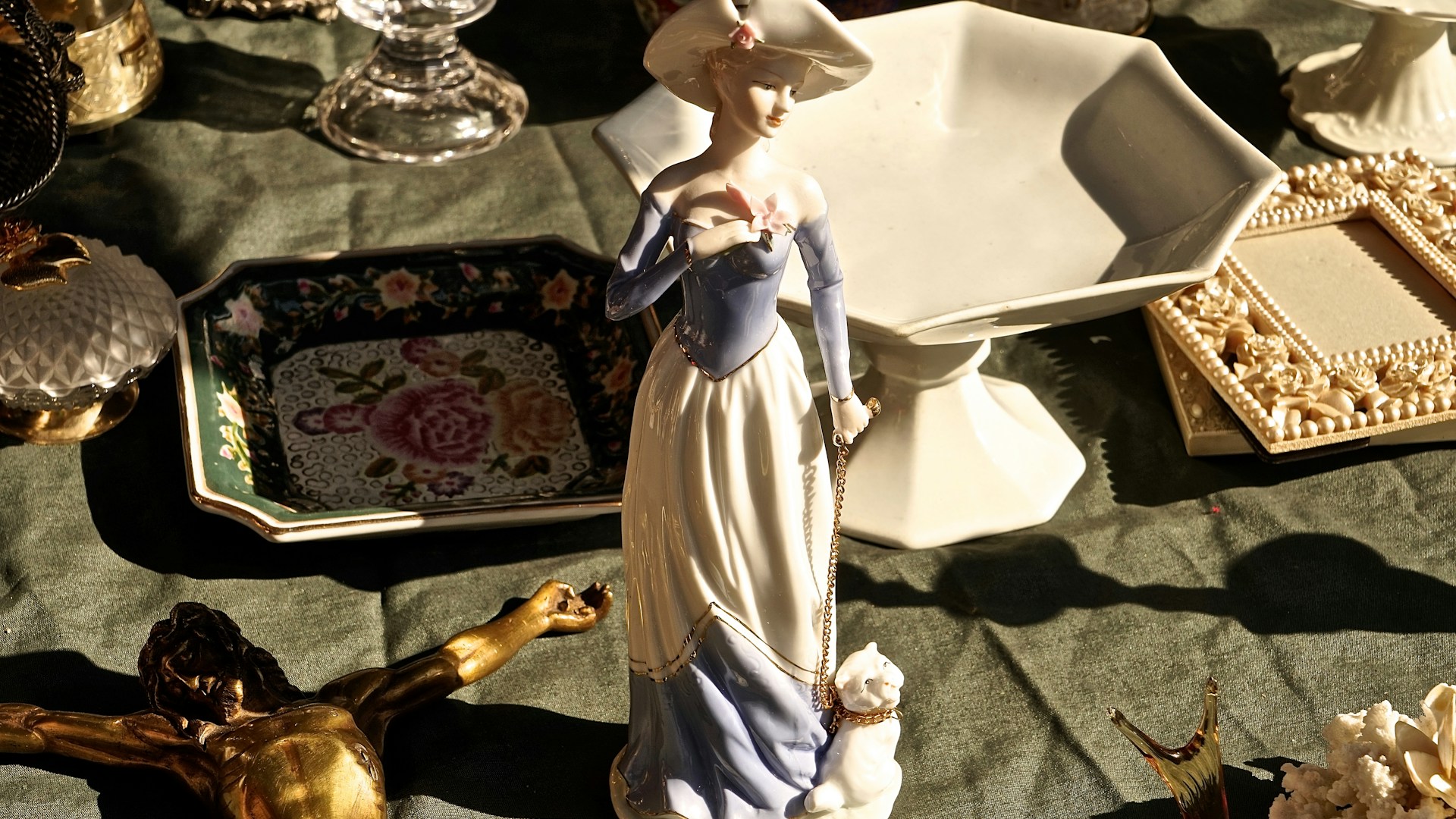
The tale was reported by The Connexion, and it is the kind of thrift store dream that keeps bargain hunters out of bed on Saturday mornings.
A €20 Brocante Buy Spent A Year In A Cupboard
The woman bought the lamp last year at a brocante, the French word for a flea market, in northern France. She paid €20 for it.
Then it went into a cupboard. Nobody thought much about it until her daughter came across it during a clear-out.
That clear-out turned out to be the most profitable bit of housekeeping in the family’s history.
Her Daughter Found A Signature Engraved Under The Base
The daughter turned the lamp over and spotted a signature engraved under the base. It read Jouve.
Georges Jouve lived from 1910 to 1964 and is considered a leading figure in post-war French ceramics. The daughter researched the name and learned that the auction house NEO Enchères knew his work and had previously sold a similar lamp.
The family contacted the auctioneers and traveled to Paris so the lamp could be examined in person.
“It’s Something Exceptional” Says The Auction House President
Quentin Charraudeau, president of NEO Enchères, confirmed that the lamp was authentic and in very good condition. He noted that condition matters greatly, because ceramic lamps can lose value if they are damaged.
The lamp went on the block at NEO Enchères in Paris on October 29, 2026. Its estimate was €80,000 to €120,000.
That estimate alone was thousands of times what the woman had paid. The result went much further.
Two European Buyers Were Left Standing After About 10 Bidders Competed
About 10 potential buyers competed for the lamp, some in the room and some by phone. It came down to two European buyers, and one of them eventually dropped out.
The final price was €251,000 including buyer’s fees. That figure is a world auction record for a lamp by Jouve, and it works out to about 12,000 times the purchase price.
Charraudeau said, “We always hope to achieve records, but we weren’t expecting such a high price.” He also called the piece “something exceptional.”
The price includes buyer’s fees, which is standard at auction. The fees are added on top of the hammer price, so the amount the winning bidder paid is higher than the number the auctioneer calls out in the room.
That is worth remembering whenever you read about an auction result, since estimates are usually quoted without fees while the final figure often includes them.
The result also shows how quickly a quiet family story can become public. A lamp that sat unnoticed in a cupboard ended the day as the talk of the Paris art market, thanks to one careful look at its base.
The Previous Example Of This Model Sold For €104,000
The sale is even more notable because this model is rare at auction. It was only the second example of the model that NEO Enchères had offered in two years.
The previous one sold for €104,000. This one more than doubled it.
NEO Enchères is now seeking other Jouve ceramics and lighting. It also offers free, confidential valuations based on photographs.
Flea markets like the one where the lamp was bought are a long tradition in France, where brocantes pop up in towns and villages across the country. Part of the fun for shoppers is the chance that something extraordinary is sitting on a folding table among the kitchenware.
How To Spot A Signed Treasure At Your Next Flea Market
Most of us will never find a lamp worth a quarter of a million euros, but the story offers a few lessons for anyone who browses flea markets, estate sales and thrift stores. The first is to look closely at the object and turn it over.
Signatures, stamps and maker’s marks are often on the base or underside. Ceramics, glass, silver and furniture frequently carry marks that identify the maker, and a quick search can tell you a great deal.
The second lesson is to research before you sell. The daughter in this story did exactly that, and her curiosity led to an expert opinion rather than a quick sale at the next garage sale.
Condition matters, too. Charraudeau’s remark about damage is a reminder that chips, cracks and repairs can sharply reduce the value of a ceramic piece, so handle fragile items gently and store them where they will not be knocked.
If you think you have something special, photographs are a good first step. Many auction houses, including the one in this story, will give a free valuation based on photos, and clear pictures of the whole piece, the base and any marks help an expert form a view.
For the family in this story, a €20 purchase and a daughter with sharp eyes turned a cupboard item into a Paris auction record. The next time you are cleaning out a cupboard, take a second look before you toss something aside.
More Stories You May Like
- Fan Spent Decades Chasing Rare Beatles Pressings, Now Nearly 1,300 Records Including One Of An Estimated 250 Radio Promo Copies Of Please Please Me Hit The Market
- Popeyes Brings Back Cajun Onion Rings For $3.99 After Dropping Them In 2020, But One Customer Says They Came Out Hard And Burnt And Overly Salted
- Eerie Indiana Had Talking Dogs Delivering Mail And Twins Kept In Giant Tupperware, Then NBC Pulled The Plug After 19 Episodes And Shelved One Over Backward Masking

Leave a Reply