

Here is a surprise for anyone who loves vinyl: there is a good chance your favorite record already sounds worse than the day you bought it, and your turntable has nothing to do with it. Most records do not wear out while they are spinning. They wear out sitting on your shelf.
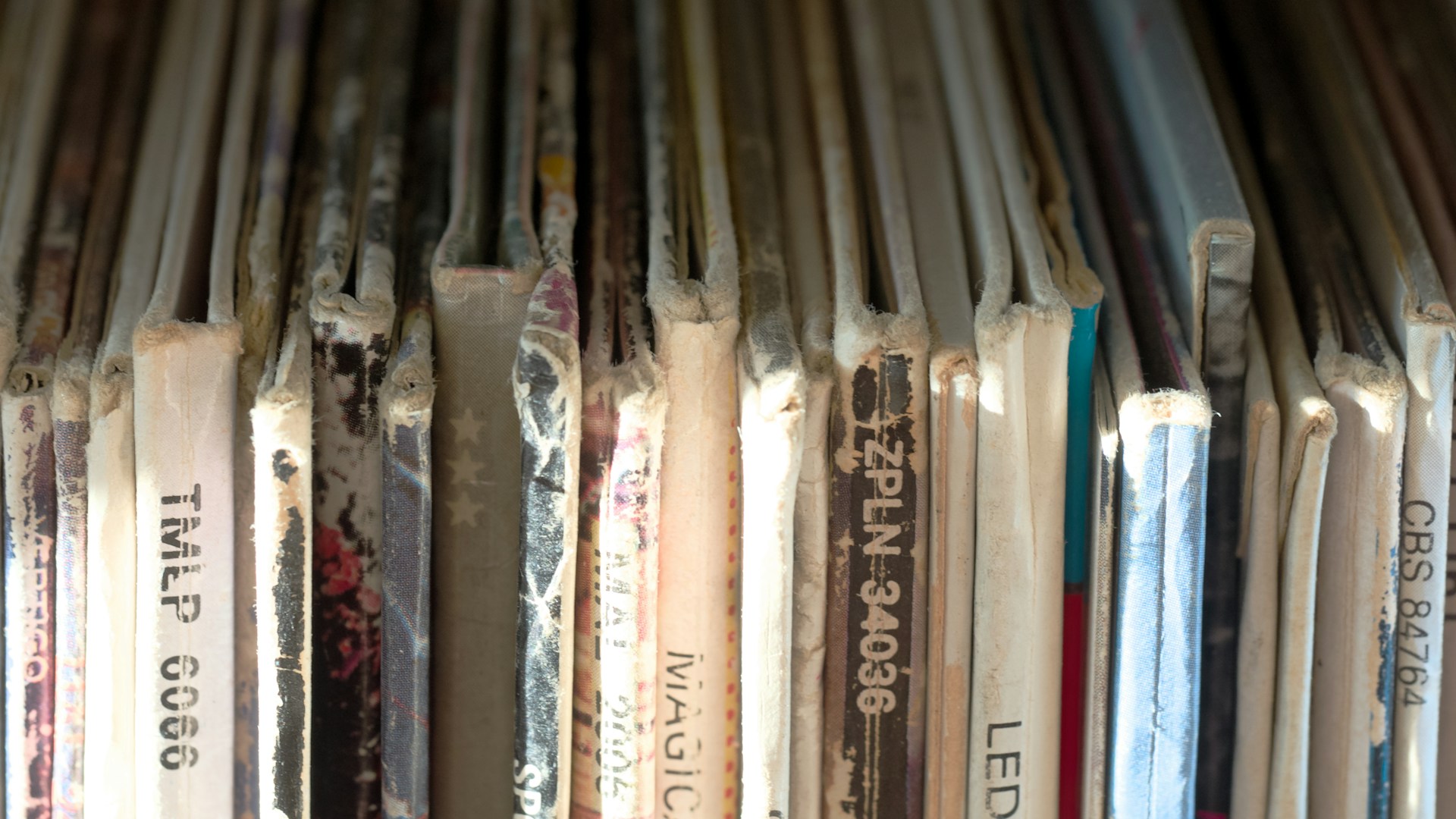
That is the message from the team at Moon Audio, an audio company in North Carolina, in a video on how collectors accidentally ruin their own records.
Records Spend Hundreds Of Hours In Storage For Every Hour They Spin
We put a lot of care into the moment a record plays. We clean it, set up the cartridge and pick good gear. But a record spends hundreds of hours in storage for every hour on the platter, and that is where small everyday habits quietly add up.
If you have ever dug through a used record bin, you have seen the results: a jacket with a faded ring worn into the cover, a record with a slight warp, one that crackles before the music even starts. Some of those records did not get that way from overuse. They were likely stored badly, and the same habits could be happening on your shelf right now.
A Stack Of 30 Records Flat On A Dresser Crushes The Bottom Ones Out Of Shape
The mistake they see most, especially in newer collections, is stacking records flat. It makes sense at first. You bring home a few albums, set them on a table or dresser, and the pile keeps growing until you have 30 or more and only the top five have been played.
The problem is weight. A stack of 20 or 30 records gets heavy fast, and the ones at the bottom carry the whole burden. Over time that pressure can push a record out of shape, and any dust on the surface gets pressed right into the grooves.
The fix is easy. Stand your records upright, the way you would store books. They stay flat, and flipping through your collection gets easier too. Records at the bottom of the pile may finally get the attention they deserve.
Attics, Garages And Sun Rooms Are The Usual Suspects
Where your records live matters just as much. Vinyl does not love heat, and a record left near a sunny window, a heating vent or a radiator can slowly start to bend. Sunlight will fade even the boldest album art.
Attics, garages and sun rooms are the worst offenders because temperatures there swing so much from season to season. Humidity is the other half. Too much moisture brings mold and mildew on jackets and sleeves, while too little creates static that pulls dust onto records like a magnet.
You do not need a climate-controlled room. The simple rule of thumb from the video is this: if the room is comfortable for you, it is comfortable for your records. Keep them out of direct sun and a few feet from anything blowing hot air. A small humidity monitor costs just a few dollars, and a dehumidifier helps if readings run high.
A Packed Shelf Scuffs Spines, And A Half Empty One Lets Records Lean
Shelves can cause trouble in two ways. Squeeze in one more record, then another, and you get jackets rubbing against neighbors, scuffed spines, worn edges and that faint circle of ring wear on the cover.
The opposite is just as bad. A half empty shelf lets records lean at an angle, and the ones at the end take all the pressure. The sweet spot is snug but not tight, so you can flip with one hand and slide a record out without resistance. Dividers help keep things organized.
Then there is the shelf itself. Records are heavier than most people expect, and a fully loaded unit can easily weigh at least 100 pounds. Check the weight rating before you load it, make sure records rest on solid panels and not small pegs, and anchor tall units to the wall, a job that takes roughly 15 minutes.
Leaving The Shrink Wrap On Can Bend The Jacket
This one surprises people. Shrink wrap feels like the safe choice for a brand new record, but it tends to keep tightening over time, especially in a room that warms up and cools down. As it pulls in, it can bend the jacket and sometimes the record inside.
If you love the sticker on the front, there is a middle ground. Slit the wrap along the open edge so it cannot squeeze anything, or remove it entirely and slide the album into a clear outer sleeve. You keep the fresh-from-the-shop look without the risk.
Putting Records Away Dirty Lets Grime Settle Into The Grooves
Another habit happens without us noticing. You finish listening and slip the record right back in its sleeve. Whatever was on it, whether dust, fingerprints or a little residue, goes along for the ride and has time to settle into the grooves.
That matters even more with used records, since you have no idea how the last owner treated them. If you take one habit away, make it this: clean the record before it goes into storage, and give it a quick brush before every play. A good cleaning kit makes it a job of less than a minute.
Paper Sleeves Shed Fibers, And Old PVC Sleeves Leave A Haze
Finally, sleeves. Most records come in a plain paper inner sleeve, but paper can shed tiny fibers that leave fine scuffs every time you slide the record in and out, and it does nothing to reduce static. Swap it for a soft, anti-static inner sleeve.
Many collectors skip outer sleeves, and the video understands why, since it is hard to spend money on plastic when you could buy another record. But outer sleeves keep jackets free of scuffed corners, ring wear and shelf wear.
One warning applies to inherited or secondhand collections. Older, thicker PVC sleeves can break down over time and react with the record, leaving a haze that will not wipe off. If you find any, swap them for clear polypropylene sleeves, which let the artwork shine and are safe for the long haul.
The Cheap Fixes That Keep Your Collection Looking New
None of these fixes are expensive or complicated. Stand your records upright, keep them somewhere steady and dry, and give them good sleeves. How you store your records matters just as much as how you play them.
Do that, and the records you love today should still look great, and sound even better, years from now.
More Stories You May Like
- These 11 Vintage Christmas Decorations Collectors Keep Hunting For, And Some Families Still Have Them Sitting In Their Original Boxes
- Forgotten Japanese Hi-Fi Giant Mitsubishi Built A 1958 Broadcast Monitor Speaker And A Vertical Turntable That Vintage Collectors Still Overlook
- 83% Of Collectors Think Their Collection Will Be Worth Something But 30% Have Already Lost Money On One

Leave a Reply