

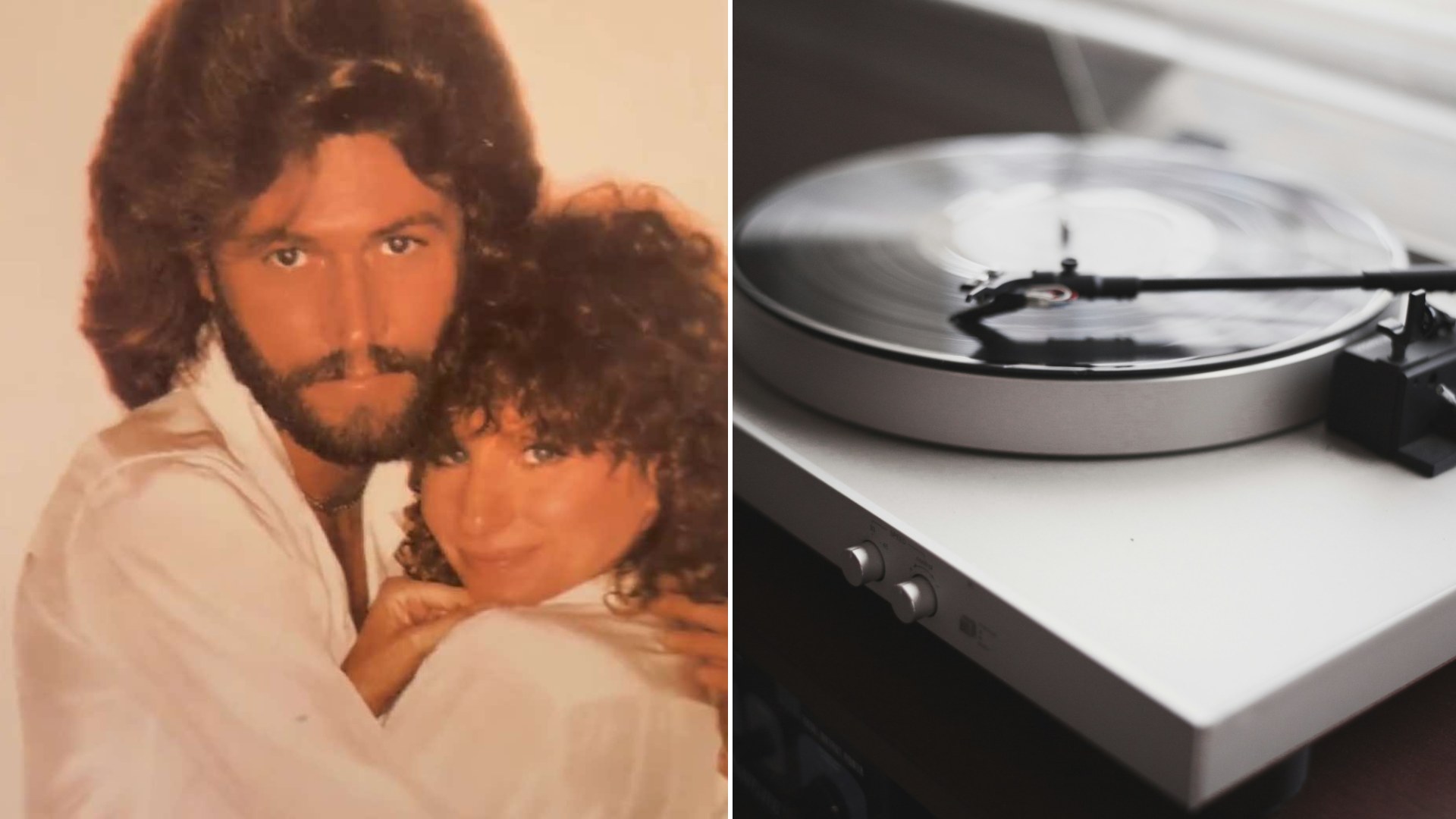
A vinyl collector dropped the needle on a 46-year-old duet between Barbra Streisand and Barry Gibb, cut the footage against archival clips of the two performing it live, and let the song carry the entire video. No dance trend, no gimmick, just “Guilty” spinning on an actual turntable, and 190,400 people stuck around to watch it happen. The caption does the explaining a music history class usually would, noting that all three Gibb brothers wrote the track, a detail that surprises plenty of listeners who assume it was a Barry Gibb solo credit rather than a full family songwriting effort.
Three Gibb Brothers, One Streisand Ballad
“Guilty” came out in 1980 as the title track of Streisand’s album of the same name, written by Barry, Robin, and Maurice Gibb specifically with her voice in mind, according to Songfacts. Streisand has described the song’s appeal in her own words as having “a breezy, almost jazz-like quality,” a tone that pulled her sound closer to the soft disco-pop the Bee Gees were dominating at the time without losing what made her a ballad singer in the first place. The album went on to become her best-selling record, reaching number one worldwide and moving 12 million copies, her first chart-topping album since 1974, at a point in her career when some critics assumed her biggest commercial years were already behind her.

A Duet Barry Gibb Almost Skipped
The collaboration nearly didn’t happen the way fans remember it now. Gibb, who produced the album, initially wanted to write for Streisand rather than sing alongside her, more comfortable behind the board than in front of the microphone with a vocalist of her stature. It took her manager pushing the idea before he agreed to the duet at all, per Songfacts. Recording it turned into its own project once he finally said yes. Engineer Albhy Galuten had to manually align Streisand’s vocal timing against Gibb’s precise phrasing using tape splices, a process that reportedly took two weeks in an era before digital editing made that kind of correction routine and nearly instant. “Guilty” eventually reached number three on the charts and won the Grammy for Best Pop Vocal Performance by a Duo or Group in 1981, proof the gamble paid off.
A Song Built for a Second Life on Vinyl
Part of what makes “Guilty” such a natural fit for a record-player video is how deliberately it was built to sound smooth on wax in the first place. Late-70s and early-80s production of this kind favored warm, layered vocals and unhurried tempos designed for a living room stereo rather than a car radio or a dance floor, which is exactly the sound that tends to translate best through an actual needle rather than a compressed streaming file. Collectors who spin records for an audience are usually chasing that specific quality, a track that rewards a slower, more attentive kind of listening than most modern production allows for.
Why It Still Holds Up on a Turntable
None of that production history requires a music degree to appreciate once you hear the finished track, which is probably why a simple vinyl spin, no commentary and no choreography, just the record and some archival clips, pulled in an audience 56 times larger than this account’s usual reach. Some songs need heavy context to land with a new audience raised on entirely different production values. This one apparently just needed a working record player, two spare minutes, and a listener willing to let a 46-year-old harmony do the rest of the work on its own. Vinyl collecting videos rarely get to lean this hard on the music alone, without a hook, a trend audio, or a punchline to carry the view count. That this one did, on a song most of its audience wasn’t alive to hear the first time around, says something about how little a genuinely well-built duet needs from anyone dressing it up decades later. A well-worn record sleeve, a needle drop, and a voice that hasn’t lost anything with age turned out to be enough on their own, no algorithm-chasing trend required to make 190,400 people stop scrolling and actually listen. That’s a modest number next to the platform’s biggest viral hits, but among vinyl collecting accounts it counts as a genuine breakout, proof that a niche hobby video can still find a wide audience when the source material carries that much weight on its own.

Leave a Reply