

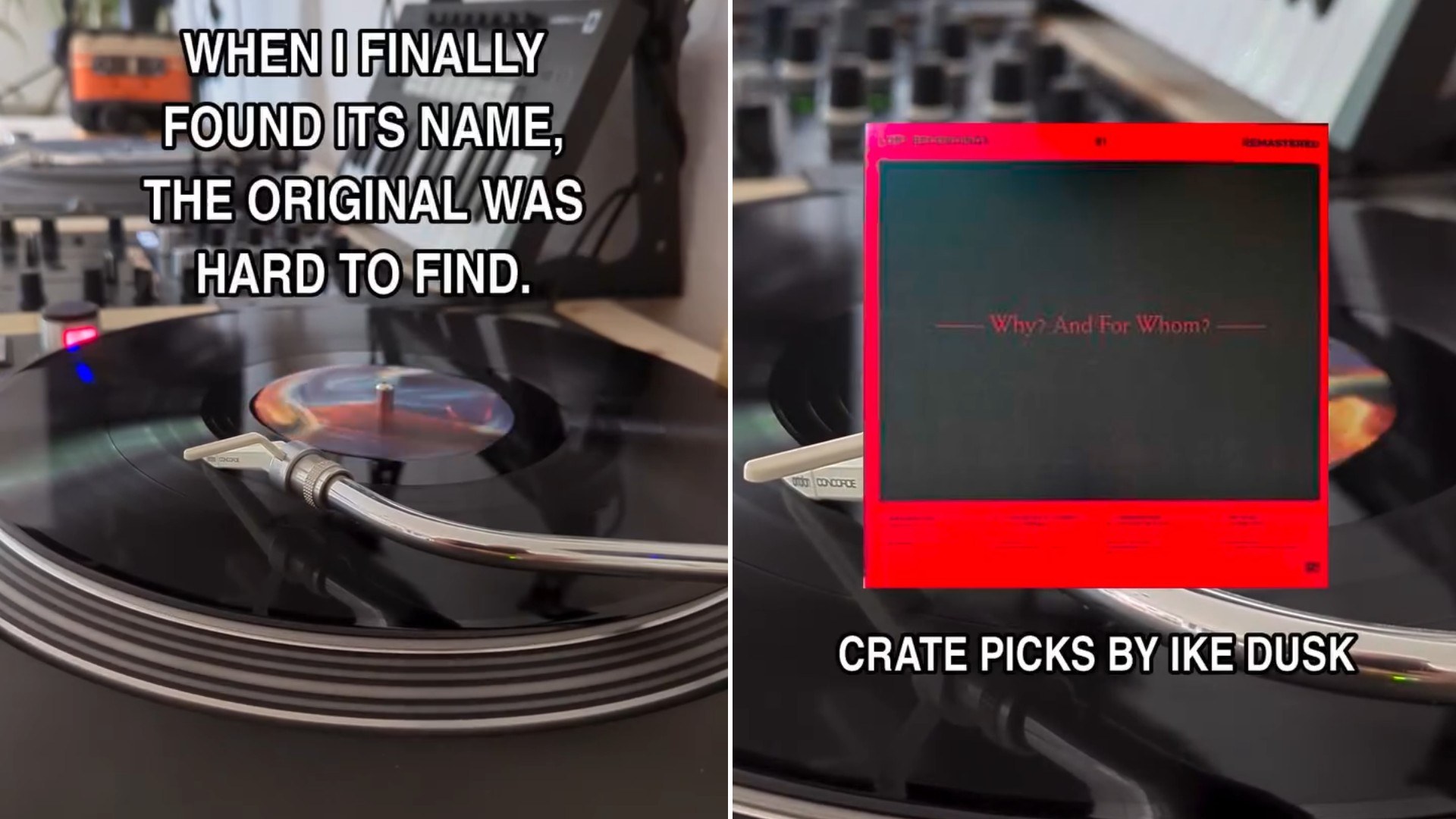
Some record hunts last a weekend. Others last years, and creator @ikedusk just closed out one of the longer ones. In a recent video, he sets a rare techno vinyl record spinning on his turntable, letting the track play while he explains, through the caption, exactly how long he’d been chasing this specific piece of music down. He’d loved the track itself for years, well before he ever learned the fuller story behind it, and only later discovered that it was tied to Steve Bicknell and Sheree Rashit’s early 1990s London party series, a piece of underground dance music history that gave the record a whole new layer of meaning once he finally understood where it came from.
What makes this story compelling isn’t simply the act of finding a rare record, though that alone carries weight in vinyl collecting circles. It’s the specific order in which the discovery unfolded. He didn’t set out hunting for a record connected to a specific historical party series. He fell in love with a piece of music first, purely on its own merits, and only afterward pieced together the deeper context behind it. That sequence, loving the art before understanding its full history, is a very particular and very relatable kind of collecting story, one that a lot of music enthusiasts recognize from their own experience chasing down songs they heard once and couldn’t shake.
View this post on Instagram
The London techno scene of the early 1990s occupies a genuinely important chapter in the broader history of electronic music, a period when warehouse parties and small, tightly-run event series helped shape an entire genre before it ever reached mainstream recognition. Figures like Steve Bicknell, known for helping build and sustain that underground scene, occupy a kind of foundational status among serious techno enthusiasts, the sort of name that means relatively little outside dedicated collecting and DJ circles but carries enormous weight within them. A record tied to that era and that specific scene isn’t just a good song pressed onto vinyl; it’s a physical artifact connected to a specific, historically significant moment in dance music culture.
Vinyl collecting in general rewards exactly this kind of patient, obsessive pursuit. Unlike streaming, where nearly any track is available instantly with a quick search, physical records, especially rare pressings tied to niche scenes or small independent labels from decades ago, often require years of searching, trading, and simply being in the right record shop at the right moment. That scarcity is precisely what gives vinyl collecting its particular emotional charge. A record that took years to track down carries a different kind of weight than one purchased instantly online, not because the music itself sounds any different, but because the object itself represents a personal history of searching that becomes inseparable from the listening experience once the hunt finally ends.
There’s also something worth appreciating about how this story models the way musical appreciation actually deepens over time for a lot of serious listeners. It rarely happens all at once. A song grabs someone first on a purely emotional or sonic level, something about the rhythm or the mood hooks them before they know anything else about it. Only later, often much later, does the fuller context arrive: who made it, why, and what scene or moment it belonged to. That additional layer doesn’t replace the original emotional connection; it deepens it, turning a favorite track into something closer to a small piece of personal and cultural history all at once.
For anyone getting into vinyl collecting or music history more generally, there’s a genuinely useful lesson embedded in a story like this one. It’s worth researching the background of the music that genuinely moves you, even after you’ve already fallen for it purely on instinct. Learning where a track came from, which scene produced it, who was behind it, and what it meant at the time can transform a favorite song from something enjoyed purely in isolation into something understood as part of a much larger cultural lineage. That kind of research doesn’t require any special expertise, just curiosity and a willingness to dig, whether that means reading liner notes, searching old interviews, or simply asking around in collector communities.
There’s a broader point here too about patience as a value that’s become genuinely rare in an era of instant access. Chasing a specific record for years, rather than settling for a digital copy the moment one became available, reflects a kind of commitment that a lot of modern consumption habits don’t leave much room for anymore. Finishing that hunt, finally setting the actual physical record down on a turntable after years of searching, delivers a satisfaction that streaming simply can’t replicate, precisely because the difficulty of getting there was part of what made the record worth having in the first place.
There’s also something worth appreciating about how stories like this one keep underground music history alive in a genuinely organic way. Scenes like the one built around Bicknell and Rashit’s parties rarely get the institutional preservation mainstream music history receives; there’s no museum wing dedicated to early nineties London warehouse techno. Instead, that history survives largely through collectors and enthusiasts who track down the records and pass the stories along, one conversation at a time.
For anyone newly curious about underground dance music history, a story like this is a good entry point, a reminder that some of the richest musical history lives in the liner notes and secondhand stories attached to specific records still circulating among people who care enough to keep hunting for them.

Leave a Reply