


eBay’s vintage ski sweater category currently holds roughly 40,500 active listings, and a genuinely old, hand-patterned one in good condition rarely clears the rack for less than $40. A navy Dale of Norway Classic with pewter buttons and a snowflake yoke recently listed at $150, the same price as a new synthetic base layer at a big-box ski shop, for a garment that could be fifty years old. Resellers describe the category as picked over within hours of a fresh thrift-store delivery, and the pattern holds whether the piece is a bold-striped 1970s pullover or a Fair Isle knit from a defunct Norwegian mill. None of it is staying on shelves.
A Village That Built an Industry Around Wool
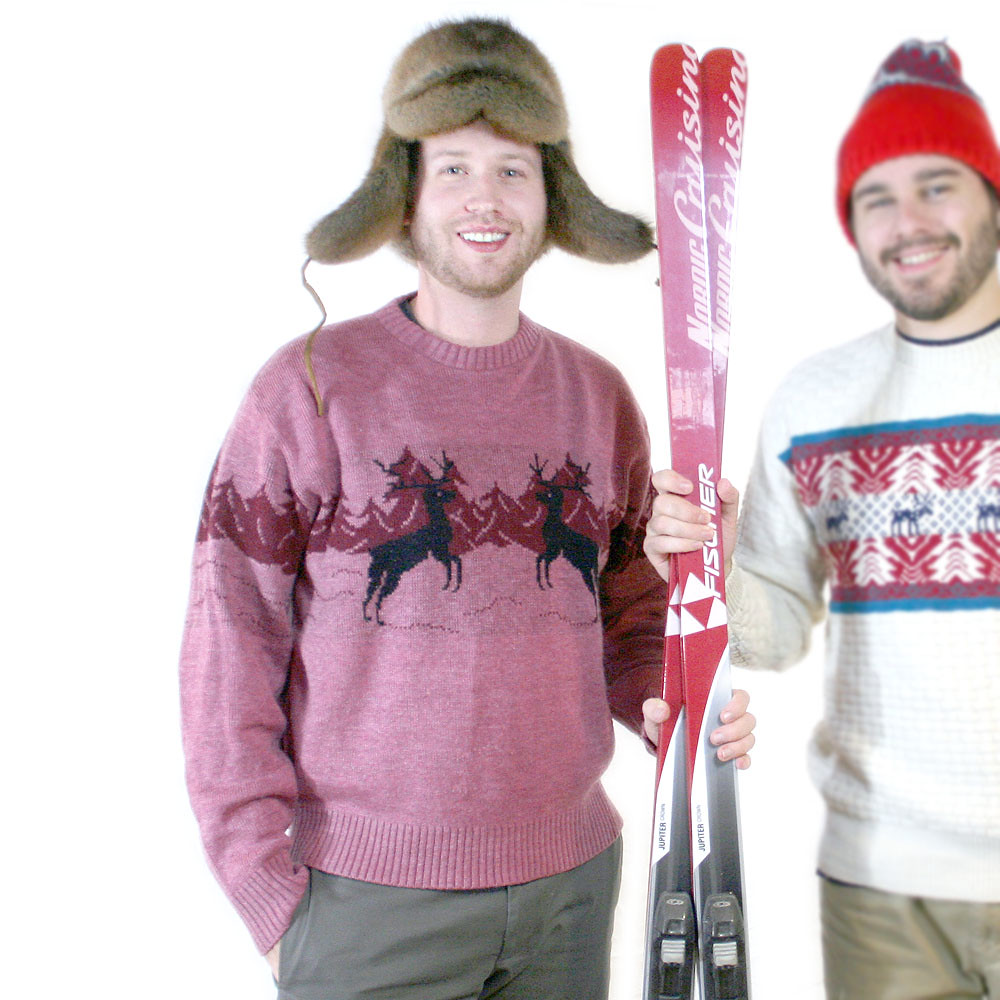
The sweater style driving most of this demand traces back to an actual place: Dale, Norway, where industrialist Peter Jebsen established a textile factory in 1872 that reached full production by 1879, according to the company’s own history as documented on Wikipedia’s overview of Dale of Norway. Hand-knitted yarn production began there in 1912, and after World War II the factory pivoted hard toward exporting finished sweaters rather than raw yarn, turning a regional mill into an international brand. The patterns that define the look today, snowflakes and reindeer worked into geometric borders of contrasting wool, came out of that same Norwegian knitting tradition and spread outward to mills and home knitters across Scandinavia, then eventually to ski towns on two other continents.
From Race Bib to Retail Rack
Dale of Norway sweaters clothed actual Olympic competitors, not just tourists browsing a gift shop. Starting in 1956, the company began designing and producing the official sweaters for Norway’s National Alpine Ski Team at the Olympics and World Championships, a relationship formalized further when the International Olympic Committee granted Dale exclusive rights to produce official Winter Olympics sweaters bearing Olympic symbols. That pedigree is part of why the vintage market treats these pieces differently than a generic thrift-store cardigan: a sweater with Olympic-adjacent design lineage reads as sportswear history, not just a cozy layer. Other mills, both Norwegian and North American, followed the same visual formula closely enough that decades-old sweaters from smaller or defunct labels now get folded into the same “Nordic” resale category, regardless of provenance.
What the Marketplaces Are Actually Seeing
Depop’s own 2026 trend research, released ahead of the fall shopping season, put a name to the broader shift: “Romanticized Sports,” a category the platform says is driving “major spikes in interest for vintage Lululemon, upcycled jerseys and ski-inspired pieces,” according to Depop’s newsroom announcement of the report. On eBay, that appetite shows up in hard numbers on individual listings: a 1970s Palmette 100% wool Norwegian Fair Isle knit sold in the $44 to $55 range, and a Meister-brand Nordic ski sweater with a clasp front closed near $60. A Demetre wool ski sweater from around 1970 matched the Dale of Norway piece at $150. Sellers report that condition matters less than pattern density and color saturation; a busier, more chaotic snowflake motif tends to outsell a plainer stripe, even at a higher price.
Spotting the Real Thing
Part of what keeps prices climbing is how hard genuine mid-century Nordic knitwear is to fake convincingly. Real vintage pieces carry telltale signs a reproduction usually skips: pewter or silver-tone clasp buttons rather than plastic, and hand-finished shoulder seams in place of an overlocked machine edge. The wool itself tends to be tighter and boiled rather than loosely spun, which is part of why it resists pilling decades later. Labels matter too, and sellers who can point to a defunct mill name or an early Dale of Norway tag tend to command the top of the range, while unmarked pieces get sold on pattern alone. That verification labor is itself part of the resale economy; buyers are effectively paying for someone else’s research into whether a sweater is actually from 1968 or merely styled to look that way.
Cold Weather, Warm Market
The timing isn’t incidental. Ski sweater demand tracks the calendar the way patio furniture does, spiking as temperatures drop and cold-weather dressing becomes a daily decision rather than a costume choice, which means every September restocking cycle hits the same wall: there is a finite, non-renewing supply of sweaters that were actually knit in the 1960s, ’70s and ’80s, and no amount of demand manufactures more of them. What’s being bought and sold functions less like an ordinary garment category and more like a fixed inventory of a specific postwar knitting boom, one that happened to intersect with the Winter Olympics, ski culture and a Norwegian mill town’s export strategy. Every sweater that sells is one fewer left to find.

Leave a Reply