

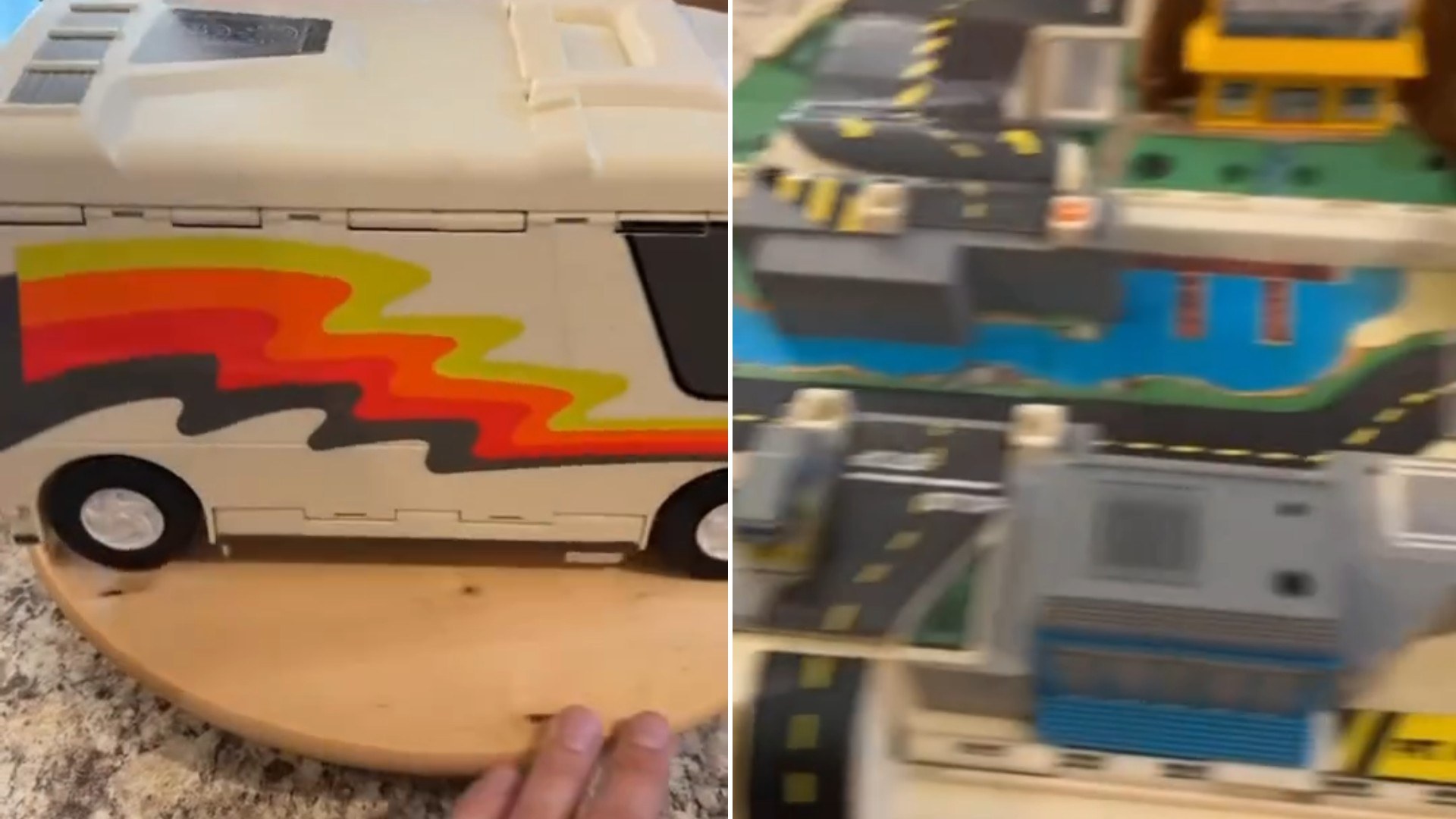
Nineties kids remember a lot of toys fondly, but few pieces reward a second look quite as thoroughly as the Micro Machines Supervan City Playset, and creator @cpj_collectibles proved exactly that in a recent video. Rotating the toy slowly on a wooden platform, he walks through every hidden compartment the van has to offer, calling out his personal favorite features from childhood along the way and demonstrating, piece by piece, how the van still fully transforms into a complete miniature town decades after it first hit toy shelves.
The appeal of this particular toy has always been rooted in its cleverness rather than its size. Micro Machines built their entire brand around miniaturization, packing surprisingly detailed play experiences into tiny footprints, and the Supervan represented one of the line’s most ambitious ideas: a single vehicle that unfolded into an entire small city, complete with multiple play areas hidden inside a shell that, closed up, looked like nothing more than an ordinary toy van. That kind of transformation mechanism required genuinely thoughtful engineering for a children’s toy, and revisiting it as an adult, with a better appreciation for design and mechanics, tends to reveal just how impressive the original concept really was.
View this post on Instagram
Toys like this one, built around discovery and hidden mechanisms, tend to age exceptionally well in collector memory precisely because the experience of playing with them the first time as a kid was itself built around surprise. A child unfolding the Supervan for the first time and finding an entire miniature city hidden inside wasn’t just getting a toy; they were getting a small revelation, the kind of moment that sticks in memory far longer than a simpler, more straightforward toy ever could. Revisiting that exact object as an adult, and rediscovering all the same hidden compartments in the same order, taps directly into that original sense of discovery, just now filtered through decades of nostalgia.
The format of the video itself, rotating the toy slowly and calling out favorite features one at a time, mirrors almost exactly how a kid would have originally explored the toy after unwrapping it, moving carefully around the object to figure out everything it could do. That structural choice matters more than it might seem, because it lets viewers relive the discovery process itself rather than just seeing a finished, fully unfolded playset all at once. Watching each compartment open in sequence recreates the actual experience of childhood exploration, which is a meaningfully different feeling than simply being shown the end result.
There’s also a genuine collector’s appreciation angle running through this kind of content. Micro Machines as a toy line has developed a loyal following among adult collectors over the years, many of whom actively track down specific sets, especially larger, more complex playsets like the Supervan, that have become harder to find in good condition as decades pass and original units get lost, damaged, or thrown away during childhood cleanouts. A well-preserved example that still transforms and functions exactly as designed represents a genuinely valuable find in collector terms, well beyond its simple nostalgic appeal.
For anyone who grew up with toys from this era and might still have some of them stored away, there’s a real incentive to revisit them rather than assume they’re simply outdated clutter. A surprising number of nineties toys were engineered with genuine mechanical cleverness that gets easy to underappreciate at the time simply because, as a kid, the wonder of the toy feels normal rather than impressive. Looking at the same object again as an adult, with a fuller understanding of design and manufacturing, often reveals a level of craftsmanship that went completely unnoticed the first time around, simply because a child doesn’t yet have the frame of reference to recognize it.
There’s a broader lesson here too about how the toy industry has shifted over the decades. Toys built around this kind of intricate, mechanical transformation used to be a defining feature of the category, requiring real engineering investment to pull off convincingly. Revisiting pieces like the Supervan playset is a reminder of just how much creative and technical effort went into what were, at the time, considered fairly ordinary mass-market children’s toys, and it’s part of why so many adult collectors today actively seek out and preserve these specific pieces rather than letting them fade into forgotten toy-box history.
There’s also a preservation angle worth thinking about here, since toys built around moving parts and folding mechanisms tend to be more fragile over the long run than simpler, static figures. Hinges wear out, small plastic pieces get lost, and complex folding toys are exactly the kind of item that stops working properly the moment even one small component goes missing. A Supervan playset that still transforms correctly decades later, with every compartment functioning as intended, has survived odds that plenty of similar toys from the same era simply didn’t.
For collectors specifically hunting down complex mechanical toys like this one, condition and completeness matter enormously, often far more than they would for a simple, static figure, which is exactly why a fully functional example like this one draws so much genuine appreciation from people who understand what it actually took for it to survive intact.
Secondary market pricing for mechanically complex Micro Machines sets like the Supervan tends to swing far more dramatically than pricing for simpler figures or single vehicles, since a listing has to specify not just whether the piece exists but whether every hinge, latch, and fold-out section still works smoothly. A complete, fully functional example in its original box can command a genuine premium over an otherwise identical loose unit with even one sticking compartment, which is exactly the kind of detail that makes a video demonstrating every single feature working correctly so valuable to other collectors trying to gauge what a comparable piece might actually be worth.

Leave a Reply