

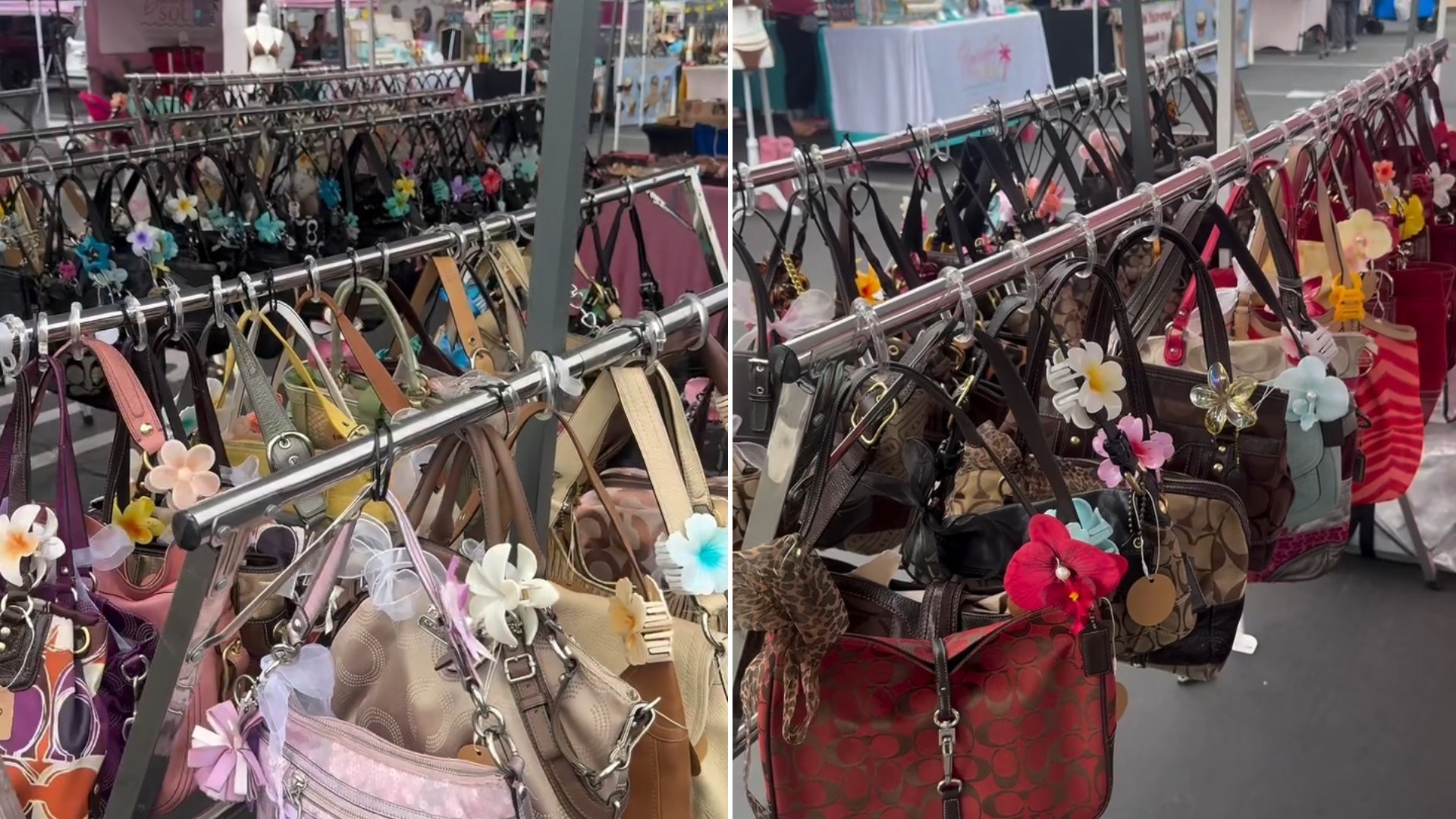
Some flea market finds are modest, a single interesting piece tucked among the ordinary stuff. And then there are booths like the one creator @y2kewt walked through in a recent video, packed floor to ceiling with rack after rack of vintage Coach handbags, many of them trimmed with the retro plastic flower charms that instantly place them in a very specific era of American fashion. The caption said it all in three simple words: Coach heaven, aimed squarely at anyone who grew up wanting one of these bags the first time they were actually in style.
The video itself works almost like a slow walkthrough, letting the sheer volume of the collection speak for itself rather than relying on narration to sell the moment. That choice matters more than it might seem. A single rare handbag photographed carefully can look impressive, but there’s a different, almost overwhelming kind of appeal that comes from seeing dozens of them lined up together, an entire wall of a brand that a lot of people associate with a very specific stretch of their own lives, whether that means saving up allowance money as a teenager or watching a parent carry one to work.
View this post on Instagram
Coach occupies a fascinating spot in the broader vintage fashion market right now. For a stretch of years, the brand’s older designs, especially from the late nineties and early 2000s, fell out of mainstream favor as fashion trends shifted toward different silhouettes and different status brands entirely. Secondhand Coach bags from that era could often be found for relatively little money, overlooked by shoppers chasing whatever was newly trendy at the time. That’s changed dramatically over the past few years, as Y2K style has come roaring back into fashion relevance and a new generation of shoppers has started actively hunting down exactly the kind of pieces that used to sit ignored in thrift stores and flea markets.
The plastic flower charms specifically are a detail worth dwelling on, because they’re the kind of small design flourish that instantly signals a specific era to anyone who remembers it. Fashion details like that rarely get reproduced accurately in modern reissues; they belong entirely to their original moment, which is exactly why vintage collectors value finding the genuine article over a modern piece styled to look similar. A booth stacked with dozens of bags featuring that exact detail represents a genuinely rare concentration of era-accurate pieces, the kind of haul that would take most individual collectors years of scattered searching to assemble on their own.
There’s also something worth appreciating about what a booth like this represents from a business perspective. Whoever runs it has clearly spent significant time, likely years, sourcing these bags one at a time from estate sales, donation bins, and individual sellers before consolidating them into a single stall. Vintage dealing at that scale isn’t a casual hobby; it’s a genuine skill built on knowing where to look, recognizing authenticity and condition at a glance, and having the patience to accumulate inventory steadily rather than expecting to stumble across a full collection all at once.
For shoppers who grew up wanting a Coach bag and never got one, whether due to the price at the time or simply not being old enough yet to care about handbags, a booth like this represents something close to a second chance. It’s a reminder that fashion nostalgia doesn’t disappear just because a trend cycle has moved on; it goes dormant and then resurfaces, often stronger than before, once enough time has passed for the original audience to have their own disposable income and their own renewed appreciation for what they missed. The handbags never changed. What changed is who’s finally in a position to buy them.
There’s a broader takeaway here for anyone interested in vintage shopping generally, and it comes down to persistence and timing. Flea markets, thrift stores, and estate sales are full of items that look unremarkable to most shoppers passing by but represent real value to the right buyer at the right moment. Brands and styles cycle in and out of favor constantly, and the pieces sitting quietly overlooked today are often the exact pieces that a future version of the market will be actively hunting for. Recognizing that cycle, and being willing to buy something before it’s back in fashion rather than only once everyone else already wants it, is often what separates a casual shopper from someone who ends up building a genuinely valuable collection over time.
There’s also a lesson here about the patience required to build a booth like this in the first place. Nobody assembles dozens of matching-era handbags overnight. It takes years of consistent sourcing, learning to spot authentic pieces quickly, passing on items that don’t meet a certain bar, and slowly accumulating enough inventory to eventually fill an entire stall rather than a single folding table. That kind of long game rarely gets showcased directly online, since most viewers only ever see the finished booth rather than the years of individual purchases that built it, which makes a wide shot like this one feel almost like watching the payoff of a project most people never get to see in progress.
For shoppers hoping to find something similar themselves, the takeaway is fairly simple: dedicated dealers who specialize deeply in one specific era or brand tend to be worth seeking out over generalist booths, since specialization is usually a sign that a seller has spent real time developing an eye for exactly the kind of pieces a focused collector is hoping to find.

Leave a Reply