

In the first week of July, the search term “cowboy boots” did something on Amazon that usually only happens around Black Friday: it jumped 175 ranking spots in a single week, climbing to roughly 28,000 weekly U.S. searches, according to retail data reported by North by Northwestern.
That kind of spike doesn’t happen because a few influencers wore pointy-toed boots to a festival. It happens because an entire category has quietly repriced itself.
The market data backs it up. The global cowboy boots market was valued at $4.8 billion in 2025 and is projected to climb to $8.1 billion by 2034, a compound annual growth rate of 5.9 percent, according to DataIntelo’s market research, cited in the North by Northwestern piece on the vintage-boot surge.
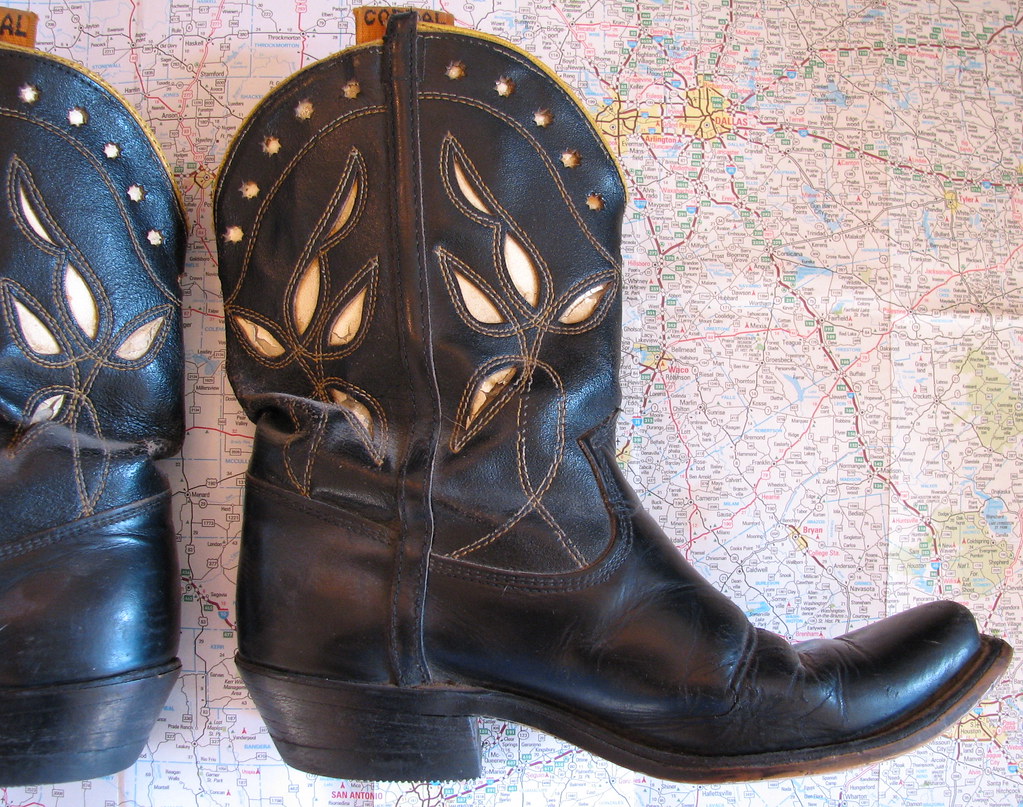
Thrifted and secondhand pairs — the scuffed, broken-in ones carrying somebody else’s decade of wear in the leather — are a real piece of that growth story, as Western wear moves from flea-market curiosity to genuine style currency rather than a passing costume phase.
None of this is really new, though. It’s a boot doing what it has done for close to a century and a half: disappearing from view for a decade, then walking right back into fashion when nobody expects it.
The design traces back to a cobbler named Charles H. Hyer, who started making boots out of his home in Olathe, Kansas, in 1875. As the story goes, a cattle driver came to him the following year asking for something that would hold up better on horseback than the flat, square-toed work boots everyone wore. Hyer built him a boot with a pointed toe, a higher underslung heel, and a scalloped top — a shape close enough to today’s cowboy boot that the company he founded in 1880 is still credited with setting the template, mail-order sizing system included.
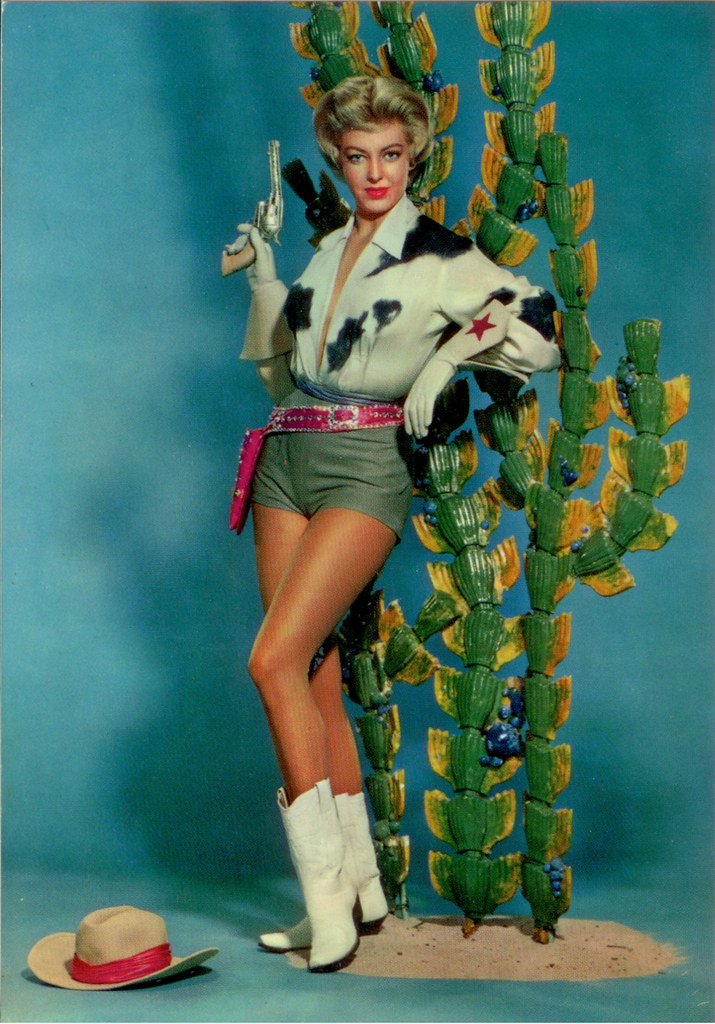
For decades after that, the boot stayed mostly where it started: on ranch hands, rodeo riders, and country performers. Hollywood Westerns kept it visible through the 1940s and ’50s, but it wasn’t exactly office attire.
Then came 1980, and John Travolta.
“Urban Cowboy,” the film that sent Travolta two-stepping through a Houston honky-tonk, triggered one of the strangest fashion booms in modern American retail. More than 10 million pairs of cowboy boots sold in 1980 alone, and the western hat business cleared $500 million, according to Western Horseman. Lawyers and bankers who had never been near a cattle drive started showing up to the office in boots and feather-banded hats. Ralph Lauren built entire ad campaigns around it. Western historian Bill Reynolds has credited the film with almost single-handedly reviving national interest in the West, a level of attention the region hadn’t seen since Hollywood’s Western-filmmaking boom faded in the early 1960s.
That boom faded, as booms do. But the boot never really went away. It just cycled back through country-music revivals and the occasional high-fashion runway. The current wave is following a similar pattern, per North by Northwestern’s reporting, which points specifically to Miu Miu as one of the labels that sent exaggerated, Western-inspired boots down European runways well before Amazon’s search data caught up. That’s the shape this category tends to take: a silhouette gets reintroduced at the top of the fashion pyramid, works its way through resale apps and secondhand shops, and lands, a season or two later, as a genuine mass-market habit rather than a runway curiosity.
What’s unusual about the current cycle is how much of the growth is happening secondhand rather than through new manufacturing. A pair of cowboy boots takes months to break in properly; the leather has to soften, the sole has to learn the shape of somebody’s foot, and none of that can be rushed with a factory distressing job. That’s precisely why the vintage market is absorbing so much of the demand spike instead of new retail lines. Shoppers chasing the look aren’t just after the silhouette, they’re after boots that already did the work of being lived in, which is a much harder thing to manufacture than the fashion industry would like.
What’s different this time is how visible the appetite is in real time. A 175-spot search jump isn’t anecdotal. It’s a measurable signal that a huge number of people typed the same two words into a search bar within days of each other. Whether it’s Americana comfort, a break from sneaker sameness, or plain old rodeo glamour, enough people want in that the secondhand market is scrambling to keep up.
A boot built for a Kansas cattle driver in 1876 is currently outselling its own hype cycle nearly 150 years later. That’s not nostalgia marketing. That’s what happens when a genuinely good design keeps getting rediscovered by people who weren’t even born the last time it was cool.

Leave a Reply