

A Broken Furnace Started All of This
In 1953, a Corning researcher named S. Donald Stookey set a furnace to heat a piece of experimental glass to 600 degrees Fahrenheit, and the controls malfunctioned, sending it to 900 instead. The glass turned milky white and bounced off the floor instead of shattering. That accident produced Pyroceram, the material behind CorningWare, which launched in 1958.
Where Spice of Life Enters the Timeline
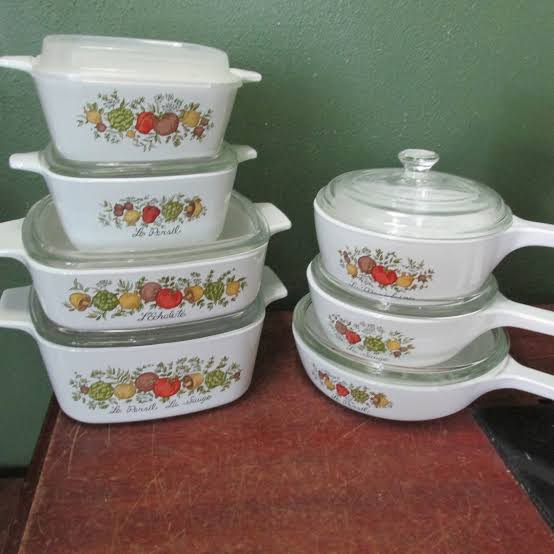
CorningWare’s most recognizable pattern for three decades was Blue Cornflower, but one of its rotating designs, a busy print of tomatoes, mushrooms, garlic, and peppers, became Spice of Life. Collector references put its introduction around 1970, with full production running from roughly 1972 to 1987. The earliest run carried French phrases stamped beneath the produce, a detail collectors shorthand as “French Spice.”
What a French Word Under a Tomato Is Worth
General guides list ordinary Spice of Life pieces selling in the low hundreds, but the pieces bearing French inscriptions push into a different tier. One collector database puts a mint-condition 4-quart casserole with the L’Echalote marking at roughly $4,000 or more at auction.
How to Tell What You’re Actually Holding
Flip the piece over and check the backstamp first, then look underneath the pattern for tiny cursive French text. No text usually means a later, more common production run, still collectible but priced in the hundreds rather than the thousands.
Why It Sat in Thrift Bins for So Long
CorningWare didn’t announce a farewell tour for Spice of Life. It simply got phased out by 1987, and pieces spent decades doing exactly what CorningWare was built to do: surviving ovens, dishwashers, and cross-country moves in absolute silence.
The Real Lesson in the Dish Bin
Vintage cookware doesn’t reward the shopper looking for a logo or a designer name stamped on top. It rewards the one willing to flip a piece over and read the fine print underneath the herbs.

Leave a Reply