

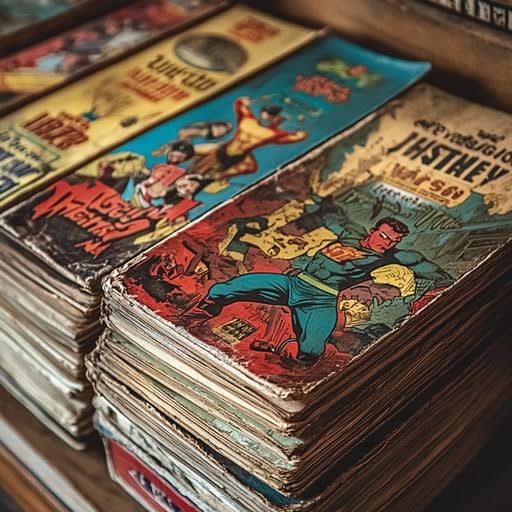
On November 20, 2025, a single comic book sold for $9.12 million at Heritage Auctions, the most expensive comic book ever sold at auction. The copy wasn’t rare because of its story. It’s Superman’s first appearance, a story collectors already know cold. It was rare because of a number stamped on the label inside its plastic case: a 9.0 out of 10 from Certified Guaranty Company, the grading service that has spent the last quarter-century doing to comic books roughly what PSA and Beckett did to baseball cards.
Heritage Auctions co-founder Jim Halperin called the sale “an early stage of popular culture collecting’s trajectory into the upper reaches of the auction field.” He wasn’t exaggerating the mechanism, even if the number still sounds absurd for a ten-cent pamphlet.
Three Graders, One Slab
CGC, founded in January 2000, runs comics through a process built to remove the guesswork that used to define comic shop transactions. A pre-grader checks for obvious flaws, three independent graders evaluate the book separately in a climate-controlled room, and a head grader assigns the final number on CGC’s 0.5-to-10 scale before the book goes into a sealed, tamper-evident holder collectors call a “slab.” The company says it has now certified more than 20 million collectibles since it started, comics included, and has since expanded into trading cards, video games, magazines, concert posters, and, as of 2024, autograph authentication through its acquisition of JSA, letting a single slab certify both a book’s condition and the legitimacy of a signature inside it.
What a Single Point of Grade Is Actually Worth
The clearest proof that grading reshaped this market is watching one comic’s price track its grade over time. A CGC 8.0 copy of Action Comics #1 sold for $1 million in 2010. A CGC 8.5 copy of the same book sold that same year for $1.5 million, a half-grade bump worth an extra half million dollars. By January 2022, a CGC 6.0 copy, objectively rougher condition than either of those, still closed at $3.18 million, because the overall market for graded Golden Age books had simply risen underneath it. None of those sales would carry the same certainty, or command the same price, without a third-party number both buyer and seller trusted before the auction ever opened.
The Slab Itself Carries Information
Part of what buyers are actually paying for is encoded right on the label. CGC sorts certified books by category using color-coded labels, blue for an unaltered “Universal” copy, purple for a professionally conserved book, yellow for a restored one, green for a “Qualified” grade flagging a specific defect, and red for a Signature Series book verified as autographed in CGC’s presence. A blue-label copy and a yellow-label copy of the exact same issue in the exact same apparent condition can sell for wildly different prices, because the label is telling a sophisticated buyer something a photograph alone never could: whether what they’re looking at is original material or a well-executed repair job.
Old Long Boxes Meet New Money
That certainty is exactly what’s pulled comic collecting out of the back-issue bin and into the same financial conversation as vintage sports cards and rare coins. Before grading services existed at scale, a “near mint” comic was whatever the guy behind the counter said it was, and prices moved on trust and reputation rather than a documented, third-party standard. A sealed CGC slab turns a five-decade-old floppy into something a buyer can purchase sight unseen, insure at a fixed value, and resell without ever cracking the case open to check the spine. That’s the actual shift: not that old comics suddenly became valuable, but that a stranger three time zones away can now trust exactly how valuable, down to the half-point.
The Long Box in the Closet Just Got Complicated
Anyone sitting on a childhood comic collection now has a genuinely different math problem than their parents did. Condition, once a matter of opinion, is now a number that can be independently verified, insured, and resold against, and that number, more than nostalgia, is what’s driving prices few Silver Age kids ever imagined their allowance-money purchases would command decades later. It’s worth actually finding out what’s in the box before assuming the answer is nothing.

Leave a Reply