

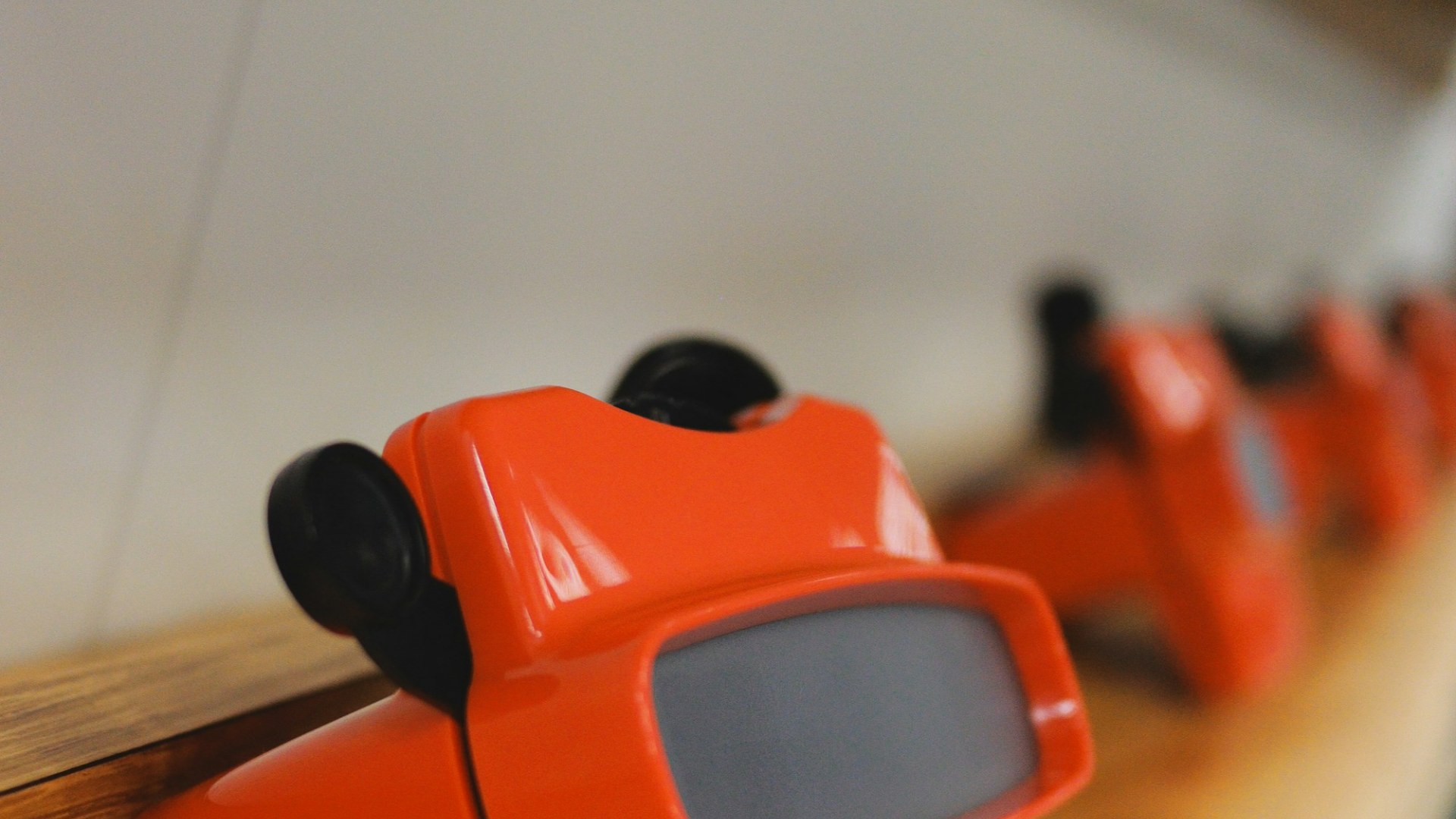
The little red viewer that generations of kids clicked through at birthday parties and long car rides was not built with children in mind at all. Its inventor was a photographer chasing a market of adult tourists and postcard collectors, and the toy industry did not get involved until years after the device had already found its first audience.
A Photographer’s Side Project
William Gruber worked as a photographer and organ maker in Portland, Oregon, when he began experimenting with stereoscopic photography, the technique of pairing two slightly offset images to create the illusion of depth. Gruber partnered with a Portland-based postcard printing company called Sawyer’s Photographic Services, and together they developed a handheld viewer that let users flip through a small paper reel of stereoscopic color photographs. Per the Smithsonian’s National Museum of American History collection record, the device debuted publicly at the 1939 New York World’s Fair, where fairgoers could see it demonstrated alongside the era’s other emerging technologies.
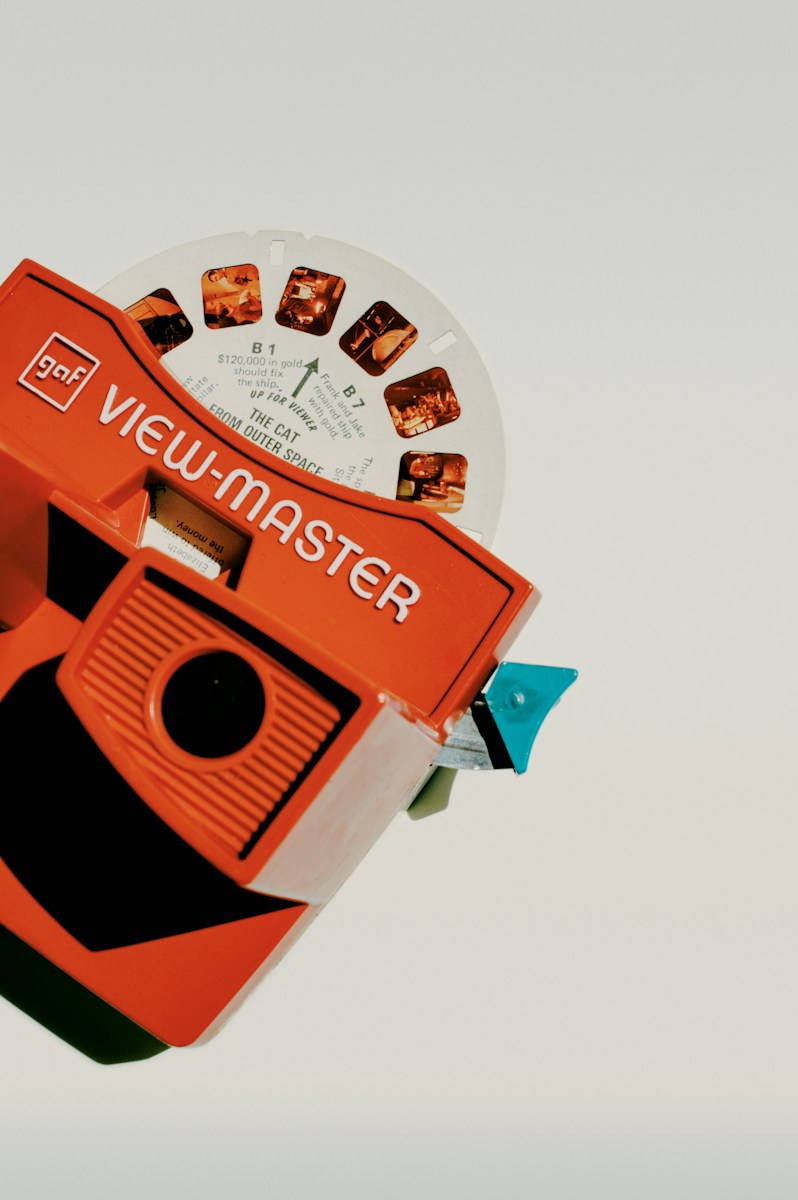
Built for Tourists, Not Toy Boxes
The earliest View-Master reels were not cartoon characters or storybook scenes. They were documentary-style photographs of national parks, scenic landmarks, and famous tourist destinations, essentially a three-dimensional alternative to the postcard racks travelers were already used to buying from. Sawyer’s marketed the device directly to adult vacationers as a novel way to relive a trip, and to photography enthusiasts who appreciated the technical achievement of the stereoscopic format itself. According to Mental Floss’s retrospective on the toy’s history, it took real convincing before anyone in the company saw children as a viable audience for the product at all.
The Slow Turn Toward Kids
World War II actually helped push the View-Master toward a wider audience, since the U.S. military purchased reels for training purposes during the war years, giving Sawyer’s both a reliable customer and a reason to keep manufacturing at scale. In the postwar years, the company gradually expanded its catalog beyond scenic travel content, and it was not until years after that initial 1939 debut that children’s entertainment content started showing up in the reel lineup in any meaningful way.
Disney Joins Years Later
The licensing deals that most people associate with the View-Master today, reels built around cartoon characters and popular children’s franchises, came well after the viewer had already established itself commercially as a photography and travel novelty. Disney licensing arrived only after Sawyer’s had spent years building out the device’s reputation with adult buyers first, a sequencing that runs opposite to how most people assume the product’s history unfolded. The company that eventually became GAF Corporation continued expanding the children’s content library through the 1960s and beyond, by which point the View-Master had fully transformed from a scenic-photography gadget into a mainstream kids’ toy.
An Engineering Achievement Hiding in Plain Sight
Part of why the View-Master succeeded with such a wide range of audiences is that the underlying stereoscope mechanism was genuinely well designed. Gruber’s system used a compact reel of seven paired image slides, precisely aligned so a simple lever advance would click each new pair into position without any fumbling. That mechanical simplicity is a big reason the basic design barely changed for decades, toy versions manufactured well into the digital age still use essentially the same click-and-view mechanism Gruber worked out in the 1930s.
Why Vintage Reels Still Turn Up in Thrift Bins
Because Sawyer’s produced so many travel and landmark reels across those early decades, a huge share of what collectors find in secondhand shops today actually predates the character-licensed era entirely. A box of unlabeled reels showing the Grand Canyon or a 1950s world’s fair is not a rare accident, it is a direct artifact of the View-Master’s original identity as a travel souvenir rather than a toy. Those scenic reels tend to sell for far less than character-based sets simply because fewer buyers recognize what they are looking at, which makes them one of the more underrated finds in a typical vintage-toy bin.
Condition matters more with these early reels than casual shoppers might expect. The photographic film inside each disc can fade or shift color with decades of light exposure, so two reels that look identical in a listing photo can produce very different images once actually held up to a viewer. Collectors who specialize in the format often test reels before buying whenever they get the chance, since a beautiful metal viewer paired with a faded, useless reel is a common disappointment at estate sales.
A Toy That Started as Something Else
The View-Master’s path from tourist novelty to nursery staple is a reminder that plenty of beloved childhood toys were not originally designed with children in mind at all. Gruber and Sawyer’s built a genuinely clever photography product first and only discovered its second life as a kids’ toy after years of selling it to grown-up travelers and hobbyists. That layered history is part of what makes an old View-Master and a stack of scenic reels such a satisfying flea market find today, it is a toy with a far more grown-up backstory than its plastic red housing ever let on.

Leave a Reply