

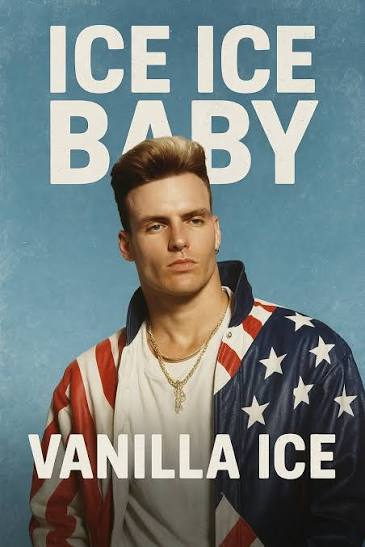
“Ice Ice Baby” hit store shelves in the fall of 1990 riding a bassline lifted, note for note, from a song that had already spent nine years as one of rock’s most recognizable four-bar hooks. For the better part of two years, Robert Van Winkle — the rapper the world knew as Vanilla Ice — insisted in public that his breakout single and Queen and David Bowie’s 1981 hit “Under Pressure” simply didn’t share the same riff, pointing to a single extra note as the line between homage and theft.
Queen’s camp and Bowie’s team weren’t convinced, and what followed was a quiet, years-long legal standoff that ended in a private settlement, a rewritten songwriting credit, and, by Vanilla Ice’s own later account, a bill running into the millions.

A Riff Nobody Forgot
Queen and David Bowie wrote “Under Pressure” together in 1981, and its descending bassline became one of the most instantly identifiable hooks in rock history, according to American Songwriter’s account of the song’s legacy. Nine years later, when Vanilla Ice released “Ice Ice Baby” as his debut single, that same bassline ran underneath the entire track — looped through the verses and choruses rather than sampled for a single moment, as documented by George Washington University Law School’s Music Copyright Infringement Resource. Listeners noticed within weeks of the song’s release. So did Queen.
The Extra-Note Defense
Rather than crediting the source, Vanilla Ice spent the early 1990s arguing the two basslines were technically distinct. His explanation, repeated across television and radio appearances of the era, was that his version added one extra note the original didn’t have, which in his telling made the two riffs legally separate compositions. Music historians and, eventually, Queen’s own representatives treated the distinction as beside the point — the rhythm and the pitch were unmistakably identical, and GWU’s legal case archive notes that the argument never carried real weight once lawyers got involved. The line became a punchline in music circles for decades afterward, a shorthand for the moment a young star tried to talk his way out of a debt that was audible to anyone with functioning ears.
Threats, Talks, and a Quiet Settlement
No trial ever took place. According to the GWU case record, Queen and Bowie’s representatives moved to threaten Vanilla Ice with a copyright infringement suit rather than filing one outright, and both sides settled privately before the matter reached a courtroom. The resolution gave Bowie and the surviving members of Queen a formal songwriting credit on “Ice Ice Baby” — an acknowledgment, on paper, of what fans had clocked by ear from the start. Terms beyond the credit were not disclosed publicly at the time, which is typical for entertainment-industry settlements of that scale, and the episode became one of the era’s most talked-about cautionary tales about uncleared samples, cited in later legal scholarship on hip-hop and copyright.
Buying the Song He Said He Didn’t Copy
The story didn’t end with a credit line. Years later, Vanilla Ice disclosed in an interview that he had gone on to acquire the publishing rights to “Under Pressure” outright, telling the story as a financial decision rather than an admission — paying what he described as roughly $4 million because it worked out cheaper than continuing to pay royalties indefinitely on a song still generating steady income decades after its release, a figure reported by the GWU legal case archive. A Queen representative later offered a different framing of the same arrangement to Ultimate Classic Rock, describing it not as an outright purchase but as a shared publishing agreement between the parties. Either version confirms the same underlying fact: the two-decade dispute never really ended in a clean break. It settled into an ongoing financial relationship between a rapper and the rock icons whose bassline made his career.
“Ice Ice Baby” left behind an early, expensive lesson for an entire genre still figuring out where inspiration ended and infringement began, one that pushed producers toward clearing samples before pressing records instead of negotiating after the royalties started rolling in. Sample clearance went from an afterthought to a standard line item in hip-hop production budgets over the following decade, and cases like this one are a large part of why: labels learned it was cheaper to pay upfront for a four-bar loan than to fight over it after a song had already sold millions of copies.

Leave a Reply