

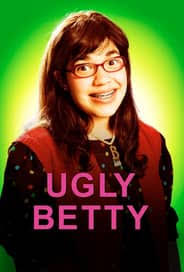
Ugly Betty turns 20 this year, and America Ferrera wore the same thick glasses and metal braces in essentially every episode of its four-season run. The ABC dramedy premiered in 2006, adapted from the hit Colombian telenovela Yo Soy Betty, la Fea, a format that had already been remade in more than a dozen countries by the time the American version launched. Ferrera was only 23 when she was cast, already known for Real Women Have Curves and The Sisterhood of the Traveling Pants, and the role turned into the biggest of her career. She won both an Emmy and a Golden Globe for it.
A Makeover Show Built Around Refusing the Makeover
The show’s entire premise ran against the genre’s usual instinct. Betty Suarez worked inside a fashion magazine that treated appearance as the only currency that mattered, and the show kept her in the same glasses and braces episode after episode instead of ever staging the reveal audiences might have expected. That consistency became part of the character’s identity rather than a problem waiting to be solved.
Ferrera Didn’t Mind the Costume, Just One Specific Piece of It
Ferrera has said publicly that she didn’t actually mind wearing the glasses and braces for four years straight. In a Late Night with Seth Meyers interview reported by AOL, she named a completely different costume as her least favorite from the entire run: a hot dog suit her character wore in a season 4 episode. It’s a detail that undercuts the assumption that the glasses and braces were the hard part of the job.
A Role That Meant More Than Ratings
Ugly Betty was still building momentum when NPR profiled Ferrera in its second season, describing her as playing Betty Suarez “with fearless gusto” and calling the character “the ultimate fish-out-of-water” inside a glossy magazine office that had no idea what to do with her. NPR credited Ferrera’s own Southern California upbringing with helping her find the role’s specific blend of confidence and self-consciousness, and by that point in its run the show had already become, in NPR’s words, “a ratings powerhouse for ABC.” That momentum showed up at the Emmys, too. Ugly Betty pulled in 11 nominations in 2007, the second-most of any series that year behind only The Sopranos, with nods in Best Comedy Series, Ferrera’s Lead Actress category, and a Supporting Actress nomination for Vanessa Williams as magazine editor Wilhelmina Slater, according to Fox News.
Salma Hayek Helped Get It Made
Behind the camera, Ugly Betty was produced by Salma Hayek’s company, Ventanarosa, alongside creator Silvio Horta, who developed the Colombian format for American television. Hayek made a cameo in the pilot episode and has stayed publicly attached to the show’s legacy ever since. Marking a resurgence in younger viewers discovering it years later, she wrote on social media that the series “was groundbreaking at its time and has remained relevant throughout all these years,” according to Hola, adding that it remains “very close to our hearts at Ventanarosa because we produced it 17 years ago.”
Twenty Years of an Unlikely Franchise
The telenovela format Ugly Betty borrowed from had already proven itself internationally before ABC ever optioned it, and the American version’s success only added to that reputation, spinning the Yo Soy Betty, la Fea concept into one of the more durable global TV franchises of the 2000s. Ferrera’s Emmy and Golden Globe wins gave the American adaptation its own distinct legacy separate from the original telenovela, proof that the format could travel without losing what made it work in the first place.
Twenty years later, the choice to keep Betty visually unchanged for four straight seasons reads as more deliberate than it might have looked at the time. Networks generally love a transformation arc. Ugly Betty built its entire identity around refusing to give them one. Twenty years on, that refusal is arguably the most quoted thing about the show that isn’t a line of dialogue, proof that a costume choice can carry as much weight as anything written into a script, and that audiences will happily sit with a character for four full seasons without ever needing her to change to keep rooting for her.

Leave a Reply