

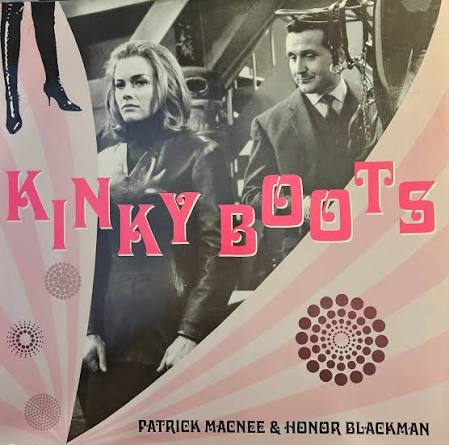
Two stars of a British spy show recorded a novelty song called “Kinky Boots” in 1964, and it became such an enduring joke about the era’s footwear that it charted in Britain again a quarter-century later. That’s not marketing copy — Patrick Macnee and Honor Blackman, both cast members of The Avengers, genuinely released the track, which was re-released in 1990 and climbed to number five on the British singles chart. The boots themselves, though, weren’t a novelty at all. By the time that song existed, one French designer had already turned them into the single most recognizable shoe of the decade.
Boots Were a Hard Sell Before They Were Everywhere
It’s easy to assume a shoe this iconic simply appeared fully formed, but fashion boots actually struggled to catch on for years. American designer Beth Levine tried selling fashion boots to women as early as 1953, well over a decade before they became a cultural fixture, and the style only gained real traction after couture houses started experimenting with the form around 1962 and 1963 — Cristóbal Balenciaga and Roger Vivier both featured boots in collections during that window, per the footwear industry’s own documented history of 1960s women’s footwear. Boots, in other words, spent nearly a decade as a fashion idea nobody had quite cracked before they became inescapable.
André Courrèges Built Them for Astronauts, Not Discothèques
The design that actually cracked it came from André Courrèges, who trained for a decade under Balenciaga before opening his own Paris house in 1961. Around 1964 he introduced a low-heeled, mid-calf white boot as part of his “Space Age” collection, made from white kidskin and patent leather with a polyurethane sole and explicitly inspired by astronaut uniforms, according to The Metropolitan Museum of Art’s own collection record of an original pair. Courrèges paired the boots with A-line minidresses, structured coats, and goggle-style sunglasses in stark white and silver — a futuristic uniform rather than a nightclub costume. The look had nothing to do with dancing when it first hit the runway; it was architecture applied to the human body, an extension of the same rigid, tailored precision Courrèges had absorbed from Balenciaga.
Television Turned Runway Boots Into Street Boots
What actually got the boots onto ordinary feet wasn’t couture at all — it was television. Honor Blackman’s own character on The Avengers, Cathy Gale, wore black leather boots that became such an identifiable part of the show’s look that they helped normalize the silhouette for a mainstream audience well beyond Paris fashion circles, per the same footwear-history record. Dancers on American music shows like Hullabaloo and Shindig! wore similar boots so consistently that the style picked up its own nickname — “hullabaloo boots” — years before “go-go boot” became the standard term, according to documented go-go boot history. By 1966, Nancy Sinatra’s “These Boots Are Made for Walkin’” turned the shoe into outright cultural shorthand for female independence, cementing in pop music what Courrèges had already established on the runway three years earlier.
A Fashion Moment Built From Several Directions at Once
What’s genuinely unusual about the go-go boot’s rise is how many separate cultural lanes converged on it at nearly the same moment — couture experimentation from Balenciaga and Vivier, Courrèges’ futurist reinvention, spy-show television exposure, and pop music all landing within a four-year window between 1962 and 1966. That’s not the typical trickle-down path where a runway idea slowly filters into stores; boots hit fashion houses, television screens, and record charts almost simultaneously, which is exactly why the style still reads as the defining shoe of the entire decade rather than one designer’s passing experiment. The astronaut-inspired white boot Courrèges built for the runway ended up walking so many different cultural paths at once that it outran its own origin story almost immediately.
By the time the material shifted from Courrèges’ original kidskin and patent leather to the cheaper PVC and vinyl that dominated mass retail, the boot had already completed its trip from avant-garde runway object to something a teenager could buy at a department store, according to the same footwear-industry account. That’s the part of the story that tends to get flattened into a single catchy sentence: it wasn’t one designer’s slogan that made go-go boots the shoe of the 1960s, it was a genuinely improbable string of couture, television, and pop culture all reaching for the same silhouette within a few years of each other, and none of them fully aware the others were doing it too.

Leave a Reply