

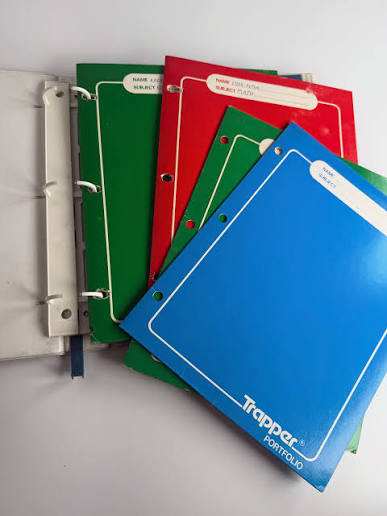
Before backpacks came loaded with laptop sleeves and insulated water bottle pockets, the real flex on any elementary school playground was the folder tucked under a kid’s arm. Mead Corporation introduced the Trapper Keeper in 1978, and within a few years it had turned a boring office supply category into something closer to a fashion statement, complete with peer pressure, trading, and the occasional teacher confiscating one on sight.
A Marketing Executive’s Idea, a Designer’s Execution
The product’s origin has always come with a bit of internal dispute. Mead marketing executive E. Bryant Crutchfield requested a new kind of binder system that could hold loose folders together under one cover, and Jon Wyant, the company’s director of new product development, is credited with actually designing the mechanism, naming the product, and building its early graphic identity, according to Wikipedia’s account of the product’s history. Crutchfield later gave interviews claiming sole credit for the invention, a version of events that made it into his obituary before Wyant’s role resurfaced in later reporting. Whoever deserves the bulk of the credit, the concept itself was simple: individual folders, called Trappers, snapped into a larger cover so a kid’s entire binder system stayed in one piece instead of scattering across a locker floor.
Mead first tested the product in Wichita, Kansas in August 1978 before rolling it out nationally. The original closure was a simple metal snap, not the Velcro most former students remember, and that small detail matters more than it sounds like it should.
The Velcro Rip Heard Across the Classroom
Roughly three years into production, Mead switched the closure from a metal snap to a Velcro strap, a change made largely for manufacturing efficiency rather than style. That single decision turned the Trapper Keeper into a classroom disruption machine. Every time a kid opened or closed the cover, the entire room heard about it, and teachers who were already fighting a losing battle against note passing and general chaos did not appreciate the extra layer of noise. According to Mental Floss, some schools eventually added Trapper Keepers to their lists of restricted classroom items, largely because of that ripping sound rather than anything about the product’s actual contents.
There is a wrinkle in the banning story that rarely gets mentioned. A number of the folders swept up in school restrictions were not authentic Trapper Keepers at all, but bulkier off-brand imitations that copied the general idea without the actual Mead engineering behind it. Genuine Trapper Keepers and their knockoffs got lumped together in the same do-not-bring-to-class memos, which only added to the product’s reputation as something faintly rebellious, worth owning specifically because grown-ups seemed a little annoyed by it.
Status Symbol With a Snap
None of that friction hurt sales. The Trapper Keeper reportedly brought in more than $100 million a year for Mead during several peak years, and the company has said roughly 75 million units have sold since the product launched. Kids cared less about the closure mechanism than they did about the covers themselves, which came printed with unicorns, wolves, geometric neon patterns, and eventually licensed characters. Mead struck deals to put Garfield, Sonic the Hedgehog, and later Star Wars and Hello Kitty artwork on the covers, and its partnership with illustrator Lisa Frank became arguably the most collectible run of designs the brand ever produced. Owning the right cover meant something on a playground where personal style options were otherwise limited to shoe brands and lunchbox characters.
Mead kept tinkering with the closure for decades afterward. Later production runs experimented with magnetic closures around 2007 and metal button snaps in 2014, each version chasing the same balance between durability and quiet operation that the original 1978 model never quite nailed. The company revived the original snap-closure look in 2021, aiming squarely at the nostalgia of parents who once fought their own classroom battles over the thing, right down to the retro cover art that first made the product a hit.
Part of the reason the Trapper Keeper mattered so much functionally is that it solved a real organizational headache. Before it existed, kids juggling five or six subjects typically carried a stack of loose folders that slid apart in a backpack or locker, spilling homework across hallways on a regular basis. Snapping every folder into one cover under a single closure sounds like a minor convenience now, but for a kid managing math, reading, and science on the same afternoon, it was the difference between an organized backpack and a genuine mess.
Few school supplies have ever managed to be simultaneously beloved by children and mildly dreaded by teachers, but for a solid run of the 1980s and 1990s, a plain three-ring binder with a flap became exactly that.

Leave a Reply