

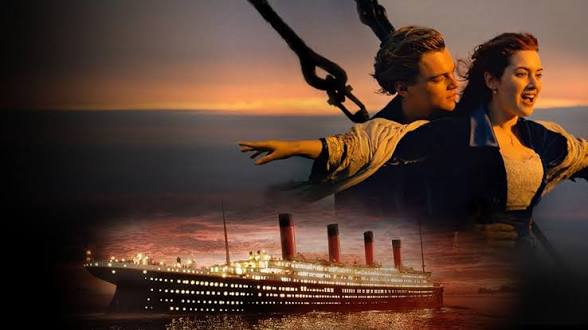
No film in history had ever crossed $1 billion at the worldwide box office before 1998 — not “Star Wars,” not any of the disaster epics or sequels that had defined blockbuster filmmaking for two decades. Then “Titanic” did it, and did it during a January still in its original theatrical run, becoming the first movie ever to clear ten figures globally.
Guinness World Records has kept that distinction on the books ever since, and James Cameron’s three-hour, $200-million gamble about a ship that sinks in the first act went on to hold the title of highest-grossing film on Earth for twelve straight years.

A Record With No Precedent
According to Guinness World Records’ own entry for the milestone, “Titanic” is officially recognized as the first movie to gross $1 billion at the worldwide box office, a record credited to its 1997 release and confirmed in 1998 as ticket sales kept climbing well past its opening months. That’s a distinction worth sitting with: by the time “Titanic” reached the mark, the film industry had produced roughly a century of features, including some of the most popular movies ever made, and none of them had cleared the threshold. Guinness’s own records page notes that it would be years before another title joined the club — “The Lord of the Rings: The Return of the King” didn’t get there until 2003, and “The Dark Knight” not until 2008, both arriving long after “Titanic” had already redrawn the map.
The Numbers Behind the Milestone
The scale of the achievement holds up under scrutiny. Box office data tracked by The Numbers, a film industry financial database, shows “Titanic” was produced on a budget of $200 million — itself a record-setting figure at the time and the source of considerable skepticism from studio executives before release — and went on to gross over $1.8 billion worldwide during its original run, a figure that has since grown further through theatrical re-releases in 2012, 2017, and 2023. International audiences did the heaviest lifting: roughly seventy percent of the film’s total came from outside the United States, an unusually high ratio for an English-language studio picture in the 1990s and a preview of how dependent modern blockbusters would become on global markets.
Twelve Years at the Top
What makes the record more than a trivia footnote is how long it held. Per Biography.com’s account of Cameron’s box-office history, “Titanic” remained the highest-grossing film ever released, worldwide, from its 1997 debut until 2009 — a twelve-year reign broken only when James Cameron did it again with “Avatar.” No other filmmaker has taken the record from himself twice in the modern box-office era, and the fact that both records belong to the same director, working with the same studio relationships and a similar appetite for technically punishing productions, says something about how rare that kind of sustained audience pull actually is. Most blockbusters fade from the top spot within a year or two, overtaken by the next big franchise release; “Titanic” simply kept selling tickets long after conventional wisdom said a three-hour romantic epic about a sinking ship should have run its course.
Why the Billion-Dollar Club Stayed Empty So Long
Part of what makes the first-to-$1-billion record striking in hindsight is how ordinary that threshold seems now. Dozens of films have crossed it since, several within their opening month. But in 1997, ticket prices were a fraction of today’s and multiplex expansion into international markets was still getting underway. The idea of a single film’s theatrical audience — setting aside home video and merchandising entirely — reaching ten figures on ticket sales alone had no real precedent to point to. “Titanic” arrived into those conditions and then rewrote them, turning billion-dollar box office from a theoretical ceiling into a realistic goal that studios have been chasing with every would-be global sensation since.
Every billion-dollar opening weekend that’s followed owes something to the fact that one movie, in one unlikely year, proved the audience for a single film could be counted in the hundreds of millions rather than the tens — and that a sinking ship, not a superhero, was the vessel that got there first. Studios spent the years immediately after “Titanic” trying to reverse-engineer what had made it work, chasing the same combination of spectacle and old-fashioned melodrama with mixed results, which is its own quiet tribute to how hard the original formula turned out to be to repeat on command.

Leave a Reply