

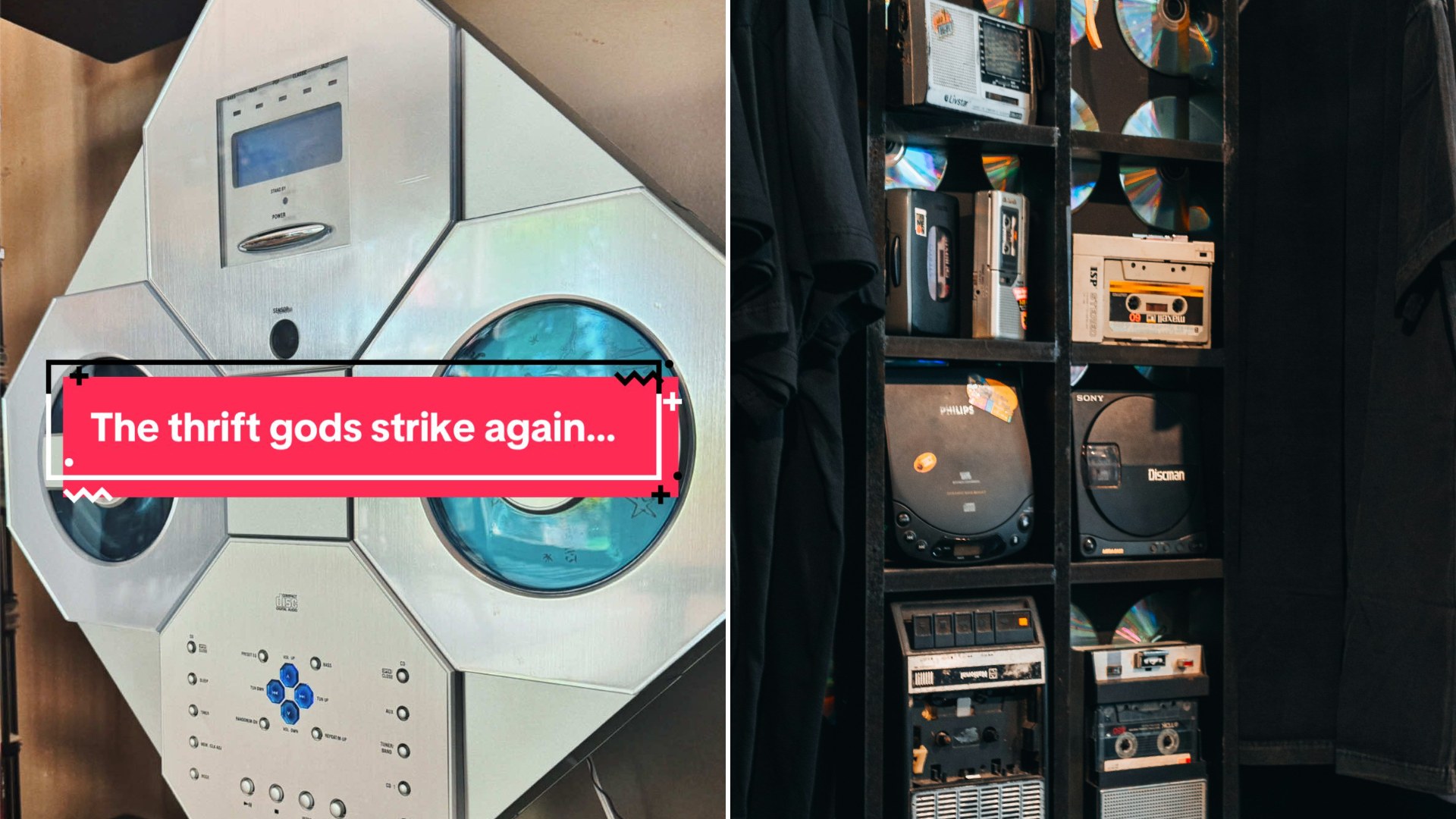
Most thrift store electronics finds are the stuff you have seen a hundred times before: a boombox missing its antenna, a stack of dusty cassette decks, maybe a turntable with a cracked lid. Creator @igeekedout found something that broke that pattern entirely, a vintage CD player and stereo system with a design so distinctly futuristic-looking that physical-media collectors watching the video say they have genuinely never come across one quite like it.
Why Old Stereo Design Still Stops People in Their Tracks
There was a stretch in electronics history, roughly the late 1980s through the 1990s, when manufacturers treated home audio equipment as a canvas for genuinely experimental design rather than just a functional box. Sharp edges gave way to curves, silver and chrome finishes replaced plain black plastic, and control layouts sometimes looked more like something out of a spaceship cockpit than a living room shelf. That era produced some of the most visually distinctive consumer electronics ever mass-produced, and most of it has spent the decades since sitting forgotten in basements, storage units, and eventually thrift stores, waiting for someone to actually notice what they were looking at.
Manufacturers were essentially competing on looks as much as sound quality during that stretch, which is how a piece of home audio equipment ended up with the kind of sculpted, almost sci-fi silhouette that a modern speaker or receiver would never bother attempting. That willingness to make a stereo system look genuinely strange, in the best way, is a big part of why so much of it still photographs and films beautifully decades later.
That is exactly what makes a find like this one land so well with the physical-media crowd. Anyone can recognize a vintage CD player. Recognizing one with genuinely unusual, ahead-of-its-time design, sitting on a random store shelf for whatever a thrift store happens to be charging for electronics that day, is a different kind of win entirely. It is the kind of find that validates the entire habit of checking the electronics shelf at every single thrift stop, even when nine out of ten visits turn up nothing worth a second look.
The Physical Media Comeback Is Bigger Than Vinyl
Vinyl gets most of the credit for the resurgence of physical media over the last decade, but CDs, and the hardware built to play them, have been quietly building their own following alongside it. Part of the appeal is straightforwardly practical: a streaming service can pull a favorite album at any time, while a physical disc on a shelf cannot be revoked, reshuffled, or removed. Part of it is aesthetic, tied directly to finds like this one, where the equipment itself is treated as a design object worth displaying rather than a piece of technology to hide behind a cabinet door.
That shift has turned thrift stores and estate sales into genuine hunting grounds for collectors looking for stereo equipment from this specific window of design history. A CD player that looks like it was built to impress someone in a showroom rather than just function in a bedroom carries a different kind of value to this crowd than a purely utilitarian model would, even if both technically do the same job of playing a disc.
What Makes This Particular Find Stand Out
What separates this discovery from a routine thrift haul is the reaction from people who spend real time around vintage audio equipment and still say they have not seen this particular design before. That is a meaningful reaction in a hobby built almost entirely around recognizing and cataloging what is already out there. A shape, finish, or control layout unfamiliar even to people steeped in the category suggests either a rarer production run or a piece that simply never circulated widely enough to become part of the collector community’s shared knowledge, either of which makes it exactly the kind of find that gets saved, shared, and searched for by name the moment a video like this one starts making the rounds.
For everyone else, it is a good reminder that the electronics aisle at a thrift store is still worth the extra five minutes of digging. Most days it is a bin of tangled cables and forgotten remotes. Every once in a while, it is a piece of design history sitting quietly on a shelf, waiting for the right person to actually stop and look.

Leave a Reply