

A reseller picked up a wooden apothecary cabinet at Goodwill, planning to clean it up and list it for sale. What she found while wiping it down had nothing to do with the price tag. @june_bug_treasures says a tiny latch led her to a secret compartment packed with old papers.
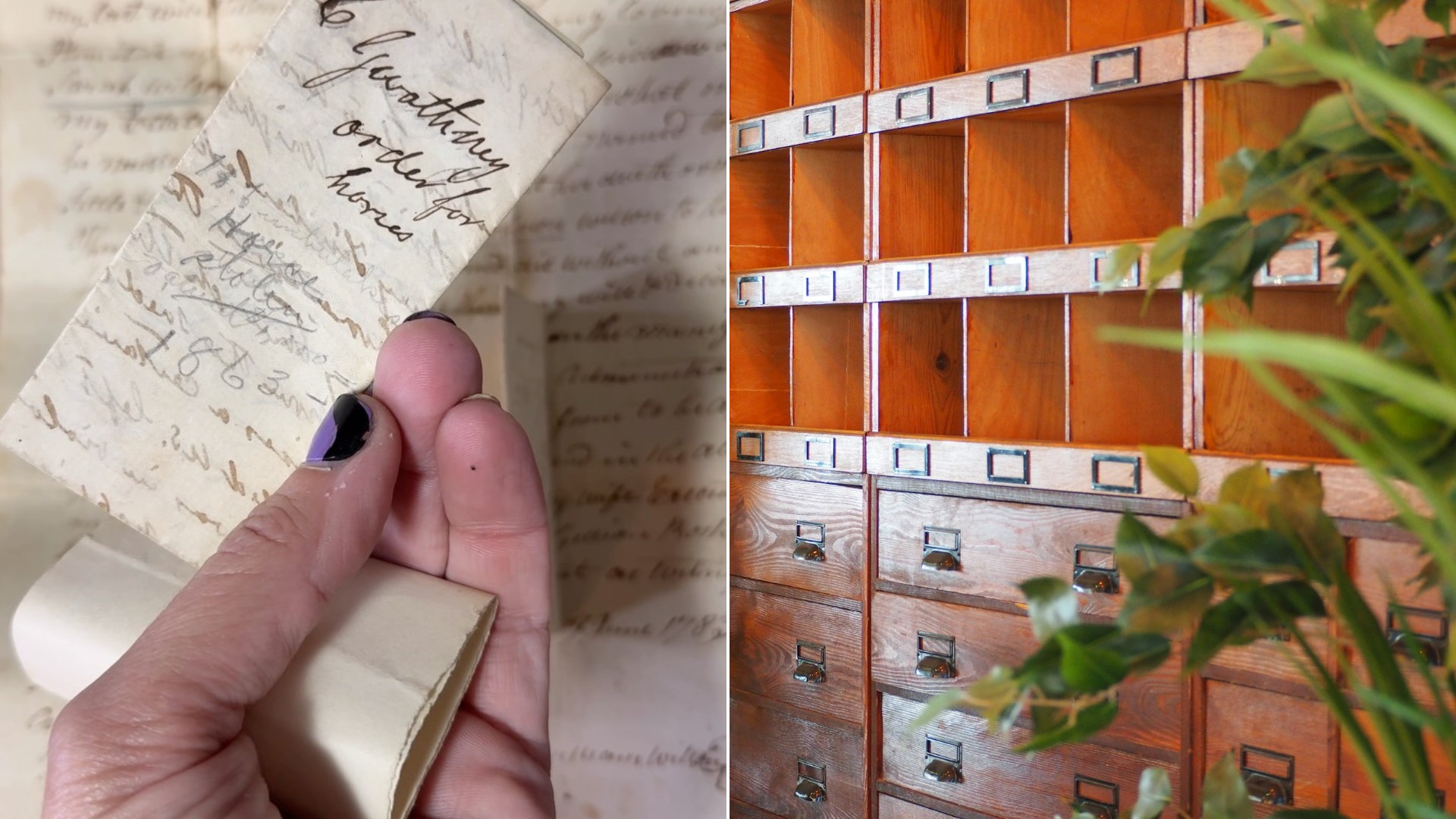
“I’ve had this apothecary cabinet. I got it at Goodwill. It has a working key. She is a true beauty,” she says. It came empty, and she loved the flush mount design and the hardware inside.
View this post on Instagram
A “Silly Little Goose” Of A Switch Made Her Look Closer
She describes the piece as a traveling apothecary cabinet made of wood. While she was cleaning it, something caught her eye. In her words, “I was like, what is that silly little goose?” It did not seem to do anything at first.
So she kept inspecting. One seam looked a little interesting, and there were seams at the bottom as well. Nothing looked too crazy, but it made her think something might be going on.
She went back to the switch inside the cabinet and gave it a push. That disengaged the lock on a sliding piece. She says she was so stoked, because she had no idea she owned a hidden compartment.
The Compartment Was “Shoved Full” Of Old Paper Documents
Then came the moment she calls her shock. When the compartment opened, it was shoved full of old paper. She says the sheets were folded and pushed into the compartments, as if someone had tucked them away in a hurry.
She has since done a little research. One picture among the papers shows the storefront of the apothecary the cabinet came from. According to her, the man connected to it was a Civil War soldier who later ran an apothecary.
That detail gives the cabinet a new story. What looked like a handsome piece of old furniture now has a person, a shop and a time period attached to it.
For anyone who has not met one, an apothecary was the old fashioned druggist, the person who prepared and sold medicines long before the modern pharmacy counter. A cabinet like hers, with a lock and small compartments inside, was built to keep bottles and supplies organized and secure.
That is what makes the hidden compartment so fun. A lock on the outside protects the medicine, and a second secret inside protects something even more private.
It also explains why the cabinet was worth listing in the first place. Antique cabinets with their original hardware and a working key are the kind of thing that decorators and collectors look for, even before anyone knows about papers inside.
Wills, Ledgers And An Order For Horses
She goes through the papers one by one on camera. One looks like a legal document. Another is an order for horses during the Civil War, which she describes as a note for more horses or maybe a bill.
Then there is a copy of the will of William Wilson, with torn edges that show its age. Another sheet, which she calls wild, is from the estate of Francis Crump. It is laid out like a ledger of how much she is leaving to each person.
One of the papers is much harder to read. She calls it “a real bummer” and says it is a receipt for two slaves from 1853. It is a sobering reminder that old papers record the hard parts of history alongside the ordinary ones.
“I Need To Do More Research”
Her last words in the video are that she needs to do more research. Anyone who has ever opened an old trunk will understand the feeling. Each paper raises a new question, and every name could lead to a family or a town.
For a reseller, the find is a twist. She bought a cabinet to sell and ended up holding a small archive. The papers can tell a story that the furniture alone never could.
What To Do If You Find Old Papers In A Piece Of Furniture
Go slowly. Old paper is fragile, and folded sheets can tear along the creases. Work on a clean, flat surface with clean, dry hands, and do not unfold anything that resists.
Photograph each page before you do anything else. A picture of every document gives you a record, and it lets you look up names and dates without handling the originals again.
Skip the tape and glue. Repairs made with household adhesive can damage paper for good. Store the documents flat in an acid free folder or sleeve, away from sunlight and damp.
Look up the names in county records, local historical societies and library archives. Many of them love to hear about finds like this, and they can point you toward the history of a family or a business.
Finally, remember that old furniture can have secret spaces. Apothecary chests, desks and dressers were often built with hidden drawers and sliding panels, so a careful look at odd seams can pay off.
A Goodwill shelf, a working key and one curious switch turned a plain listing into a piece of local history. It is the kind of surprise that keeps thrifters checking every drawer.
So the next time you bring home an old cabinet, take a flashlight and a few quiet minutes. You never know what a seam is hiding.
More Stories You May Like
- Babe Ruth Signed A Contract For $10,000 To Play 10 Games In Cuba In 1920, And Legend Says He Left Havana With Less Money Than He Earned
- Roger Dean’s Original Yes Fragile Cover Painting Vanished From His Studio In The 1970s, Then A Police Report Helped Bring It Home After Nearly 50 Years
- Dallas Shopper Pays $5.99 For A Signed Woodcut At Goodwill, Then The Print Sells At Heritage Auctions For $17,500 In An Unforgettable Shopping Trip

Leave a Reply