

Every thrift shopper dreams of the moment a bargain bin turns into a jackpot. For Pokémon collector VeeMatt, that moment came early one morning at a thrift store, when he found whole binders of cards wrapped up in sleeves of 25 and priced at $25 each. By the time he finished flipping through the first one, he said three cards alone made the whole purchase worth it.
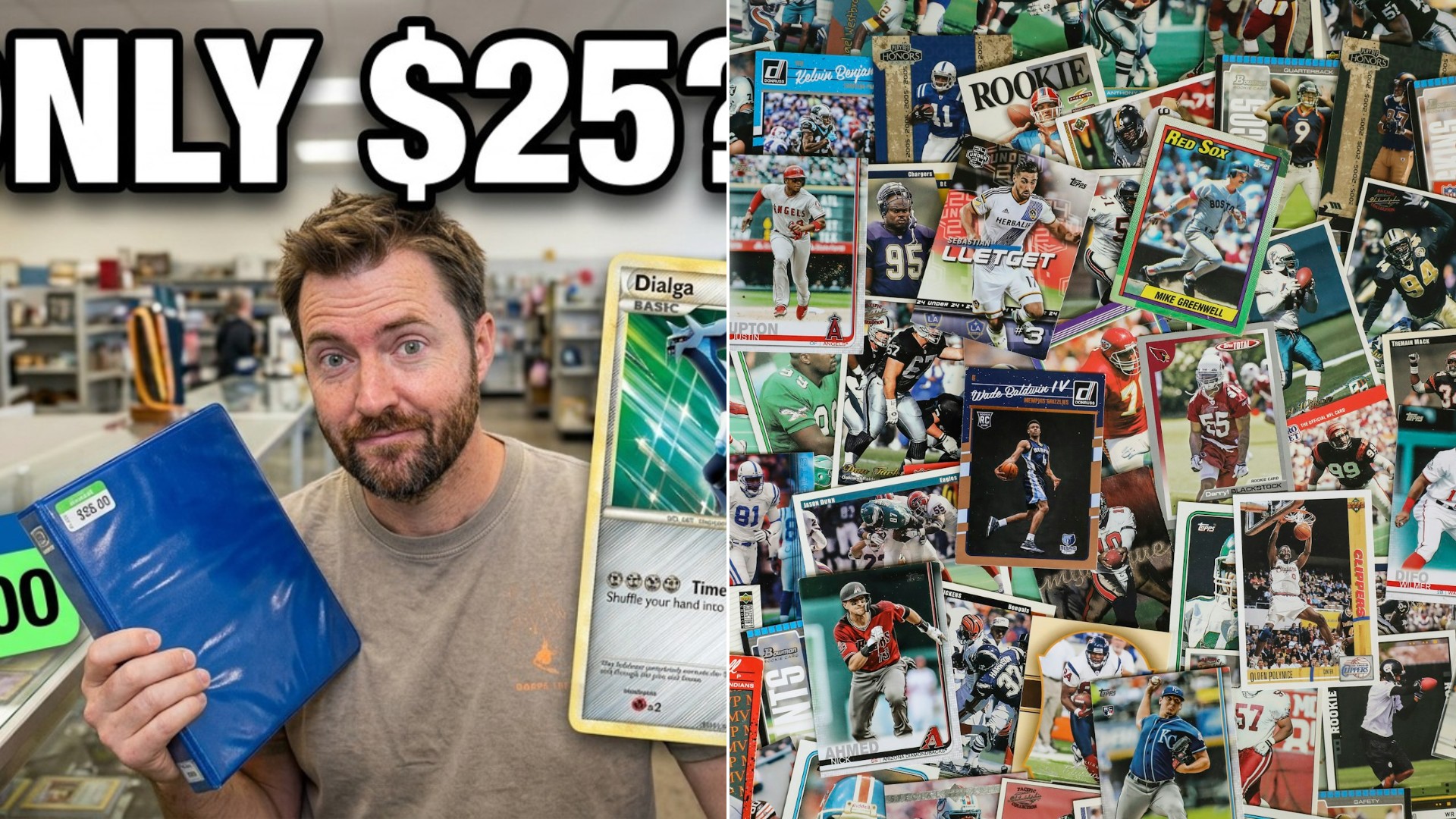
Usually the store sells $15 grab bags, the kind he has opened many times on his channel. This time was different. He had arrived about ten minutes after opening and was standing near the video game section, right by the booth where staff put out items, when he spotted a trolley holding the binders. His reaction, by his own account, was to ask if they were kidding and grab them right away.
The cards looked like they came from the HeartGold SoulSilver and Platinum era. One binder seemed full of fire Pokémon and trainers, and another looked like water and grass types. He called it possibly one of the best buys the channel has ever had, though he tried not to get his hopes up, since it could still turn out to be bulk.
Why Binder Pages Gave Him Hope
VeeMatt’s reasoning was simple. If you were going to dump bulk cards in a bag, why bother putting them in binder pages? He knows some people still do, but in his experience cards in binder pages are usually good, and the sleeves also meant the condition would likely be better than the beat up cards he normally finds at a thrift store.
He was right about the condition. Cards that had been protected in pages looked near mint in many cases, which he said was the part he was happiest about. He went through the binder page by page, in slow motion so viewers could see each card, calling out anything that might be worth more than a dollar or two.
A Lot Of Trainers, Then A Few Treats
The first pages were heavy on trainer cards, many from the XY era, plus a few Diamond and Pearl trainers. He spotted reverse holographic cards among them, including a Team Plasma reverse and a Super Potion, and he noted that some reverse trainers can carry real value. There were also a few blank pages, which he admitted annoyed him, along with signs that some spots may have been picked over.
Further in, the Pokémon started to show up. He found a reverse holographic Litleo from the Black and White era, a nice Dugtrio rare, and a reverse holographic Bagon, which he called pretty old. A reverse holographic HeartGold SoulSilver Tangela got him saying “now we’re talking,” and a Professor Elm’s Training Method reverse holo came from the same era.
Then came the page that lifted the whole binder. He pulled out a HeartGold SoulSilver Dialga in good condition with a cosmos holographic finish, and he let out a shout. He set it aside right away, saying he needed to get a sleeve for it after filming, and added that he remembered having that very card back in the day.
The Three Cards That Paid For It All
Later he reached the fairy types, including Jigglypuff, Swirlix, Mr. Mime, Xerneas and a Carbink reverse holographic. He pointed out that a viewer had commented that those cards are no longer being made, which could mean they go up in price later. He was clear that people should do what they want with that advice, but he said it sounded fair.
A cracked ice holographic Meowstic stood out, and so did an Espeon he called a solid pull, set aside because it was clean. Near the end, a Black and White promo Tepig also went to the side, with some whitening along the top. He explained that promos from that period often look a little rough, but this one was probably really good because it is one of the earliest.
His verdict was that those three cards, the Dialga, the Espeon and the Tepig, were enough on their own to make the entire purchase worth it. He had spent $50 on two binders, and he said that one card alone could possibly pay for both of them.
What Thrift Shoppers Can Take From This
There are a few lessons in the story. Be there early, since he got lucky arriving shortly after opening, and look in the odd corners of the store where staff leave carts and trolleys before items hit the shelves.
Check the condition and the way cards are stored. Cards in binder pages tend to be better kept than loose ones. A card in bad shape at a thrift store, he says, can still turn out to be a good one, though in his case the beat up Magnemite he checked was not.
Do not trust the first impression either. He worried about the stretches of trainers and blank pages, and nothing blew him away at the halfway point. Yet by the end he had pulled a handful of cards that he now has to research and price. He noted that the thrift store’s own pricing may miss reverse holos, since it is hard to tell a card is holographic until you tilt it in the light.
He plans to dig through everything, look up prices, and show the total on screen. A second binder is still waiting, which he promised to open in the next video. For anyone who loves the thrill of the hunt, his excitement is contagious, and it is a reminder that a pile of cards in sleeves for $25 can be worth a closer look.
More Stories You May Like
- Chunky Plastic Bracelets In A Thrift Store Bin Could Be Bakelite Worth Thousands And A Warm Water Smell Test Can Help You Tell
- Her Favorite Thrift Store Went 50 Percent Off, So She Waited On Fenton Cranberry Glass She Passed Days Earlier, And It Paid Off
- Thrifter Calls It the Most Insane Haul of Her Entire Life After Pulling a Designer Emilio Pucci Coat Off the Thrift Store Rack That Fits Her Like a Glove

Leave a Reply