

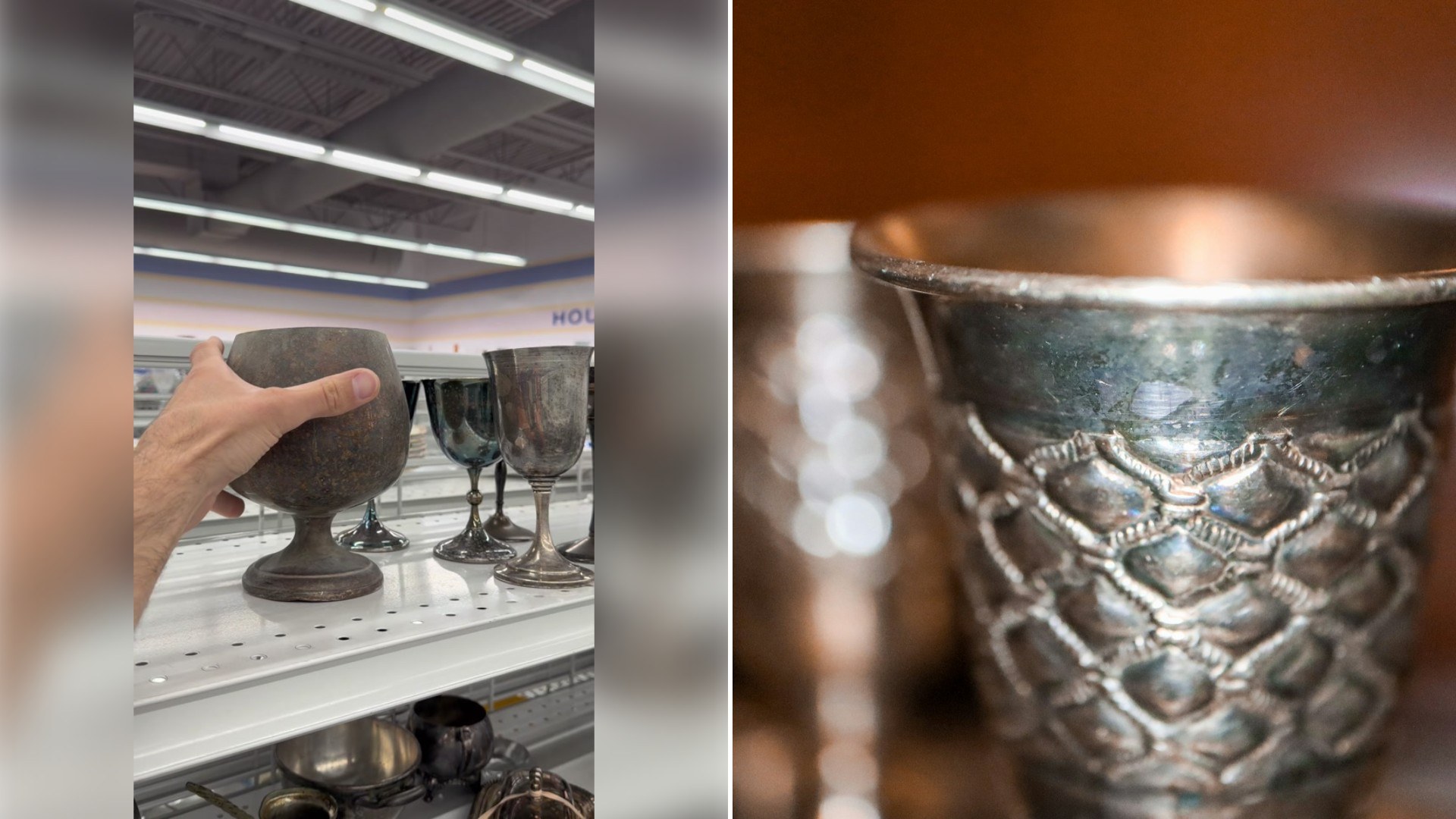
Not every thrift store find needs a dramatic backstory to earn attention, and the latest project from @crazyclean01 proves it, turning a heavily tarnished goblet found for three dollars and ninety nine cents into a genuine restoration story. The video opens with the piece in rough shape, its surface dulled and darkened by what looks like years of neglect, sitting on a shelf priced low precisely because most shoppers would have scrolled right past it without a second glance.
Rather than leaving it as is, the creator brings the goblet home and gets to work on a full restoration, methodically polishing away the layers of grime and tarnish that had built up over time. The process unfolds in satisfying stages on camera, each pass revealing a little more of the shine hidden underneath, the kind of transformation that has become a genre unto itself online precisely because it delivers such a clear, visual before and after with minimal explanation needed.
@crazyclean01
As the piece nears its finished state, the creator turns to her audience with a genuinely open question: should the restored goblet be used as a drinking glass, honoring its original function, or repurposed as a vase, giving it a new life as decor. That small, low-stakes question does a lot of work, inviting viewers to weigh in and turning a solo restoration project into a piece of interactive content that keeps people engaged well past the final reveal of the shine.
Tarnish on metal goblets and similar pieces typically forms through a chemical reaction with air and moisture over time, and while it looks dramatic, it is often more of a cosmetic problem than a structural one, meaning pieces that look nearly ruined on a thrift store shelf can frequently be brought back to a near-original shine with nothing more than patience and the right polishing approach. That accessibility is part of why tarnished metalware makes for such popular restoration content: the transformation looks dramatic, but the actual barrier to achieving it at home is genuinely low.
That low barrier to entry is exactly why restoration content built around cheap, unassuming thrift finds has become such a durable corner of secondhand culture online. Unlike furniture restoration or major refinishing projects, which often require specialized tools, significant space, and real time investment, polishing a small tarnished piece like a goblet can be done at a kitchen table in a single sitting, making it one of the more approachable entry points for anyone curious about restoration work but intimidated by bigger projects.
There is also a quieter environmental and financial argument running underneath videos like this one. A three dollar and ninety nine cent goblet, restored rather than discarded, keeps a perfectly functional piece of metalware out of a landfill while giving its new owner something that would likely cost significantly more to buy new in a comparable style, particularly if the piece has any age or craftsmanship to it that a modern mass-produced equivalent would lack. Restoration, in that sense, is as much a value proposition as it is a hobby.
For anyone inspired to try a similar project, the general approach is straightforward: a gentle, non-abrasive metal polish suited to the specific material, soft cloths to avoid introducing new scratches during the process, and enough patience to work through multiple passes rather than expecting a single application to strip away years of tarnish at once. Whether the finished piece ends up back on a table as a drinking glass or repurposed as a vase, as this creator’s audience is now busy deciding, the real win happens well before that choice, in the moment a nearly written off thrift store find starts to shine again.
It is also worth noting that not every tarnished piece needs professional intervention to look its best again. Household staples like baking soda paste or specialty metal polish sold at most hardware stores are often enough to handle moderate tarnish, and reserving stronger chemical treatments for only the most stubborn buildup helps avoid accidentally damaging a piece’s finish in the process of trying to save it.
There is also a lesson here about not judging a secondhand item purely by its surface condition at the moment of purchase, since tarnish, rust, and grime can make even a genuinely well-made piece look far worse than it actually is structurally, scaring off shoppers who might otherwise have recognized real potential underneath the neglect.
For readers with their own tarnished thrift finds sitting untouched at home, this kind of video is a good reminder that a little research into the specific metal involved, along with some patience during the polishing process, is often all it takes to turn an overlooked three dollar piece into something worth displaying proudly again.
That same principle applies well beyond goblets specifically, since almost any tarnished metal item found secondhand, from candlesticks to serving trays, tends to respond to the same basic combination of the right polish and a willing set of hands.
In the end, the transformation says less about the goblet itself and more about the willingness to see potential in something everyone else had already decided to overlook.

Leave a Reply