

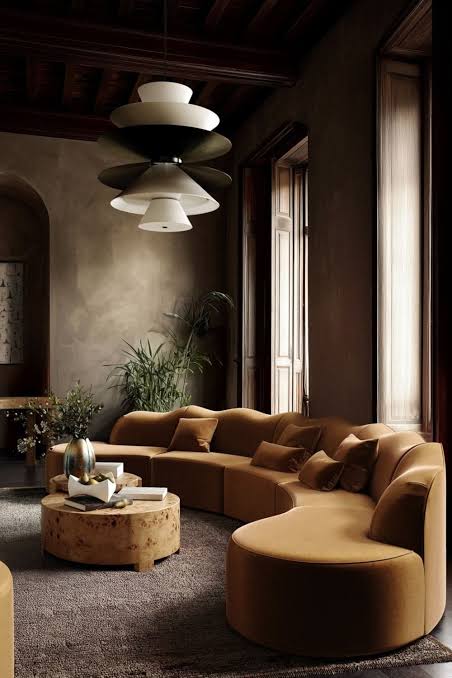
Search interest in “Neo Deco” is up 210 percent year over year, according to Trendalytics’ own Fall/Winter 2026 Home Decor Trends Report, which tracks search and influencer data to spot where consumer attention is actually moving. That number puts it among the fastest-growing named design movements the report tracked, described there as a modern take on “bold architectural geometry and rich materials like marble and velvet” — in other words, the Jazz Age’s favorite materials, filtered through a 2026 sensibility.
What the Data Shows
Trendalytics’ report names Neo Deco as one of five primary design movements it identified for the season, alongside Organic Modern, Vintage Decor, Whimsical Decor, and a heritage-focused seasonal styling trend, according to the same report. The broader pattern the firm describes is a shift away from minimalism toward “tactile natural materials, layered warm lighting, and grounded, expressive aesthetics” — Neo Deco is the movement inside that shift specifically built around geometry, shine, and material contrast rather than the softer, more muted textures driving categories like Organic Modern. Separately, Houzz’s own 2026 predictions, reported by Forbes, independently flagged an Art Deco revival for the same season, describing “chevrons, sunbursts, and stepped details paired with marble, lacquered surfaces, and metallic accents in brass, gold or chrome” — two separate research firms landing on the same visual language at the same moment.
What “Neo” Actually Changes About Deco
Original Art Deco, born in 1920s Paris and exported everywhere from Miami hotel facades to Manhattan skyscraper lobbies, was maximalist by nature — dense ornamentation, exotic materials like ivory and shagreen, and a level of formality that doesn’t map cleanly onto most 2026 homes. Neo Deco, as both reports describe it, keeps the bones — the stepped forms, the sunburst motifs, the confident symmetry — while trading some of the density for restraint: one lacquered console instead of a fully lacquered room, a single sunburst mirror instead of a wall of them, brass and chrome hardware doing the metallic work rather than gilded surfaces everywhere. It’s Deco’s geometry without Deco’s insistence on covering every surface.
Where the Look Actually Shows Up
Marble is doing double duty in this trend — as flooring and countertops in a diamond or checkerboard layout, and as smaller accent pieces like side tables and trays, where its natural veining supplies pattern without a repeating print. Velvet shows up almost exclusively as upholstery: a single Deco-silhouette chair or a banquette-style sofa with the material’s light-catching sheen doing more visual work than the shape alone would. Stepped, tiered forms — mirror frames, lamp bases, even cabinetry with a stair-stepped silhouette — are the detail most likely to read as specifically Deco rather than generically “glam,” since chevron and sunburst patterns alone have drifted into enough different design eras to lose some of their period specificity.
How to Bring It In Without Overdoing It
Because the original style was so dense, the failure mode with Neo Deco is usually doing too much rather than too little. Designers pulling this look into contemporary rooms tend to treat it the way they’d treat any bold historical reference: one true Deco-era or Deco-inspired piece as the room’s anchor, paired with simpler, more neutral furniture around it so the geometry and shine have room to register rather than competing with five other patterns. A stepped mirror or a single marble-topped bar cart tends to carry the reference more convincingly than an attempt to Deco-fy an entire room at once.
The Pattern Behind the Number
A 210 percent jump in search interest for a named, specific style — rather than a vague “glam” or “luxe” catch-all — suggests people are searching with real intent, not just browsing. Paired with an independent report flagging the same Art Deco revival from a different angle, it points to something more durable than a single influencer moment: a genuine appetite for a design language built on confidence and craftsmanship, arriving right as the design world more broadly pulls back from a decade of quiet, low-contrast minimalism.

Leave a Reply