

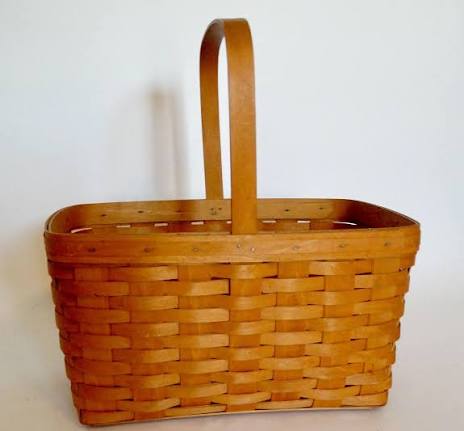
In 2000, a company that sold handmade maple wood baskets out of living rooms and church basements hit $1 billion in sales, employed more than 8,000 people directly, and paid roughly 70,000 independent sales consultants to move product door to door, making it one of the 500 largest privately held companies in the United States, according to reporting on the company’s rise and fall. Eighteen years later, that same company was in federal bankruptcy court, converting to Chapter 7 liquidation. There was no single scandal, no dramatic collapse caught on camera — just a slow eighteen-year unwind that offers a genuinely useful lesson in how a business built entirely on one person’s momentum survives that person’s absence.
A Basket Business Bigger Than Most People Realized
The Longaberger Company’s model looked, on paper, like a novelty: handwoven maple baskets, sold not in stores but through home parties run by an army of independent consultants, direct-sales style, the way Tupperware and Mary Kay had built their own empires decades earlier. But novelty and scale aren’t mutually exclusive, and by 2000 Longaberger had proven that a basket could be a genuinely serious consumer product. The company wasn’t a regional curiosity — with 70,000 sales consultants and over 8,000 direct employees, it was operating at a scale that put it in the same conversation as far larger, more conventional retailers.
The Year the Foundation Cracked
Founder Dave Longaberger stepped back from day-to-day operations in 1998 and died in 1999, and the company never fully replaced the force of personality that had built it, according to the same reporting. His daughter Rachel Longaberger Stukey has since described the transition as one for which the family had essentially no preparation — a founder-dependent business losing its founder with no real succession plan in place. That gap arrived just as the broader economy turned against discretionary home-decor spending: the September 11 attacks and the 2001 recession hit sales hard, and the 2007–2009 recession delivered a second blow the company never fully recovered from.
Eighteen Years of Slow Erosion
What makes Longaberger’s story more than a single bad decade is how many separate things had to go wrong to finish the job. The company later moved pottery production overseas to China, alienating loyalists who had specifically valued the brand’s “Made in the USA” identity — a core part of what buyers were paying for in the first place. Consumer habits shifted too; as one Ohio reporter covering the closure put it, people simply “began to see they could get by without baskets,” per WOSU’s coverage of the 2018 liquidation. A 2013 sale to JRJR Networks brought what that same reporting described as operational chaos and repeated layoffs rather than the stabilization new ownership was supposed to provide.
The company’s headquarters told its own version of the story. Longaberger had famously built its corporate office in Newark, Ohio, shaped like one of its own giant picnic baskets, complete with oversized handles arching over the roofline — a physical monument to the brand at its most confident. By mid-2016, the company had vacated that building entirely, two years before the bankruptcy court converted its Chapter 11 filing into a full Chapter 7 liquidation and forced the sale of what remained of its assets. A once-thriving direct-sales business that had put its face on Ohio’s skyline had, by the reporter’s own description, become the kind of company people were mildly surprised to learn had lasted this long.
What a Billion Dollars in Baskets Actually Proves
It’s tempting to read Longaberger as a story about baskets going out of fashion, but that undersells what actually happened. The company didn’t lose to a smarter competitor selling better baskets — it lost to time, to an unreplaced founder, to a supply chain decision that broke trust with its own customer base, and to a direct-sales model that depended on tens of thousands of individual relationships holding steady through a recession, an ownership change, and a generation of shifting habits. A billion-dollar year and 70,000 sales consultants weren’t insurance against any of that; they were simply evidence of how far momentum can carry a business before the momentum itself becomes the only thing holding it up. Once that stopped, there was nothing structural left underneath it — just a very large, very empty basket-shaped building in Ohio, waiting for a buyer.

Leave a Reply