

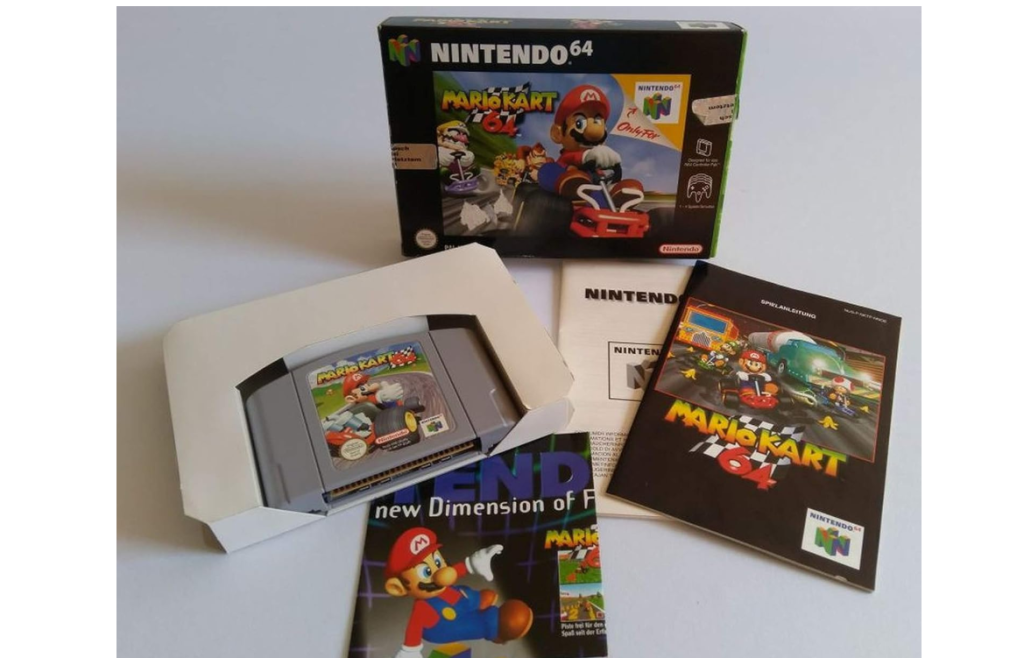
On June 23, 1996, Nintendo launched a console in Japan that would go on to set three world records nobody else in gaming has managed to break. The Nintendo 64 reached the United States roughly three months later, timed almost by accident to arrive one day after id Software’s Quake had just reshaped what PC shooters could look like, according to TechCrunch’s retrospective on the console’s debut. Its launch-window flagship, Super Mario 64, sold 11 million copies and is officially recognized as the first Mario game ever made in 3D, according to Guinness World Records. Two more N64-exclusive games would go on to do something similarly strange to their own genres. Thirty years later, all three records are still standing.
The Console That Rewrote the Rulebook
Nintendo built the N64 around fully 3D worlds at a moment when most consoles were still thinking in flat sprites, and it used Super Mario 64 to prove the bet was right. The game shipped the same day as the hardware specifically to drive adoption, according to Guinness’s own record page. Mario 64 wasn’t technically the first 3D platformer, though — that honor belongs to Sony’s Jumping Flash, which beat it to store shelves by a full year on the original PlayStation, per Guinness’s own ranking of the genre’s history. What Mario 64 actually did was set the template that nearly every 3D platformer built afterward has copied in some form: a free-roaming camera, open hub worlds, item-collection goals. Being first mattered less than being right.
Three Records That Have Never Been Broken
The N64’s other two genre-definers picked up their own hardware. GoldenEye 007, Rare’s 1997 shooter built around the Pierce Brosnan Bond film, sold 8.09 million copies — enough to make it the best-selling videogame ever based on a movie, a Guinness World Record it still holds. It also carries a second title: most critically acclaimed James Bond videogame, on the strength of a 96 on Metacritic and a 94.7 percent average on GameRankings across 21 reviews, according to Guinness. No Bond game since has matched it, in review scores or in cultural footprint. The four-player split-screen deathmatch it introduced became the reason a lot of households only owned one working N64 controller and three broken ones.
The Legend of Zelda: Ocarina of Time did something even harder to repeat. Guinness World Records lists it as the most critically acclaimed videogame ever recorded on Metacritic, with a score of 99 out of 100. As of the record’s most recent verification, it remains the only game to ever hit that number; nothing else has landed above a 98. A 3D-platformer record, a Bond-game record, and the highest Metacritic score any game has ever posted: three N64 exclusives hold them, and none of the three has been broken in decades. That’s less coincidence than evidence of a console that launched with the right team building the right ideas at the right moment.
Thirty Years Later, It Still Hasn’t Left
Nintendo keeps quietly re-releasing its own thirty-year-old console, which is the simplest explanation for why the N64 never really left. More than 40 N64 titles — Mario 64, Ocarina of Time, and GoldenEye among them — are playable today through the Nintendo 64 – Nintendo Classics library on Switch, which launched October 26, 2021 as part of the Nintendo Switch Online + Expansion Pack tier, according to Nintendo’s own listing. Then, on June 12, 2026, Nintendo announced Ocarina of Time is being fully remade and brought back exclusively for Switch 2, “reborn for a new generation,” per the company’s own announcement — a rerelease that lands, whether Nintendo planned it that way or not, almost exactly on the game’s 30th-anniversary window. Star Fox 64 got its own Switch 2 remake this year too, and GoldenEye’s soundtrack still has enough of a following among both millennials and Gen Z that it shows up in year-round retro playlists, according to Fox News‘s look back at the console’s impact.
Most 30-year-old consoles are museum pieces by now, plastic and cartridges gathering dust in a closet. The N64’s actual legacy is that three of its games are still the answer if you ask what a 3D platformer, a console shooter, or an action-adventure game is supposed to look like — and Nintendo is still selling that answer, one remake at a time.

Leave a Reply