

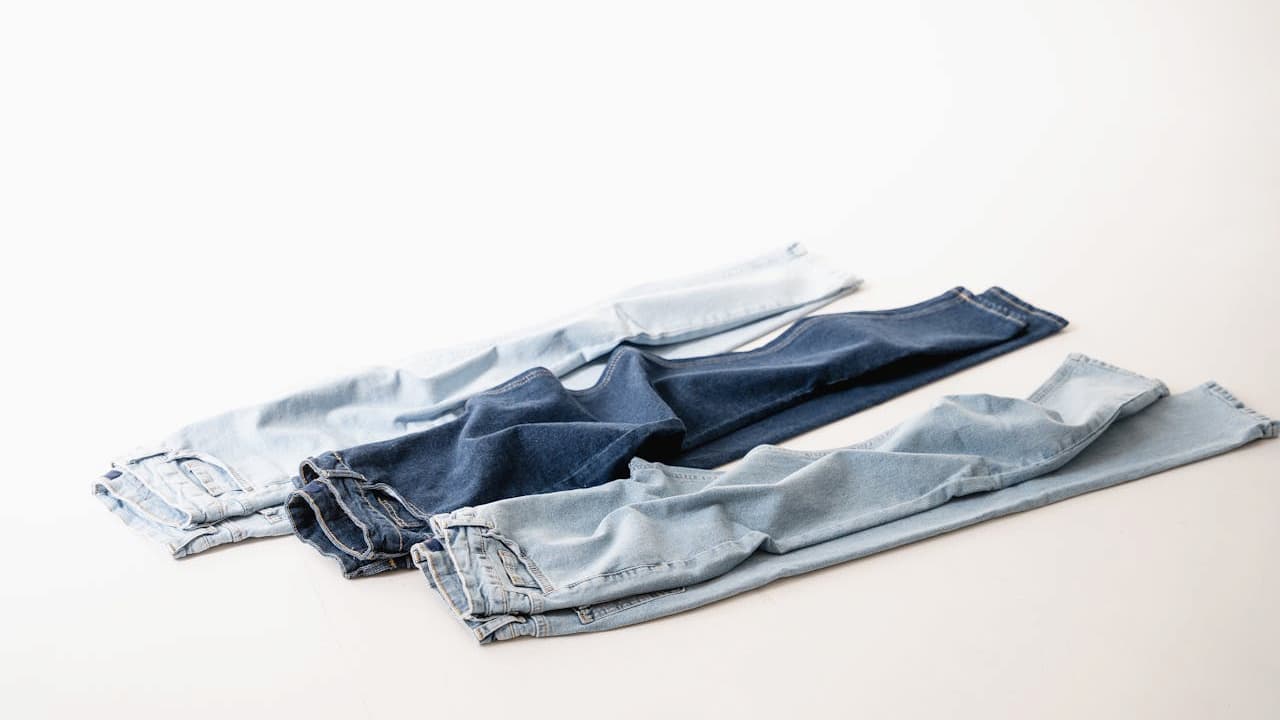
A pair of Levi’s that spent decades buried in a Nevada mine sold for $100,000 in 2023. Another pair, stitched together in 1893 for an Arizona storekeeper, brought in nearly the same amount in a private sale. If the denim in the back of your closet has a red tab, a button fly, and a manufacturing date somewhere in the last century, it’s worth a second look before it heads to the donation bin.
Jeans That Outlived a Mine Shaft
In September 2023, a badly distressed pair of jeans attributed to Levi’s and dated to 1873 sold for $100,000 at the second annual Durango Vintage Festivus, a denim-collector auction held in New Mexico, according to Artnet News. The buyer was an anonymous online bidder in Thailand. Vintage-denim dealer Brit Eaton had acquired the pants through a trade with a Japanese collector the year before; he’d hoped for more than $150,000 but landed on the reserve price instead, Artnet reported. The jeans, missing part of one leg and patched on the other, had a back buckle and a single rear pocket — construction details common on Levi’s made before 1900 and rarely seen intact today.
That wasn’t an isolated case. A separate 19th-century pair found in an abandoned Western mine shaft sold for $87,400, including buyer’s premium, according to Entrepreneur. The pants had been discovered roughly five years earlier by a searcher who’d combed through dozens of abandoned mines before finding them, and they still carried Levi’s original “made by white labor” label — wording the company dropped in the 1890s, which is part of what let buyers date the garment so precisely.

The $100,000 Storekeeper’s Jeans
Age and rarity, not brand recognition alone, are what push a price into six figures. A 125-year-old pair originally belonging to Solomon Warner, an Arizona Territory storekeeper, sold for nearly $100,000 in a private sale handled by Daniel Buck Auctions, according to ABC7 Chicago. The 1893 jeans were a size 44 waist with a 36-inch inseam, had only one back pocket instead of two, and used suspender buttons instead of belt loops, since belt loops weren’t added to the design until decades later. They’d reportedly been worn only a handful of times and survived in close to pristine condition. A comparable 1880s pair, per the same report, sold separately to a Japanese collector for $60,000.
What makes jeans like these different from a random thrift-store find isn’t just their age — it’s how few survive at all. Work pants were built to be worn out, not saved, so a 19th-century pair that escaped that fate is closer to an archaeological artifact than a fashion item.
What Actually Makes Denim Valuable
You don’t need 1800s denim to have something worth appraising. Collectors and dealers pay real premiums for details specific to Levi’s manufacturing history: a capital “Big E” on the red tab, used before the company switched to a lowercase “e” around 1971; selvedge seams with a visible red thread line, a marker of shuttle-loom denim production that Levi’s phased out of mass production by the mid-1980s; a single stitch on the back pockets instead of the later double arcuate reinforcement; and a lot number in the low 500s stamped on the leather patch. None of that guarantees a five-figure sale — most vintage jeans, even genuinely old ones, sell for closer to $100 than $10,000 — but it’s the difference between a garment a dealer will glance past and one that gets a second look.
The company itself treats this history as an asset worth preserving, not just a curiosity for resellers. Levi Strauss & Co.’s own archive, overseen by company historian Tracey Panek, holds garments dating back to the late 1800s alongside thousands of other pieces documenting the brand’s run through American fashion, according to the Levi Strauss & Co. newsroom. It’s the same collection the company draws on when it wants to verify whether a given pair actually is what a seller claims.
Before You Toss Them
None of this means every pair of old jeans is a lottery ticket. The sales that hit six figures involve extreme rarity — pants old enough to predate features modern buyers take for granted, verified down to the stitching and the label copy. But the gap between “worthless” and “worth checking” is smaller than most people assume, and it starts with actually looking at the tag instead of assuming decades in a mine, a mill, or a closet erased the value along with the fabric.
The pattern holds across most of what collectors chase: it was never the intention to save these things that made them valuable, it was the accident of nobody throwing them away.

Leave a Reply