

A mint-condition, first-edition 1959 Barbie — the original straight-leg doll in her debut swimsuit, doll number 850 — is valued at £25,000-plus, according to Potteries Auctions’ own published collectibles guide. At current exchange rates, that’s roughly $30,000 to $32,000 — comfortably clearing the $25,000 mark that keeps coming up as the benchmark figure for a genuinely rare vintage Barbie. The catch, and it’s a significant one, is the word “mint.” Most Barbies that have actually spent six decades in an attic, a toy box, or a garage sale bin don’t come close to that condition, which is exactly why knowing what to look for matters more than knowing the headline number.
What makes the 1959 original worth that much
Potteries Auctions, a UK auction house that fields Barbie valuation inquiries regularly enough to publish a standing guide on the subject, identifies the original 1959 doll as “the first ever Barbie doll,” distinguished by its straight-leg body construction and original swimsuit. Mattel produced the first-year run in far smaller numbers than later editions, before Barbie had proven itself as a mass-market phenomenon, which is the fundamental reason surviving examples in top condition command auction-house-level prices decades later. Later straight-leg and early bent-leg variants from the 1960s carry real but lower value — Potteries Auctions puts a 1965 Twist ‘n Turn Barbie in the £5,000 to £15,000 range, still a meaningful sum, but a fraction of what a true first-year doll commands.

The tells that separate a real find from a flea-market doll
A handful of physical details separate a genuinely valuable early doll from a later, far more common reissue or a well-loved but ordinary vintage piece. Body construction is the first check: the earliest dolls have a straight-leg design, changed to a bendable-knee construction in later production years, so leg posture alone rules a doll in or out of the earliest and most valuable category. Original packaging, original outfit, and original accessories all matter enormously — a doll with its correct period swimsuit, stand, and box intact is worth dramatically more than the same doll undressed and unboxed, even in comparable physical condition. Facial paint and hair also carry weight: subtle differences in eyebrow shape, lip color, and hairstyle mark specific early production runs that collectors track closely.
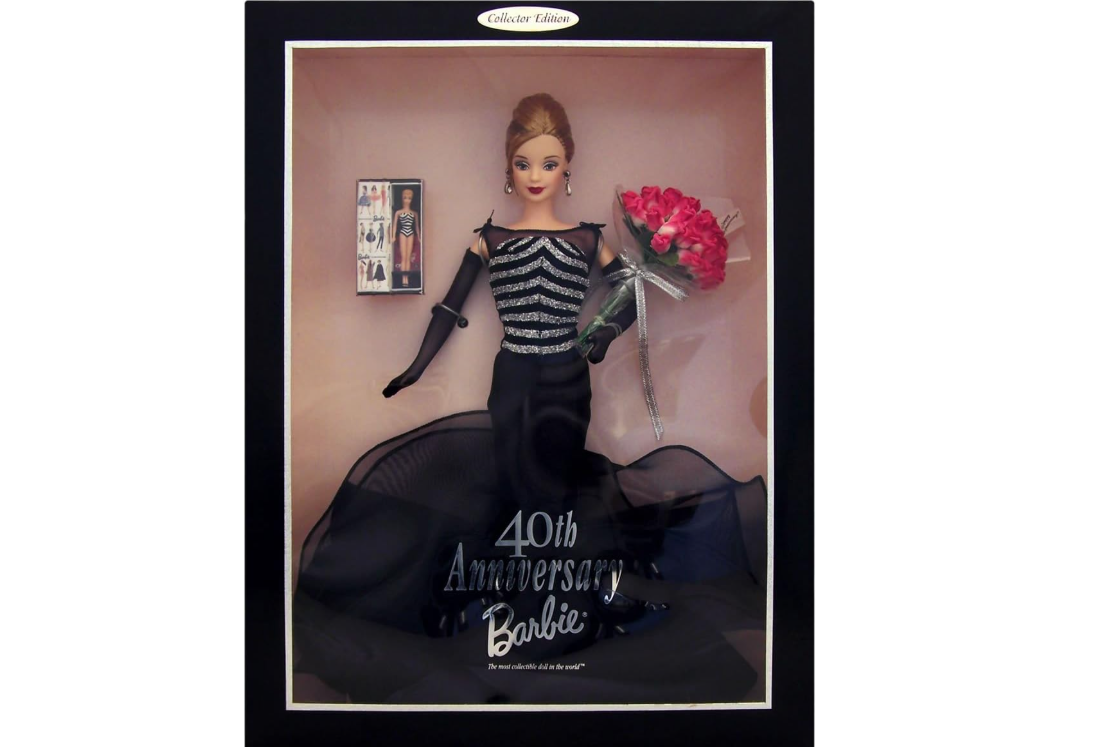
Beyond the original 1959 run, Potteries Auctions’ guide also flags specific later editions with genuine collector demand — limited-run designer collaborations and special releases rather than standard retail dolls. The De Beers 40th Anniversary Barbie, produced to mark the brand’s milestone and set with real diamonds rather than costume jewelry, is one frequently cited example of a special edition that trades well above typical secondhand Barbie prices precisely because its production run was deliberately small and its materials genuinely valuable, independent of the doll itself.
Why condition swings the price so dramatically
Dolls are unusually condition-sensitive compared to most collectibles because they were made to be handled, dressed, undressed, and played with — the exact opposite of how a collectible is supposed to be treated. Vinyl and early plastic degrade differently depending on storage conditions: sunlight fades hair and skin tone unevenly, heat can warp limbs at the joints, and humidity swings cause the vinyl itself to develop a sticky or greasy surface collectors call “vinyl rot” over enough decades. A first-edition 1959 doll that spent sixty-some years in a climate-controlled box behaves nothing like one that sat in an attic through decades of summer heat, even if both were technically “kept” the whole time. That’s a large part of why appraisers weight condition so heavily against age alone — for dolls specifically, survival and preservation aren’t the same thing.
What to actually do before assuming a doll is worthless
Most vintage Barbies in circulation, even genuinely old ones, land in modest territory — a few dollars to a few hundred, per Potteries Auctions’ broader guidance, once condition and edition are factored in. That’s precisely why it’s worth checking rather than assuming either extreme. A doll with a straight-leg body, an intact original outfit, and box or accessories that survived alongside it is worth a real appraisal rather than a garage-sale price tag or an automatic donation-bin toss. The gap between an ordinary secondhand doll and a five-figure find comes down to a small number of specific, checkable details — leg construction, originality of outfit and packaging, and edition — not a vague sense that “it’s old, so it must be valuable.”

Leave a Reply