

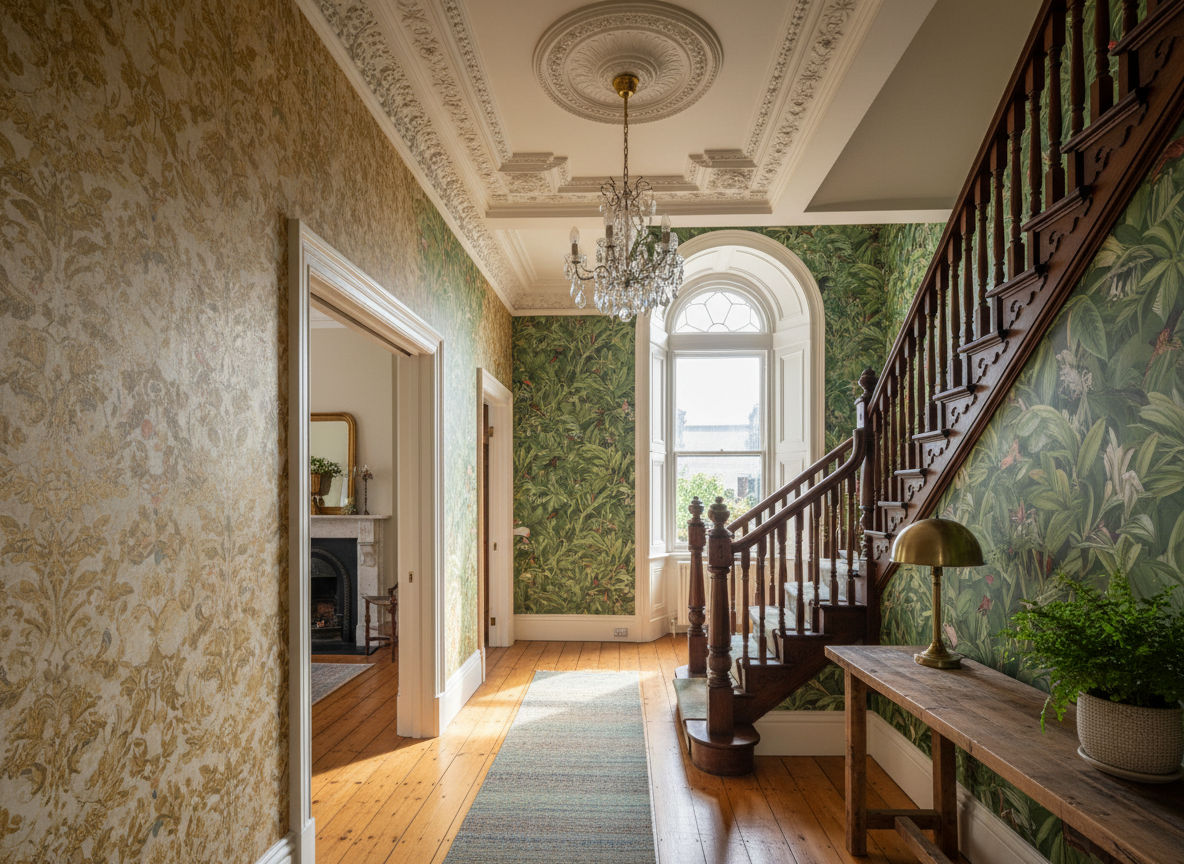
Amy Easley and her partner Dan just pulled the original gold-and-white wallpaper off a wall in their 1890 brick Victorian home, and the reaction from her own followers ran the opposite direction from what old-house purists usually expect.
The wallpaper had to go
Easley documents the ongoing renovation of her family’s 1890 brick Victorian on her own TikTok, @amy_easley, where she’s built an audience following the house room by room. According to a report from Yahoo, Dan had disliked the home’s dated gold-and-white wallpaper from the start, and the couple finally stripped it in favor of a green-toned, botanical mural-style design. Easley narrated the two-person job herself on camera, captioning the video simply: “This is definitely a DIY that requires two people.”
Old-house accounts usually get pushback for this exact move
Renovation accounts built around historic homes tend to draw a specific kind of comment section: anything read as erasing original character gets called out fast. That’s what makes the response here notable. Per Yahoo’s coverage of the video, commenters largely praised the update rather than criticizing it, with several specifically noting that the new wallpaper paired well with the home’s original ceiling work and woodwork, and that swapping one wall covering is a different thing entirely from stripping out the moldings, fixtures, and architectural details that actually define a Victorian interior.
The coverage also flagged a genuinely useful point for anyone tackling a similar project in a pre-1980s home: wallpaper from that era can contain asbestos in its backing or adhesive, and Yahoo’s report recommended researching a home’s specific wallpaper and checking local regulations before stripping anything, rather than assuming an old wall covering is automatically safe to remove without precautions.
The bigger debate isn’t going anywhere
Easley’s account has built its following specifically on the tension between preserving an old house and actually living in one, and this project is a clean example of how she navigates it: she kept the room’s ceiling, woodwork, and layout untouched, and changed only the one element that wasn’t working for the family. Judging by this reaction, that’s the distinction her audience actually cares about, not whether every original surface survives untouched.

Leave a Reply