

A woman recently shared her frustration on Reddit after her mother allowed a friend to reorganize the kitchen she had spent a year cleaning and managing. The young woman, living with her mother following her father’s death, had taken on the daunting task of restoring a severely neglected home. The kitchen was particularly challenging, as it had been a site of hoarding, covered in grime and disarray.
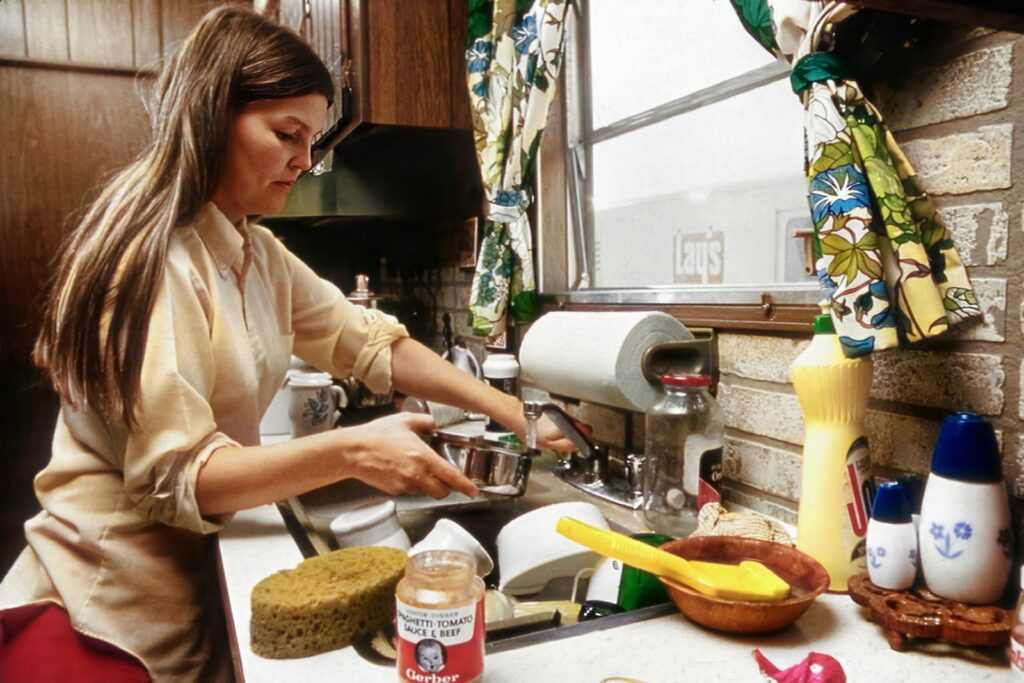
Before she moved in with her mother, the kitchen had been a chaotic environment. Layers of dirt coated surfaces, expired food littered the cabinets, and the floor was nearly impassable, buried under a mountain of boxes and clutter. The daughter, who suffers from severe scoliosis and other health issues, rented dumpsters multiple times to rid the house of its accumulated junk. Her hard work made the kitchen somewhat presentable, transforming it from an unsanitary space into one where meals could be prepared.
The kitchen had become her domain, a refuge where she could cook and create healthier meals for both herself and her mother. She had put significant effort into organizing everything from utensils to food items. However, her mother, who had not cooked in years and mostly relied on fast food, was not as invested in the cleanliness and functionality of the kitchen. Yet, she understood the importance of the space for her daughter.
Just before the daughter was set to return home, she made it explicitly clear to her mother that she wanted to be present if any work was done in the kitchen. Despite her mother’s previous assurances, on the day of her arrival, she allowed her friend to come over and reorganize the kitchen. The daughter was horrified when she learned that the friend had moved items around, creating chaos in the very space she had worked tirelessly to restore.
Upon calling her mother from the airport, she felt a wave of disappointment and frustration wash over her. She explained how her efforts had been disregarded, that the boundaries she set had been ignored. Instead of understanding her feelings, her mother downplayed the situation, suggesting that her daughter was overreacting. The friend, present on the call, even joked about the daughter’s need for control, further aggravating the situation.
What stung the most was not just the disarray; it was the principle behind it. The daughter had devoted a full year to making the kitchen her own, pouring in labor and care despite her physical limitations. For her mother, who had hoarding tendencies herself, to allow someone else to disrupt that space felt like a betrayal. The daughter had been mindful of her mother’s attachment to her belongings, often seeking approval before discarding items. The lack of respect from her mother was profoundly disheartening.
In the daughter’s eyes, it was about more than just the kitchen. It was about respect, boundaries, and recognizing the hard work put into a space that had been foul and unmanageable for far too long. As she stood in the airport, she felt defeated, overwhelmed by the chaotic state her mother and friend had created in her absence. The feelings of hurt were compounded by the fact that her mother seemed not to understand the significance of the kitchen to her daughter.
One reader pointed out that it was understandable for the daughter to want control over her own cooking space. “You dedicated so much time and energy to it,” they wrote. Another user expressed that her feelings of frustration were valid, especially since she explicitly communicated her wishes beforehand.
The daughter has been left wondering whether her mother’s actions were taken out of spite or simply a lack of understanding of her needs. The experience has stirred conflicting emotions about the relationship and her role in the household. How do you navigate respect and autonomy in a space that has been both a sanctuary and a source of stress?
As she processes what happened, she’s contemplating how to address the issue with her mother. Should she push for an apology? Try to rebuild the kitchen again? The uncertainty lingers as she weighs her options.
More from Vinyl and Velvet:

Leave a Reply