

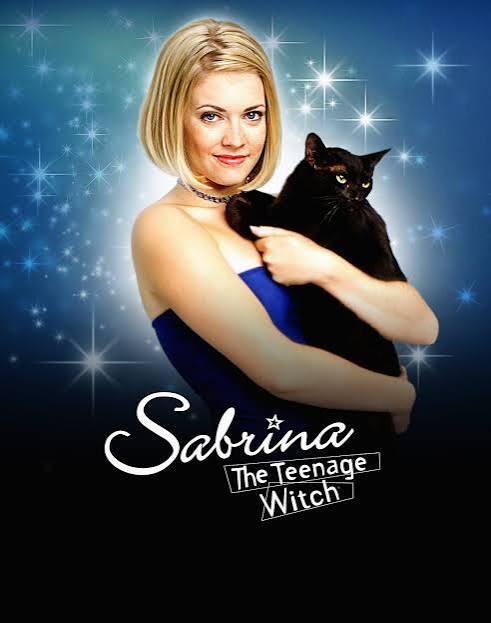
Sabrina the Teenage Witch turns 30 this month, and for years almost nobody watching at home could tell that Salem, the show’s sharp-tongued talking cat, was mostly a machine. Melissa Joan Hart starred as the title witch when the series premiered Sept. 27, 1996, running seven seasons before it wrapped in 2003. Salem’s close-up dialogue scenes were handled by an animatronic puppet, not a trained animal, with live cats brought in only as stand-ins for wider shots. Hart, it turns out, wasn’t particularly fond of working around the real ones.
A Cat Built for Close-Ups
Salem’s design was a practical solution to an impossible ask. A live cat can’t deliver deadpan one-liners on cue, so the production leaned on an animatronic version, one clearly built to move its mouth and speak convincingly on command, for any shot requiring precise timing, according to E! News. Real cats filled in as stand-ins throughout the show’s seven-season run for scenes that just needed a cat to sit, walk, or glare. It’s a detail that surprises a lot of longtime fans, since Salem reads on screen as such a fully realized character that the mechanics behind him tend to disappear entirely.
Hart Would Rather Have Worked With a Dog
According to E! News, Hart said at a 2013 book launch event that she struggled being around the show’s live cat stand-ins for the entirety of its run, noting the set was “covered in cat food” and joking that she “can’t do cats anymore.” She has described herself flatly as “a dog person,” a small detail that has stuck with fans mostly because it runs so against type for an actress whose most iconic role spent seven seasons opposite a cat.
Not Everyone on Set Agreed
Hart’s on-screen aunt didn’t share the sentiment. Caroline Rhea, who played Aunt Hilda, pushed back at the same event, saying, “I was always the one who had to be mean to the cats, and I’m the one who, like, loves the cats the most!”, per E! News. The split take between two of the show’s leads is a small reminder that a beloved TV animal is rarely one single, consistent experience behind the camera, even when it looks completely seamless in the final cut.
The Voice Behind the Puppet
Salem’s voice belonged to Nick Bakay, who was originally hired as a writer on the show before auditioning for the role himself. “I was already in there working on it, and they were looking for voices. They had me read for it, and I got it,” Bakay later told Refinery29. He voiced the character live on set, working just off-camera with a boom mic while head puppeteer Thom Fountain operated the animatronic’s mouth in sync, a partnership Bakay described as developing “a very great rhythm” over time. By his own count, the production cycled through roughly five or six different Salem puppets built for different scenes and camera angles.
Thirty Years of a Show Nobody Expected to Last
Sabrina wasn’t positioned as a flagship series when it launched in 1996, arriving on ABC’s Friday-night TGIF lineup alongside a rotating cast of family sitcoms, most of which did not survive the decade. This one did, moving networks, gathering a loyal audience, and eventually spinning off comic books, a reboot, and enough Salem merchandise to suggest the cat business model worked out fine either way. A cryptic 30th-anniversary tease from Hart on social media this year has fans wondering if there is more story left to tell, per Parade.
Thirty years on, Salem still gets more attention than almost any other sitcom pet from the era, animatronic joints and all. The puppetry never had to hold up under close scrutiny because the writing sold the joke first, and viewers happily went along with a cat who could out-talk every teenager in the room. Whatever comes of Hart’s teased announcement, Salem is likely to be part of it, boom mic and animatronic mouth included. It’s a strange kind of longevity for a character built largely out of practical effects and one writer’s voice work, but three decades later nobody’s proposing a CGI upgrade. The rough edges are apparently the point, and thirty years in, they’ve aged into a kind of charm that a smoother, more modern version of the character probably couldn’t fake.

Leave a Reply