


Forty thousand people held their sneakers in the air at Madison Square Garden on July 19, 1986, at Run-DMC’s direct request, and an Adidas executive sitting in the crowd watched it happen. That single moment turned a basketball shoe from 1970 into a cultural landmark, and it’s still how Adidas tells its own origin story. According to Adidas’ own company blog, the collaboration “marked a pivotal moment, solidifying the shoe’s influence across music, art, and fashion communities.” Sixteen years after the Superstar’s release, a rap song did what sixteen years of basketball marketing never fully managed.
A Shoe Built for the Court, Not the Stage
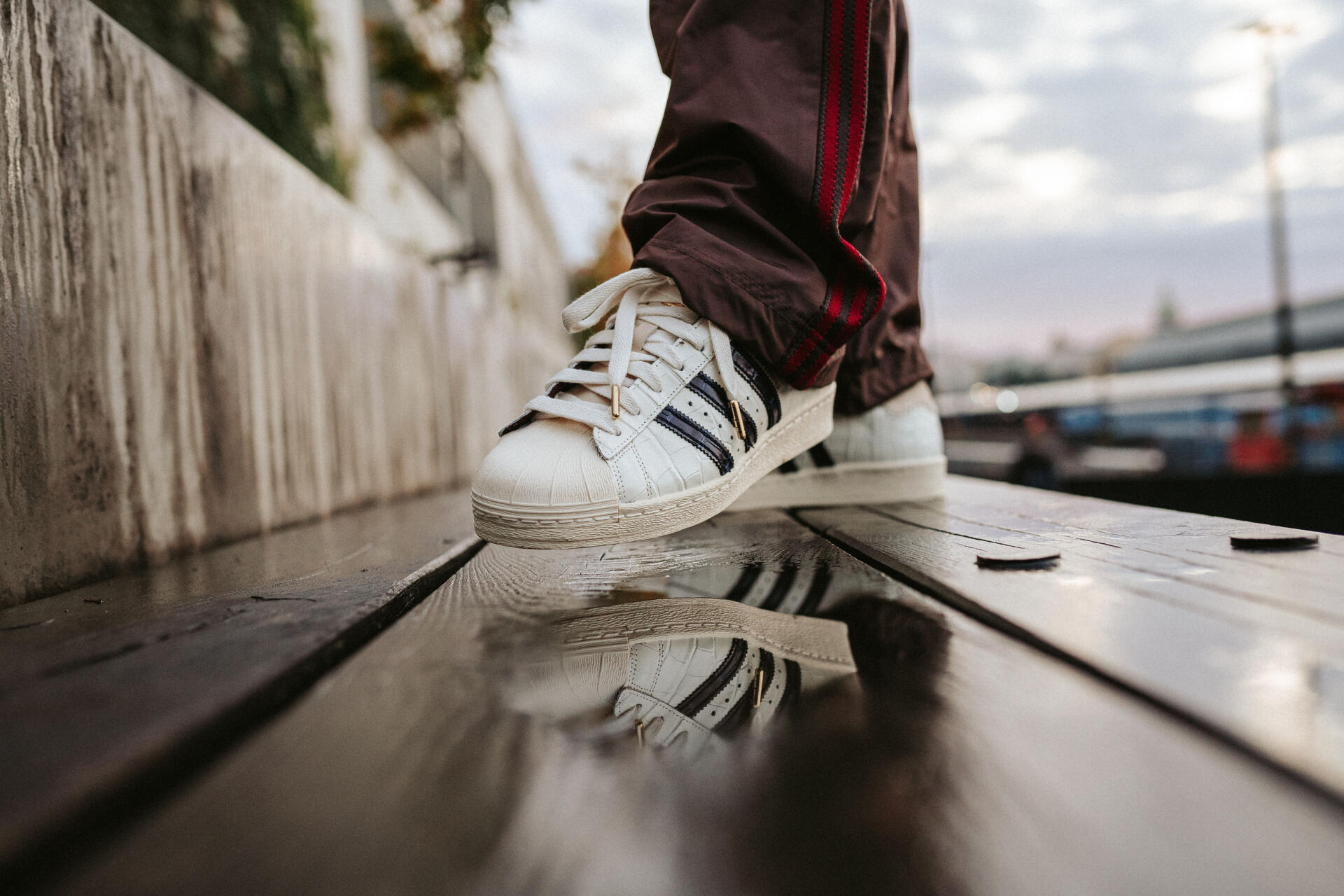
Adidas launched the Superstar in 1970 as a performance basketball shoe, distinguished by its now-famous rubber shell toe, designed to protect players’ feet during hard court contact. For most of the following decade and a half, it stayed exactly that: an athletic shoe worn by athletes, sold through athletic channels, with no particular connection to music or street culture. Nothing about its original design brief anticipated it becoming a symbol carried by a rap trio from Queens.
A Song Written to Fight a Stereotype
The shift began with a specific grievance. According to Complex’s interview with Run-DMC’s DMC, the group wrote “My Adidas,” released on their 1986 album Raising Hell, partly as a response to a local doctor who’d published materials suggesting kids wearing certain sneaker brands were criminals. Run-DMC wanted to flip that narrative, turning the shoe into a symbol of their own achievements rather than a mark against them. The track climbed to number 5 on Billboard’s Hot R&B/Hip-Hop Songs chart and, per Guinness World Records’ account of the story, sparked a noticeable sales spike for Adidas footwear on the US East Coast.

The Concert That Sealed It
That sales bump got Adidas’ attention, but the Madison Square Garden show is what turned interest into a deal. The group’s co-manager arranged for an Adidas executive, Angelo Anastasio, to be in the room. When Run asked the sold-out crowd to hold up their Adidas sneakers, an estimated 40,000 people responded at once, and Anastasio reported what he’d witnessed straight back to the company’s leadership in Germany. Within that year, Run-DMC signed a $1.6 million endorsement deal, a figure Guinness World Records recognizes as the first sneaker endorsement ever given to people outside professional sports.
Why a Basketball Shoe Was the Right Canvas
Part of what made the Superstar work as this unlikely crossover symbol is that it was never trying to be fashionable in the first place. Its shell toe and stripes were functional design choices for a court shoe, plain and durable rather than decorative. That utilitarian honesty is exactly what let Run-DMC reclaim it as a statement of self-made success rather than a targeted status object, and why the shoe’s meaning could shift so completely without the design itself changing at all.
A Deal That Rewrote the Playbook
It’s worth pausing on how unprecedented that $1.6 million figure actually was in 1986. Athletic footwear companies had endorsement relationships with athletes going back decades, but signing three musicians who had never thrown a ball professionally in their lives was, per Guinness World Records, the first deal of its kind given to anyone outside sport. That single contract effectively created the template every sneaker brand still uses today, pairing footwear with musicians and cultural figures rather than only professional athletes, a strategy so normalized now it’s easy to forget someone had to prove it would work first.
The Lasting Lesson
What connects a 1970 basketball shoe to a 1986 rap anthem to a still-running sneaker franchise decades later is that the Superstar’s biggest transformation happened entirely outside Adidas’ own marketing department. The company didn’t design a hip-hop shoe. Three musicians from Queens looked at an ordinary athletic product, saw something worth defending, and rewrote what it meant for everyone who came after them. Every artist who has since designed a signature sneaker, headlined a fashion campaign, or turned a piece of clothing into a statement about identity is, in some sense, working in the space Run-DMC opened up on a Madison Square Garden stage in the summer of 1986. That’s an unusually long shadow for one song and one concert to cast over an entire industry, but the shell toe is still selling because of it.

Leave a Reply