

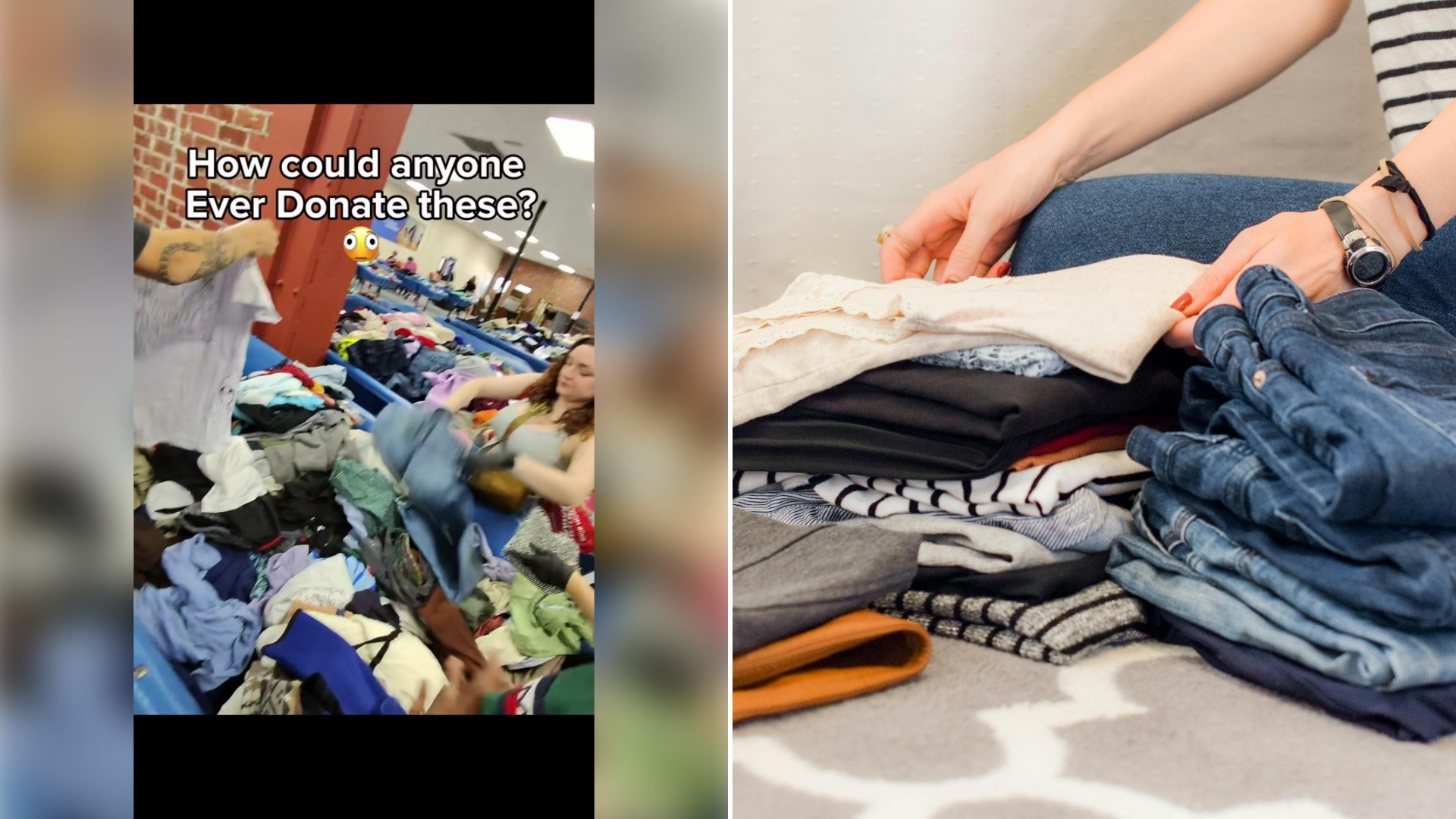
Outlet bin stores exist on donated volume, and few formats capture the sheer unpredictability of that volume as well as a video from @fiyabenda, who digs through large bins of unsorted clothing pulling out one surprisingly high-quality or desirable piece after another. Her reaction to each find settles into a consistent, genuine disbelief, repeatedly asking how anyone could have given a piece like this away in the first place.
That repeated question is really the heart of the video. Rather than treating each find as an isolated lucky pull, the accumulation of good pieces builds into a broader commentary on just how much genuinely desirable clothing ends up donated without a second thought, landing in a bin priced by the pound rather than sold for anything close to its actual worth.
Thrift outlet bin stores sit at the very end of the secondhand donation pipeline, typically receiving items that did not sell at a standard thrift store first, which means the bins are a genuine mixed bag: plenty of ordinary, unremarkable items, but occasionally something that should never have made it that far down the chain in the first place. That inherent unpredictability is exactly what makes bin-diving content so consistently watchable, since no single trip guarantees a good find, but the possibility is always technically there.
Fast-paced, high-volume digging videos like this one also double as an implicit argument for why some shoppers are willing to spend hours sorting through unsorted piles rather than simply shopping regular racks, since the sheer volume of material being cycled through means good pieces really do slip through more often than most casual shoppers would expect.
The economics behind bin store pricing help explain exactly why finds like these keep happening. Because inventory is typically priced by weight rather than by individual item value, a designer piece and a worn-out basic tee can end up costing essentially the same amount, removing any of the usual pricing signals that might otherwise clue in a casual shopper to an item’s actual worth. That flat, undifferentiated pricing structure is precisely what creates the enormous value gaps that bin-diving content thrives on capturing.
There is also a real skill component to bin diving that separates a successful trip from a wasted afternoon, one that goes well beyond simple patience. Recognizing quality fabric, construction, and brand details buried among piles of ordinary clothing requires a trained eye built up over repeated trips, since bins offer none of the usual organizational cues, no size sorting, no category separation, no visual merchandising, that a standard thrift store rack at least loosely provides. A digger who can consistently pull out genuine finds from that chaos is demonstrating real expertise, not just luck.
The specific question of how anyone could give a piece like this away also touches on something true about how donation habits actually work at scale. Most donors are not carefully evaluating each item’s resale value before dropping off a bag of clothes; they are decluttering, moving, or simply clearing out a closet, and that practical, often rushed mindset means genuinely valuable pieces get swept up and donated right alongside worn-out basics with no real distinction made between them. The resulting donation stream reflects convenience and volume far more than any careful curation, which is exactly why so much genuinely desirable clothing ends up in a bin priced for its weight rather than its worth.
Bin diving specifically has grown into its own distinct and increasingly popular subculture within the broader reselling and thrifting community, drawing a dedicated following willing to accept dirtier, less pleasant search conditions in exchange for meaningfully lower prices and a genuinely wider pool of unsorted inventory to dig through. That trade-off, comfort and convenience against raw opportunity, defines the format and explains why content built around it tends to emphasize both the grind of digging and the payoff of a good find in roughly equal measure.
There is also something worth saying about the physical, almost athletic nature of digging through a large bin, an activity that looks casual on camera but actually involves real repetitive effort, leaning over the bin’s edge, sifting through tangled layers of clothing, and moving quickly enough to cover meaningful ground before other shoppers pick through the same section. That physicality is part of why bin-diving content reads as more genuine and less performative than a curated store haul, since there is no way to fake the sheer volume of material being sorted through in real time.
The video also captures something worth appreciating about the emotional rhythm of a good bin session, the way disbelief compounds with each subsequent find rather than fading after the first one. A single surprising pull might read as luck, but repeated finds within the same trip start to feel like validation of a genuine skill or strategy, reinforcing the diver’s instinct to keep digging rather than move on after an initial success. That compounding excitement is part of what keeps viewers watching through an entire video rather than losing interest after the first reveal.
It is also worth noting how content like this one contributes, in its own small way, to a broader cultural reconsideration of what secondhand clothing actually represents. Rather than treating donated clothing as inherently lesser or worn out, videos built around genuine, high-quality bin finds push back against that assumption, reframing the donation pipeline as a source of real value hiding in plain sight rather than a last resort for items nobody wants anymore.
For anyone curious about trying bin diving themselves, a video like this one is a solid preview of the payoff, provided you are willing to put in the digging that makes finds like these possible in the first place.

Leave a Reply