

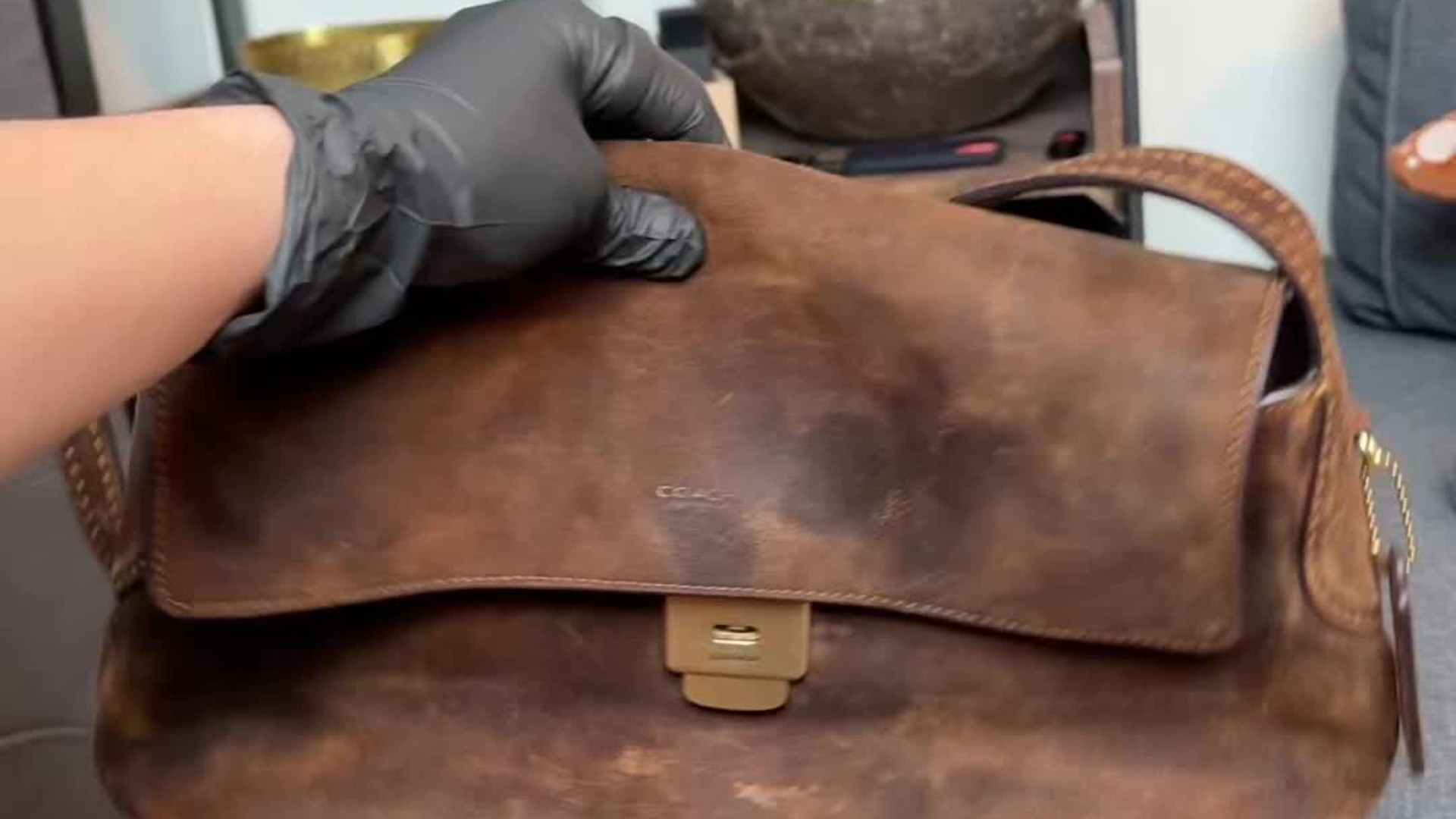
Most Goodwill shoppers would walk right past a suede bag covered in water stains and years of grime. One reseller picked it up anyway, and turning its recovery into a running series has already pulled in 1.4 million views on the first installment alone.
A Bag Nobody Else Wanted
The video comes from @naddyamichelle’s own TikTok, where the creator shows off a suede Coach Chelsea bag picked up at Goodwill for almost nothing, badly stained and clearly neglected by whoever donated it. The on-screen text asks the question every viewer is thinking: “WHAT HAPPENED TO THIS BAG?” The caption sets the tone for what’s coming: “This poor suede Chelsea bag. We’ll see if we can revive her. Part 1 day 1 of this project.”
That framing matters. This isn’t a quick before-and-after wipe-down. It’s day one of what the creator is already presenting as a multi-part project, and judging by the numbers, viewers are here for the long haul. The clip has pulled 1.4 million views on an account with just 4,000 followers, a jump of roughly 115 times what the creator typically sees, tagged with #coach, #coachrestoration, #bagrestoration, #coachbag, and #suedecleaning.

Why Suede Scares Off Most Resellers
Leather has a forgiving reputation in the secondhand world. A scuffed leather bag can usually be conditioned, buffed, and sold within an afternoon. Suede is a different animal entirely. Its raised, fibrous surface traps dirt, oils, and water stains in a way smooth leather doesn’t, and a wrong move with the wrong cleaner can permanently flatten or discolor the nap. That’s exactly why so many suede pieces end up in donation bins in the first place. Previous owners either didn’t know how to maintain them or gave up trying, and most casual thrifters skip past a stained suede bag rather than risk making it worse.
That hesitation is precisely what creates the opportunity a patient reseller can capitalize on. A designer bag like a Coach Chelsea already carries brand recognition and resale value even before restoration. Add in the visible transformation of turning a stained, unloved piece back into something presentable, and the appeal isn’t just financial. It’s the same instinct that drives interest in furniture flips and thrift store makeovers across social media: watching something written off as ruined slowly come back to life.
Turning a Flip Into a Series
Labeling the video “Part 1 day 1” was a smart structural choice, whether or not it was intentional. Restoration content thrives on anticipation, and a single before-and-after clip can’t deliver the same suspense as a process broken into stages. Viewers who watch the first stained reveal have a reason to come back and see how the cleaning actually goes, whether the discoloration lifts, and what the bag ultimately looks like once it’s done. That kind of built-in cliffhanger is part of why restoration and refurbishment content performs so consistently well across resale-focused corners of the internet.
It also mirrors a broader shift in how secondhand sellers present their work. A decade ago, a reseller might simply photograph a cleaned bag next to its dirty original state and call it done. Now the process itself has become the content, with cleaning techniques, product choices, and patience on display as much as the final result. For suede specifically, that visibility matters. Plenty of thrifters own a stained suede piece sitting untouched in a closet because they assumed it was beyond saving, and watching someone else attempt the fix in real time offers both entertainment and something closer to a tutorial.
What Happens to the Bag Next
As of this first installment, the full outcome of the Chelsea bag’s restoration hasn’t been shown yet. That’s the point. What’s already clear is that a badly stained suede bag most shoppers would have left on the shelf has become the centerpiece of a running series people are actively invested in following. Whether the finished bag ends up back on someone’s shoulder or listed for resale, the audience built around watching it happen is proof that a good restoration story can be just as valuable as the item itself.
A Bigger Lesson for Thrift Shoppers
There’s a practical takeaway buried inside all the entertainment value, too. Suede pieces get passed over constantly at donation centers precisely because most shoppers assume stains are permanent. This series suggests otherwise, at least for some cases, and that alone could nudge more casual thrifters toward giving a damaged suede bag or jacket a second look instead of walking past it toward the leather rack. Designer labels in particular hold enough resale value that even a partial restoration can make the initial bargain price worth the effort.
It also reflects how much patience factors into successful reselling as a whole. Anyone can flip an item that only needs a wipe-down. Fewer people are willing to sit with a genuinely rough piece through multiple cleaning sessions and document the uncertainty along the way, including the very real chance that a stain simply won’t lift. That willingness to show the process without knowing the ending in advance is part of what’s pulling viewers back for the next part, and it’s a habit worth borrowing for anyone building a resale account of their own.

Leave a Reply