

Ask a certain generation about the toy helicopter that flew in circles around the living room, and the memories come flooding back. Creator @travis.chumley.75 takes a look back at the Mattel Vertibird, and it is a trip down memory lane.
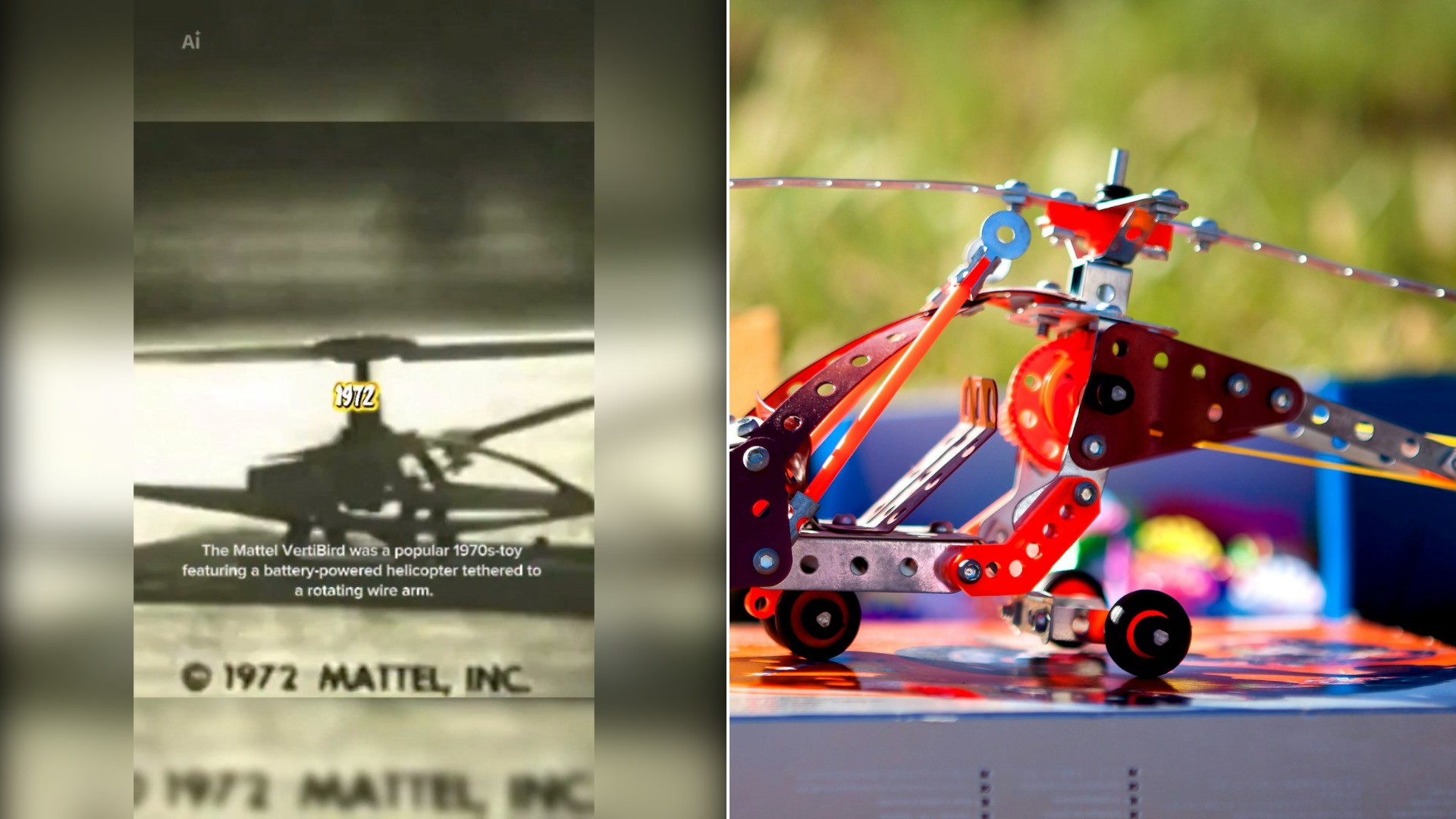
The Vertibird was a battery powered toy helicopter tied to a rotating wire arm. It came with a landing pad, a capsule, a life raft and a tiny astronaut, and it turned every kid into a rescue pilot.
View this post on Instagram
A Helicopter On A Wire That Felt Like Real Flying
The toy was built around a simple but clever idea. The helicopter was attached to a rotating arm, so it could rise and circle but never fly away, which kept it safe for a child to operate indoors.
It was a toy from the early 1970s, and it came from Mattel, the company behind Hot Wheels and Barbie. In an era of space exploration and rescue missions, the Vertibird fit right in.
Two Levers Gave Kids Real Pilot Controls
The creator explains that the handheld control had two levers. One controlled the speed of the rotor, and the other changed the pitch of the blades.
That was the secret to the Vertibird’s charm. Instead of a single on-off switch, kids had to learn how the two controls worked together, just like a real helicopter pilot, to lift off, hover and gently set down.
It was a little tricky, and that was the fun of it. Landing the helicopter on the pad took practice, patience and steady fingers.
The Landing Pad, Capsule, Life Raft And Tiny Astronaut
The set came with accessories that turned play into a mission. There was a landing pad to touch down on, a capsule, a life raft and a tiny astronaut who needed rescuing.
Kids would hook the capsule, lift it into the air and carry it to a new spot, then set it down just right. The astronaut and life raft added a splashdown story that matched the space coverage on television at the time.
It was imaginative play with a real skill challenge built in, which is part of why people still talk about it decades later.
Why The Vertibird Still Brings Back Memories
Many grown-ups remember getting one for a birthday or Christmas and playing with it until the batteries ran down. The whirring sound of the rotor and the click of the levers are the details that stick in the mind.
Toys from that era were often built with sturdy plastic and real moving parts, and they asked kids to do something rather than just watch. That is why nostalgia posts about them draw so many comments from people sharing their own stories.
The Vertibird has since become a fond reminder of a time when a living room carpet could turn into an ocean and a coffee table into a launch site.
Thinking Of Buying One? Collector Tips
Vintage Vertibird sets turn up at online auctions, toy shows and estate sales, and prices depend on condition and completeness. A set with its original box and every accessory is worth far more than a loose helicopter.
Check that all the pieces are there: the helicopter, the control, the arm, the landing pad and the small accessories. Tiny parts like the astronaut and life raft are the ones most often lost over the years.
- Open the battery compartment and look for corrosion, which can ruin the electronics.
- Look for brittle or cracked plastic, a common problem with toys of this age.
- Ask if the unit has been tested, and check sold listings for fair prices.
The Golden Age Of Mechanical Toys
The early 1970s were a high point for toys that moved, buzzed and whirred. Battery power was getting cheaper and more reliable, and toy makers competed to put small motors into everything from race tracks to robots.
The Vertibird stood out because it asked for skill rather than a button press. Kids could get better with practice, and that sense of mastery kept them coming back to the living room floor.
Parents liked it too, since the tether kept the helicopter from crashing into the lamp, and a good landing earned a cheer from everyone in the room.
Take Care Of Your Old Toys
If you still have one in the attic, remove the batteries before storing it, since leaking batteries ruin more vintage toys than anything else. Keep it in a cool, dry spot away from sunlight, which fades and cracks plastic.
Gentle cleaning with a soft cloth and a little mild soap is usually enough. Skip harsh solvents, which can damage decals and paint.
Sharing the toy with a grandchild is a nice way to hand down a piece of your childhood. Let them take the controls, and you will see the same spark that kids saw fifty years ago.
A Toy That Let Kids Fly
The Vertibird was never fancy, but it captured the imagination of a generation. A helicopter on a wire, a pair of levers and a tiny astronaut were enough to make a kid feel like the hero of a rescue mission.
For anyone who remembers one, it is worth taking a moment to smile at the memory. And for anyone who never had a chance to fly one, it is easy to see why the toy still has fans.
More Stories You May Like
- Hayley Williams Brings Out Seu Jorge In Sao Paulo To Sing His Portuguese Bowie Cover Life On Mars, The Same Cover That Inspired A Verse On Her Song Zissou
- Bon Jovi Shot Five Or Six Different Slippery When Wet Covers Before Landing On A Black Plastic Bag Sprayed With Oil And Water, After The Label Got Nervous About Anything Provocative
- Harper Lee Wrote To My Dearest Truman Inside A First Edition Mockingbird Now Estimated At $20,000 To $40,000 With Bids Already At $7,000

Leave a Reply