

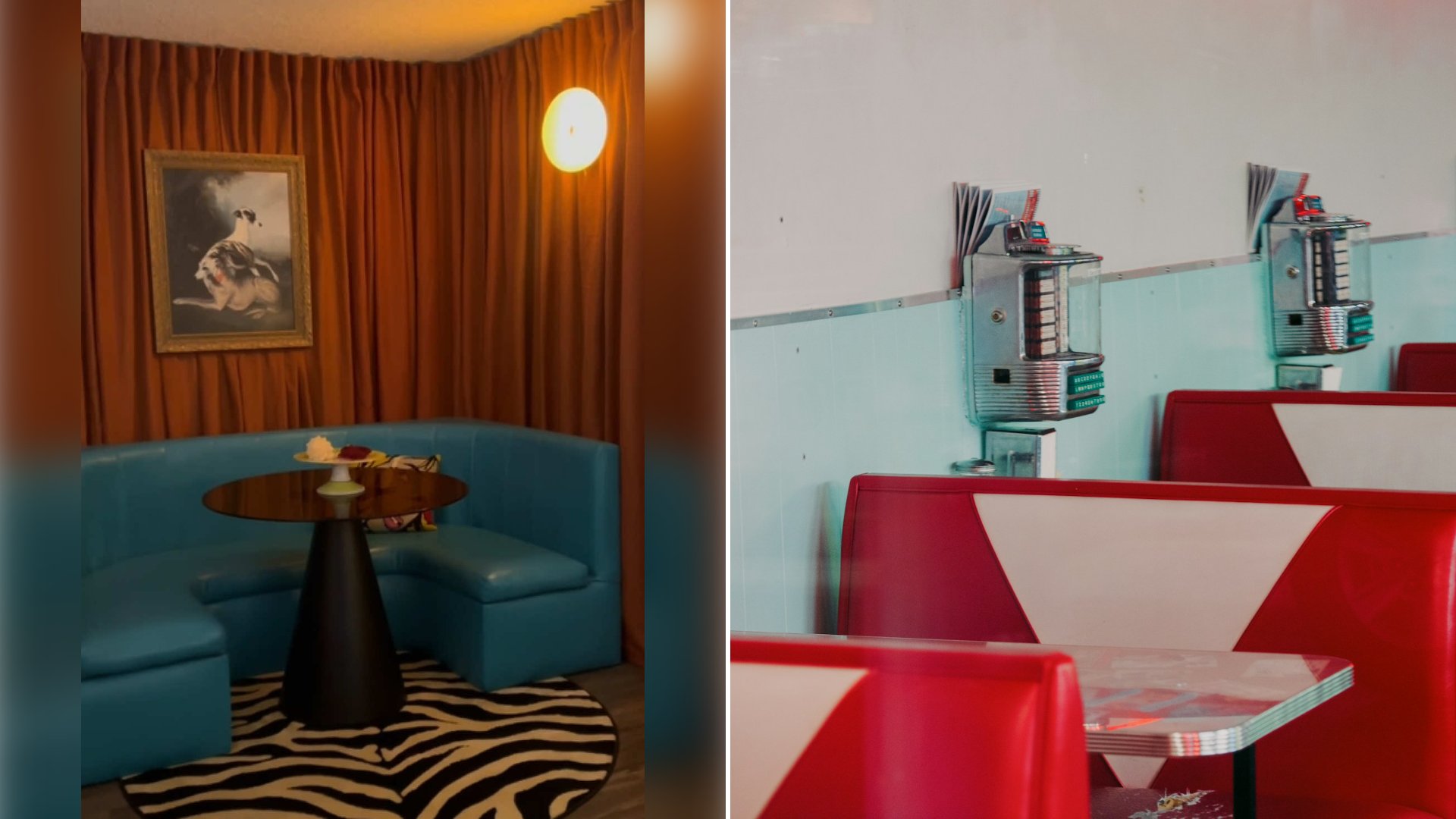
A vintage turquoise booth seat sits alone in an empty corner, looking exactly like the kind of impulsive Facebook Marketplace buy that someone regrets the moment it’s actually sitting in their house. Scuffed, oddly shaped for a normal room, and clashing with nothing else around it yet, it’s the kind of before shot that makes a viewer brace for a disappointing reveal. Instead, the full room transformation that follows turns that same booth into the centerpiece of a space that looks pulled straight out of a 1950s diner.
@paulruddsantmansuit builds the whole clip around that gap between the risky purchase and the payoff, letting the awkward, out-of-place first shot do the work before cutting to the finished room. It’s a format that works because the before shot never flatters the piece. The booth looks like it needs a full diner built around it to make sense, which is exactly what ends up happening.
@paulruddsantmansuit
Diner-style booth seating like this traces directly back to the rise of the American roadside diner in the 1930s through the 1950s, when prefabricated diner cars and freestanding diners needed seating that packed in more customers per square foot than individual chairs and tables ever could. Upholstered booths with a shared table became the standard layout, and manufacturers leaned into bold, saturated colors, turquoise, cherry red, mint green, chrome accents, partly because those colors photographed well and signaled a clean, modern, optimistic postwar aesthetic that diners wanted to project.
When diners closed, got remodeled, or were demolished over the following decades, their booth seating frequently ended up salvaged, sold off piecemeal, or passed between secondhand dealers rather than destroyed outright, which is exactly how pieces like this one tend to surface decades later on Facebook Marketplace, at architectural salvage yards, or through estate and restaurant liquidation sales. Original vinyl and chrome construction from that era was also built to be durable and heavily reupholstered over its working life, meaning a genuinely old booth can often be stripped down, reupholstered again, and brought back to a near-original look without replacing the underlying frame.
That durability is a big part of why this kind of risky purchase so often pays off the way it does in the video. A frame that’s survived decades of commercial use in an actual diner is typically sturdier than most furniture built for home use today, so the “ugly duckling” stage is almost always cosmetic rather than structural. A new cushion, a cleaned-up vinyl surface, or a bit of chrome polish can transform the same piece that looked out of place into something that reads as an intentional, era-accurate design choice rather than a mismatched secondhand find.
It also explains why diner booths have become a genuine design trend rather than just a kitschy novelty. Retro kitchen and home bar builds increasingly use salvaged or reproduction diner seating as a deliberate anchor piece, precisely because it brings instant color, nostalgia, and a built-in conversation starter that a standard dining set can’t match. The lesson from this clip holds for anyone eyeing a similarly weird-looking Marketplace listing: judge the frame and the bones, not the faded cushion, because the transformation potential in pieces like this is usually a lot higher than that first lonely corner shot suggests.
More from Vinyl and Velvet
- Two Women Shopping at Parma Flip Open the Glass Lids on a Dark Wood Drinks Cart and Find Glasses, Decanters and a Cocktail Shaker Waiting Inside
- Minnesota Antique Refrigeration Specialist Shows a Teal Fridge Swinging Open Hands Free When a Foot Presses a Chrome Pedal, Revealing Copper Toned Shelves Inside
- Creator Who Tags It Dumpster Diving Finds a Dirty Yellow Chair, Searches It and Sees Used Hosu Listings From $2,200 to $4,000, Then Deep Cleans It and Lounges in It

Leave a Reply