

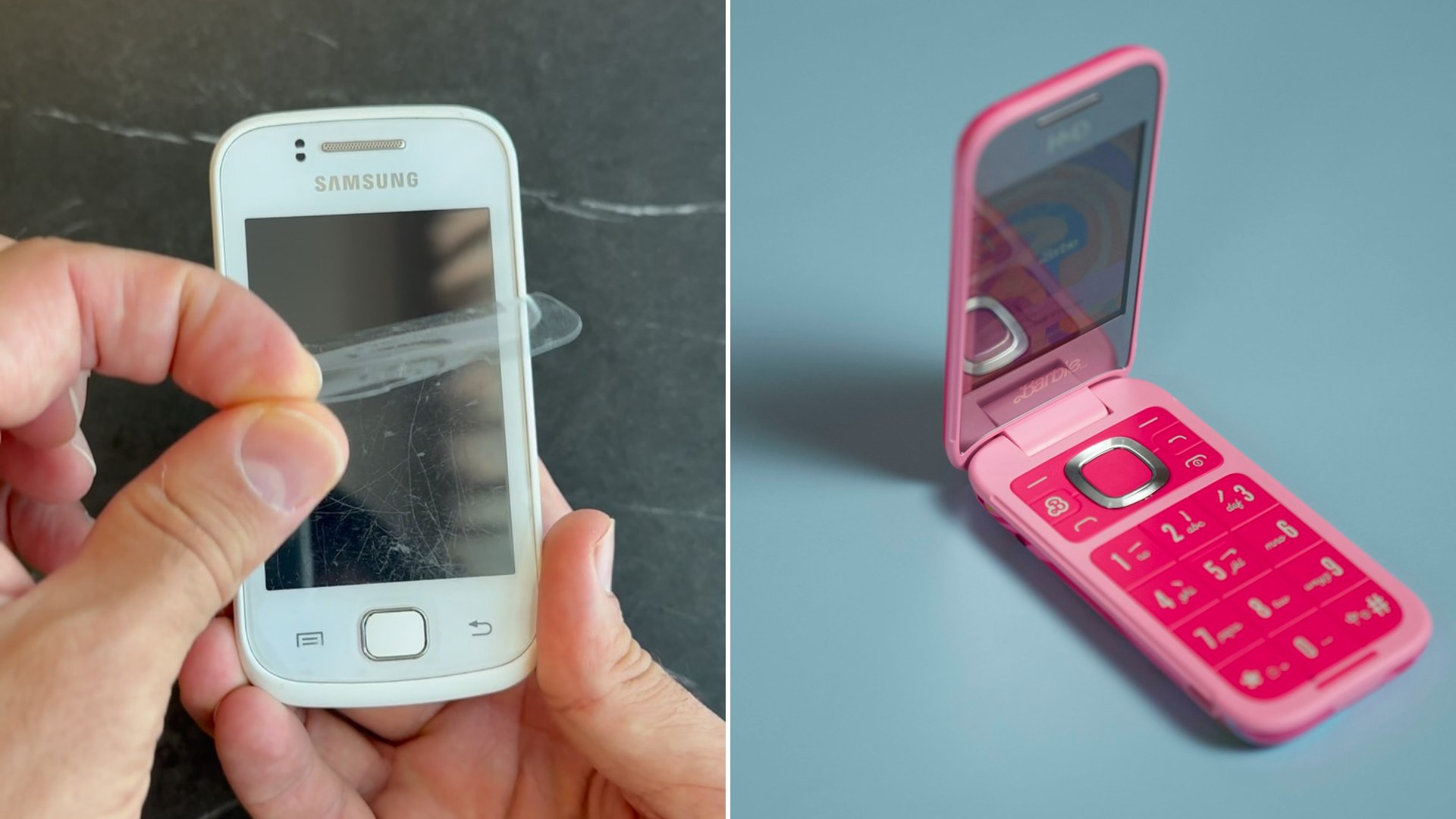
Few genres of online content deliver quite as pure a sensory payoff as a good peeling video, and creator @titovman taps into exactly that satisfaction in a recent Instagram reel, slowly removing protective plastic film from an entire lineup of vintage mobile phones. Each strip comes away cleanly, revealing pristine, untouched screens and surfaces beneath, and the cumulative effect across a full collection is nothing short of mesmerizing.
Peeling and unwrapping content occupies a genuinely significant niche within the broader satisfying-video genre that has flourished across social media platforms for years, tapping into a specific sensory pleasure that psychologists studying ASMR and related phenomena have linked to feelings of calm, control, and completion. There’s something inherently gratifying about watching a clean, uninterrupted peel, particularly when it reveals a flawless surface beneath, and that satisfaction only compounds when the process repeats across an entire collection of similar objects.
What elevates this particular video beyond generic peeling content, though, is the specific subject matter: vintage mobile phones that have apparently been preserved in their original protective film for years, if not decades, since their initial purchase. This detail transforms a simple sensory pleasure into something with genuine collector significance, since devices maintained in this pristine, factory-fresh condition represent a considerably rarer and more valuable category within vintage electronics collecting than units that have seen regular use and handling.
Vintage mobile phone collecting has grown into a genuinely significant niche within broader vintage technology collecting circles, with early flip phones, candy bar phones, and other pre-smartphone devices increasingly sought after by collectors drawn to their distinctive, era-specific industrial design. Unlike the largely uniform rectangular slab design that has dominated smartphones for well over a decade, earlier mobile phones displayed enormous variety in form factor, color, and mechanical features, making them genuinely interesting objects of design history study and appreciation in their own right.
The specific detail of original protective film surviving intact for years adds considerable value and interest for serious collectors, since it suggests a device that was purchased, perhaps used briefly or not at all, and then carefully stored away rather than subjected to years of regular daily handling. Mint-condition vintage electronics, complete with original packaging materials and protective coverings, command significant premiums in collector markets precisely because this kind of pristine preservation is genuinely rare, especially for devices that were originally designed and marketed as everyday consumer products rather than collectibles.
This kind of content also offers viewers a direct, visceral reminder of just how much mobile phone design has diversified and then subsequently converged over the past few decades. Seeing an entire lineup of distinct vintage phone designs, each with its own specific shape, button layout, and screen size, highlights just how creatively varied the category once was before smartphone design settled into its current, largely standardized rectangular form across nearly every manufacturer and price point.
There’s also a strong nostalgic dimension at play for viewers who recognize specific models from this lineup, potentially triggering memories of their own first mobile phone or a particular model owned by a friend or family member during a formative period. Vintage phone collections like this one often function as a kind of visual timeline of personal technology history, with each model representing a specific, identifiable moment in the broader evolution of mobile communication.
It’s also worth noting how this kind of content bridges multiple audience interests simultaneously, appealing equally to viewers purely drawn to the sensory satisfaction of the peeling process itself and to those genuinely invested in vintage technology and design history. That crossover appeal helps explain why content like this one tends to perform so consistently well regardless of a given viewer’s specific prior interest in phone collecting.
Ultimately, @titovman’s video succeeds on two simultaneous levels, delivering both immediate sensory satisfaction and genuine collector-grade interest in a single, tightly constructed piece of content. It’s proof that even a simple peeling video can carry real substance when the objects beneath the plastic film happen to be genuinely worth preserving in the first place.

Leave a Reply