

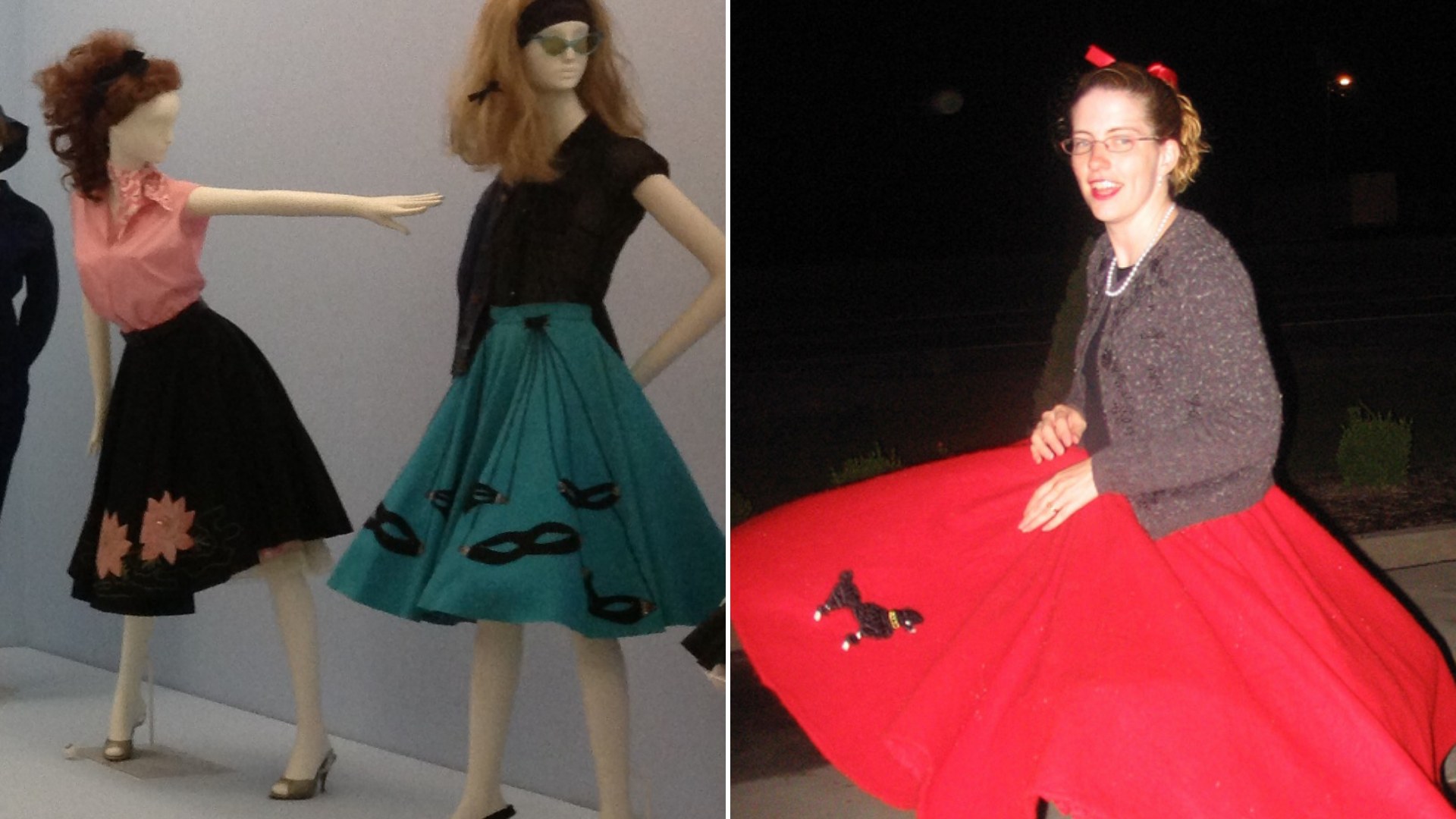
Ask most people what a poodle skirt is and they’ll picture a felt circle skirt with a curly dog stitched across the front, practically synonymous with soda fountains and sock hops. The actual origin story has almost nothing to do with dogs at all, and it started with a much more practical problem than anyone designing a fashion trend on purpose.
A Christmas Costume Solved in Felt
Designer Juli Lynne Charlot is widely credited with creating the felt circle skirt in the late 1940s, and by most accounts the very first one wasn’t built as fashion at all. Charlot needed a quick, festive costume for a Christmas party and turned to felt because it was easy to cut into shapes and didn’t fray at the edges, meaning it could be appliquéd with decorative designs without any hemming required. That practical shortcut, more than any grand design vision, is what launched an entire genre of skirt that would go on to define a decade, according to the Vintage Fashion Guild’s profile of Charlot’s work.
The felt itself did a lot of the heavy lifting. Because it held its shape and could be cut into clean silhouettes, whimsical appliqué designs, from musical notes to Christmas trees to eventually poodles, could be sewn directly onto the fabric without the fraying problems a woven material would have created. That made the skirts relatively simple to produce by hand, which mattered enormously for a style that needed to scale quickly once demand took off.
How the Poodle Became the Signature Motif
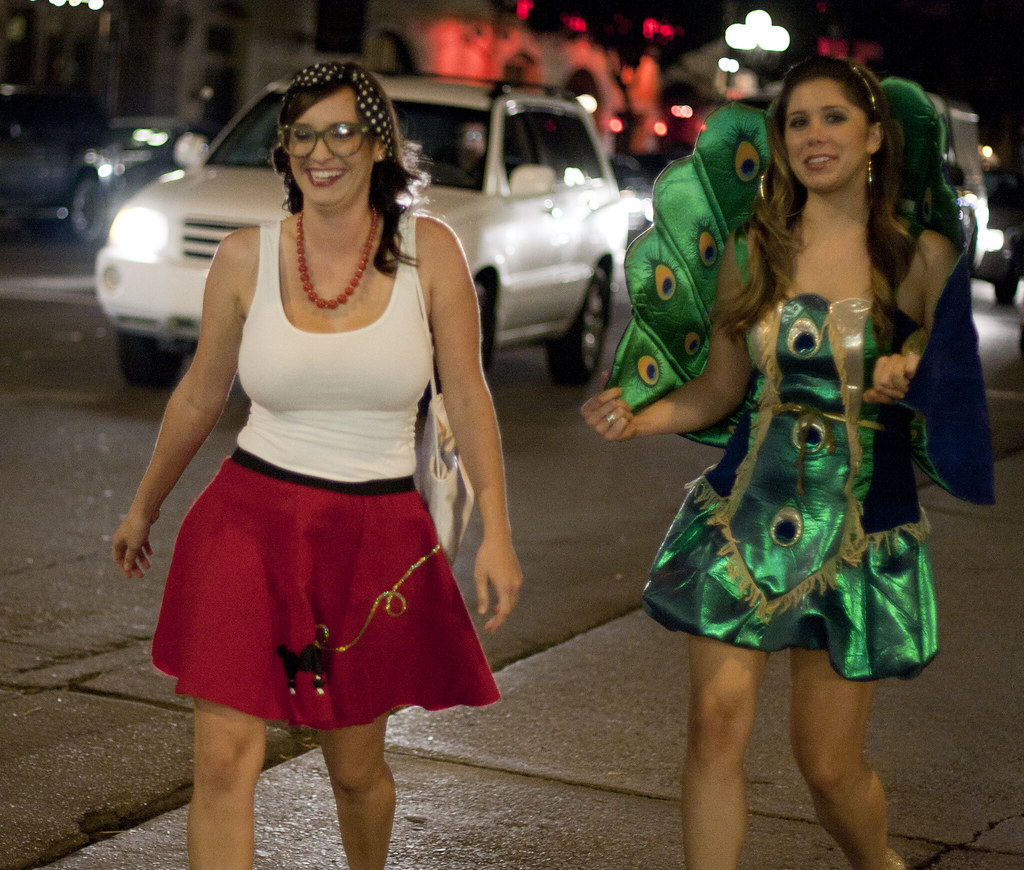
Poodles were just one of many appliqué designs Charlot and the designers who followed her lead put on these skirts, alongside everything from playing cards to hot rods to French poodles walking on leashes. But the poodle motif in particular caught on in a way the others didn’t, eventually becoming so closely associated with the style that the entire category of skirt inherited its name. Part of the appeal was almost certainly the shape itself. A poodle’s curled coat translated well into the kind of bold, graphic appliqué that read clearly from a distance, which mattered on a garment meant to be seen twirling across a dance floor.
By the early-to-mid 1950s, the trend had exploded well beyond its original novelty-costume roots, becoming one of the defining pieces of American teen fashion, as mainstream costume-history retrospectives on the style’s rise document. Department stores and home sewing patterns alike picked up the format, and the felt circle skirt became a wardrobe staple for teenage girls across the country almost overnight.
Why the Style Fit the Decade So Well
Part of what made the poodle skirt such a natural fit for its moment was how well it matched the era’s emerging teen culture. Rock and roll was reshaping how young people socialized, dance halls and sock hops were becoming genuine social institutions, and a wide circle skirt happened to be exactly the right garment for the physical movement that new style of dancing demanded. A poodle skirt swings and flares dramatically with a spin, which made it as functional on a dance floor as it was decorative sitting still. That combination of practicality and personality gave it staying power that a purely decorative trend likely wouldn’t have had.
The skirts were also, crucially, achievable for home sewists working with a limited budget. Felt was inexpensive and forgiving to work with compared to more structured fabrics, and appliqué designs could be as simple or elaborate as a seamstress’s skill allowed. That accessibility meant the trend wasn’t limited to what department stores stocked. Plenty of teenagers, or their mothers, were cutting and stitching their own versions at home, which almost certainly accelerated how quickly the look spread across the country.
A Simpler Story Than the Legend Suggests
None of that origin story involves a designer setting out to build a defining symbol of an entire decade. It involves a costume improvised for one party, a fabric chosen for convenience, and a dog-shaped appliqué that happened to catch on harder than the others sitting right next to it on the same rack. Decades later, the poodle skirt remains one of the most immediately recognizable garments in American fashion history, built not from grand design intention but from felt, scissors, and a shortcut that turned out to have far more staying power than anyone making it could have guessed.

Leave a Reply