

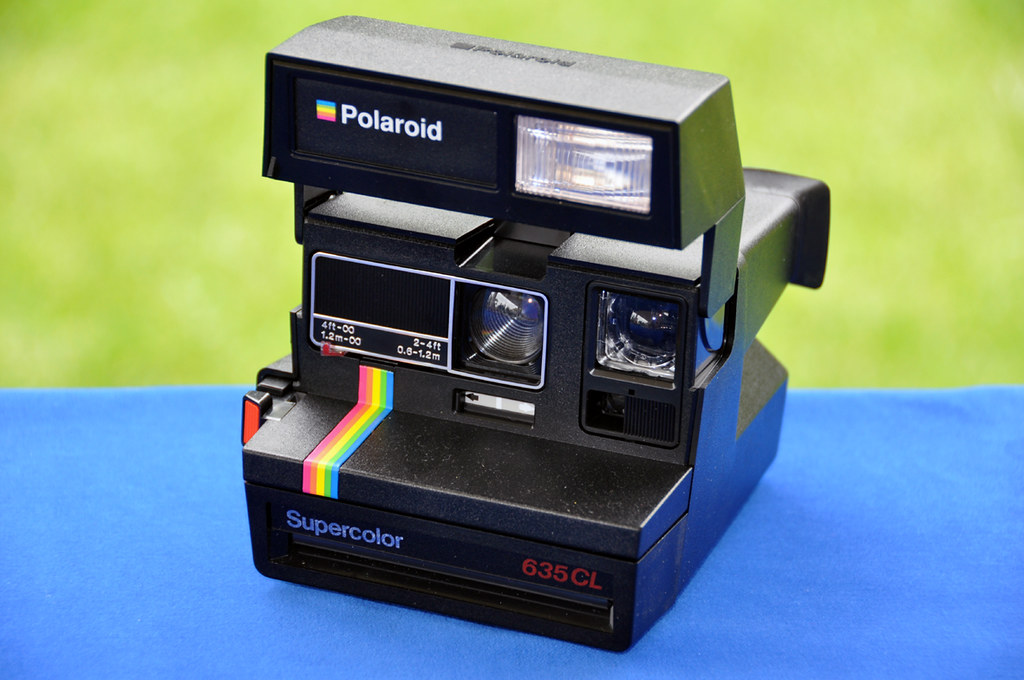
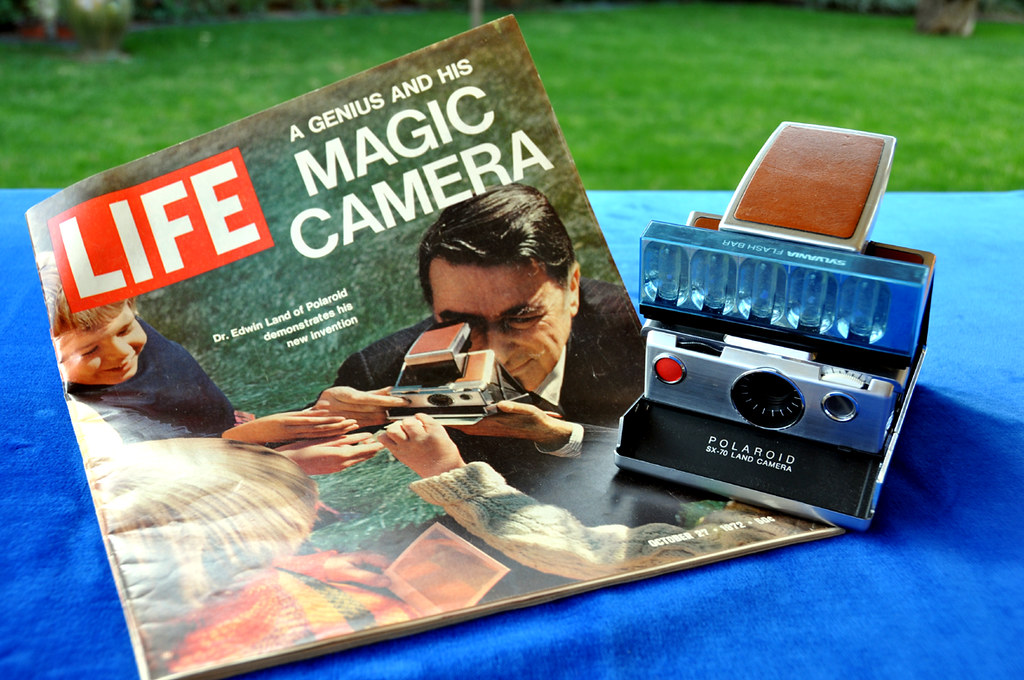
Edwin Land unfolded a camera the size of a paperback from inside his blazer at Polaroid’s annual shareholder meeting on April 25, 1972, and shot five photographs in ten seconds flat. Nobody in the room had seen anything quite like it, because nothing quite like it had existed before that afternoon in Needham, Massachusetts. The SX-70 wasn’t a modest upgrade to the instant camera. It was a machine Polaroid’s own engineers had spent years quietly insisting couldn’t actually be built.
The problem nobody could solve
Every Polaroid camera before the SX-70 made you work for your photograph. You pulled a film sandwich out by hand, timed its development with a watch, then peeled the layers apart and swabbed the print with a chemical fixer before it would hold. It was instant in the sense that you didn’t need a darkroom down the street, but it was still a chore, and it still left you holding wet chemical waste. Land wanted something that folded flat enough to slide into a jacket pocket, that showed a true single-lens-reflex image through the actual taking lens instead of a separate peephole viewfinder, and that ejected a fully sealed color print that developed itself in broad daylight, with nothing left to peel and nothing left to touch.
Nobody had built a folding SLR before, in any format. Engineers had to invent an entirely new reflex mirror system just to make the viewfinder show precisely what the lens saw, according to a detailed engineering history from Casual Photophile. They needed plastic gear moldings precise to fractions of a millimeter to make the folding hinge reliable over years of use, and they had to design a battery flat enough to live inside the film pack itself, since there was no room left anywhere in the camera body for one. Automated exposure control ran on close to 300 transistors, all of it packed into a device that weighed about a pound and fit in a coat pocket.
Land had been chasing this outcome for close to three decades by the time the SX-70 finally shipped. According to a widely told account of the company’s own origin story, Land first got the idea for a self-developing photograph in 1943, on a family vacation in Santa Fe, after his three-year-old daughter Jennifer asked why she couldn’t see the picture he’d just taken of her right away. He reportedly worked out the rough principle within the hour, though it still took Polaroid until 1948 to get a first, clunky peel-apart version onto store shelves. The SX-70 was where that original impulse — a kid’s impatient question — finally caught up with what a camera was actually capable of doing.
A luxury built for one moment
When it finally reached stores, the SX-70 cost $180, or roughly $1,200 in today’s money, and Polaroid held its wide release back until the fall of 1973 while it worked out manufacturing kinks. That price put it well outside impulse-buy territory. You didn’t buy an SX-70 just for the pictures it took. You bought it for the experience of taking them, and Land seemed to understand that better than most inventors ever do. In Polaroid’s 1972 annual report, he wrote that “a new kind of relationship between people in groups is brought into being by SX-70 when the members of a group are photographing and being photographed” — an unusually sociological line for a piece of camera-company literature, and not an inaccurate one. Watching a picture materialize in your own hand, in front of the people standing in it, changed what taking a photograph actually felt like.
Why it never really left
Instant film mostly vanished once digital cameras and then phones took over, and Polaroid the company survived bankruptcies and ownership changes that would have buried a lesser piece of design entirely. The SX-70 kept going anyway. Original units still turn up at estate sales and flea markets for a fraction of their launch price, and a small cottage industry of independent technicians now specializes in nothing but restoring them, swapping brittle old circuit boards, cleaning the folding hinge, and replacing the leatherette skins — sometimes in colors the camera never originally shipped in — once fifty-some years of handling has left them cracked or peeling. Nobody bothers doing that kind of careful, unglamorous repair work on a camera people don’t actually want back in their hands. It is, if anything, a strange kind of tribute: a machine built to make photography instant has itself become something people are willing to wait weeks for a technician to slowly bring back to life. It gets done because the folding mechanism still snaps into place exactly the way it did in 1972, and there is still nothing else quite like hearing that little motor whir a fresh print out into the light.
Land spent his career chasing ideas other engineers had already filed under impossible, and the SX-70 was the one that made the impossible foldable, pocketable, and, more than fifty years later, still worth hunting down.

Leave a Reply