

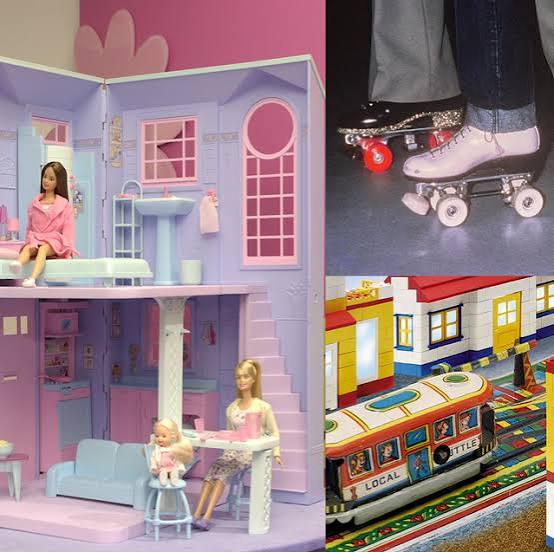
Searches for “1970s childhood toys” are up 280 percent year over year on Pinterest, and “vintage kids bedroom” searches have doubled, according to Pinterest’s inaugural 2026 Parenting Trend Report. Those aren’t isolated data points, either — searches for “vintage baby clothes 90s” are up 660 percent and “2000s kids toys” are up 610 percent in the same report, suggesting parents aren’t chasing one specific decade so much as reaching backward into their own childhoods, whichever decade that happened to be, and pulling the aesthetic forward into their kids’ rooms.
The Numbers
Pinterest’s report, its first dedicated parenting trend study, pulls from search behavior across the platform’s user base rather than survey responses, which makes the data a read on what parents are actually planning and building rather than what they say they want. Alongside the toy and bedroom numbers, the report found “screen free activities” searches up 200 percent, “family traditions ideas” up 200 percent, and “digital detox aesthetic” up 95 percent — all pointing toward the same underlying instinct, according to Pinterest, where 54 percent of parents surveyed who use the platform monthly said they support screen time caps for their kids. Today’s Parent’s coverage of the report labeled the throwback-toy pattern the “Throwback Kid” trend, tying it directly to the same real-world, screen-light instincts driving the rest of Pinterest’s 2026 findings.
Why 1970s Toys Specifically
The 280 percent jump in 1970s childhood toy searches lines up with a generational math problem: parents having kids in the mid-2020s were mostly born in the late 1980s and 1990s, which means the “vintage” decade lighting up their nostalgia isn’t necessarily their own childhood — it’s frequently their parents’ or grandparents’ era, filtered through hand-me-down toys, thrifted finds, and half-remembered stories. Wooden toys, simple primary-colored plastic, and open-ended play objects that defined 1970s childhoods also happen to align closely with what the “screen free” and “analog” search categories are chasing, which is likely why the two trends are climbing together rather than separately.
What “Vintage Kids Bedroom” Actually Looks Like
Unlike a themed nursery built around licensed characters, the vintage kids’ bedroom trend Pinterest’s data points to skews toward warm wood furniture, secondhand dressers and rocking chairs, and a limited, non-primary color palette — mustard, rust, and sage rather than the bright saturated colors typical of contemporary kids’ decor. Thrifted and hand-me-down furniture does double duty here: it’s both the aesthetic and the practical, budget-conscious choice, which may be part of why it’s resonating at a moment when many parents are also actively rejecting overconsumption of new plastic toys and decor.
The Screen-Time Connection
The vintage-toy and analog-decor searches don’t exist in isolation from Pinterest’s screen-time findings — they’re arguably the aesthetic expression of the same parenting instinct. A room built around wooden blocks, secondhand books, and a single well-loved teddy bear rather than a wall of plastic and light-up gadgets is, functionally, a room designed to make screen-free play feel more inviting rather than like a punishment. That’s a meaningfully different motivation than pure nostalgia, even though the two produce a similar-looking room.
What the Pattern Actually Says
Taken together, the numbers describe parents using their kids’ rooms as a small act of resistance against both overconsumption and over-screened childhoods — reaching for whichever decade’s toys and furniture happen to be sitting in a parent’s or grandparent’s attic, rather than a specific decade’s aesthetic for its own sake. It’s less a ’70s revival than a reminder that “vintage,” for a new parent, is really just shorthand for “before all of this.”

Leave a Reply